Key takeaways
- Use a broad, stable base rather than placing a tall tower on a narrow cabinet.
- Confirm that the drawer stops prevent a fully loaded drawer from falling out.
- Do not stack higher than you can safely reach; a 48-inch tower is awkward if you need a step stool.
- Check the stated load capacity. Lightweight plastic drawers may bow under books, bolts of fabric, or metal tools.
The best sewing storage organizers for craft rooms are modular plastic drawer units for maximum visibility, rolling carts for portable projects, and divided sewing boxes for small collections of thread, needles, and notions.
Choose by the supplies you own rather than by appearance alone. A thread-heavy setup needs tall, shallow compartments; fabric storage needs wide shelves or bins; scissors and rotary cutters need protected horizontal storage; and a small room benefits from organizers that use vertical space without blocking the work area.
Quick picks by craft-room situation
| Craft-room situation | Best organizer type | Useful dimensions | Why it fits |
|---|---|---|---|
| Small apartment or 10×12-foot room | Narrow rolling cart or stackable drawer tower | 12–16 inches wide; 15–20 inches deep | Uses vertical space and can be moved away from a desk |
| Large fabric and quilting collection | Cube shelving with fabric bins | 12–15-inch cube openings; 11–14 inches deep | Supports folded fabric without overfilling small drawers |
| Frequent classes or sewing-room changes | Portable divided case or rolling sewing tote | 14–18 inches long; under 15 pounds when loaded | Protects supplies and makes transport manageable |
| Children or pets in the home | Latching hard-sided case inside a closed cabinet | At least 3-inch locking or latched compartments | Keeps pins, needles, blades, and small parts contained |
| Back or shoulder discomfort | Shallow drawers at seated or standing height | Drawer handles 28–42 inches above the floor | Reduces bending and avoids lifting a heavy supply box |
Best overall: modular clear drawer storage
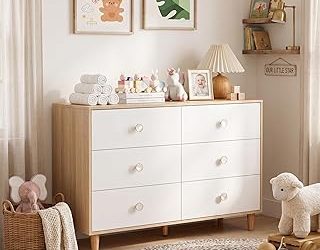
A stackable drawer unit is the strongest all-purpose choice for a dedicated sewing corner. Clear polypropylene drawers let you identify thread colors, zippers, elastic, and presser-foot accessories without opening every compartment. Look for units about 12–18 inches wide, 8–16 inches deep, and 24–36 inches tall.
Choose shallow drawers, roughly 2–3 inches high, for bobbins, machine needles, clips, and thread. Deeper 4–6-inch drawers are better for folded fat quarters, interfacing, patterns, or a small cutting mat. A useful layout is two-thirds shallow drawers and one-third deep drawers; all-deep drawers waste space around small notions.
Stacking units are especially effective beside a sewing table. Keep the top drawer between 28 and 42 inches from the floor so commonly used items are reachable without stooping. Before buying, measure the gap between the table and wall, then leave at least 2 inches of clearance for drawer handles and 24–30 inches of walking space in front.
What to check before stacking
- Use a broad, stable base rather than placing a tall tower on a narrow cabinet.
- Confirm that the drawer stops prevent a fully loaded drawer from falling out.
- Do not stack higher than you can safely reach; a 48-inch tower is awkward if you need a step stool.
- Check the stated load capacity. Lightweight plastic drawers may bow under books, bolts of fabric, or metal tools.
Best for portability: rolling craft carts
A three-tier rolling cart works well when the sewing machine moves between a dining table, desk, and storage closet. The most useful size is approximately 15 inches wide, 12–18 inches deep, and 30–36 inches tall. That is narrow enough to pass through most interior doorways while still holding thread, a project pouch, and cutting tools.
Look for four casters, with at least two locking wheels. A cart without wheel locks can drift while you are pulling a drawer or cutting fabric. Metal carts usually tolerate more weight than thin plastic carts, but their open sides allow dust to collect and do little to contain pins. Plastic carts are easier to wipe clean and quieter on hard floors.
Portability has a practical limit. A cart loaded with fabric can easily reach 20–30 pounds, making it difficult to lift over a threshold or into a vehicle. Use the cart for active projects, not as a permanent warehouse. Store heavy fabric on lower shelves and keep scissors, rotary cutters, and machine feet in a latching container on the top shelf.
Best for thread, bobbins, and small notions: divided cases
A divided sewing box is more efficient than a large drawer when your main problem is small-item organization. Adjustable dividers let you create separate sections for bobbins, snaps, buttons, hand-sewing needles, seam rippers, and zipper feet. A case around 12–16 inches long, 8–12 inches wide, and 3–6 inches high is easy to carry and fits on most shelves.
Choose fixed, deep compartments for pins and clips so they cannot migrate under a removable divider. For thread, measure the spool diameter and height before buying. Many standard spools fit in compartments about 1.5 inches wide, but larger quilting or specialty spools may need 2-inch-wide sections and at least 4 inches of vertical clearance.
Transparent lids are useful, but they do not replace a secure closure. A hinged lid with two latches is safer for transport than a friction-fit lid. If the box will be used around children or pets, choose a case that stays closed when carried by its handle and keep rotary blades in a separate locked container.
Best for fabric: cube shelving and fabric bins
Fabric is bulky, flexible, and difficult to manage in narrow drawers. Cube shelving with openings around 12–15 inches square accommodates folded yardage, fat quarters, and soft-sided bins. A four-cube unit is often enough for a small sewing area; an eight-cube unit needs more wall space and should be anchored to studs or suitable wall hardware.
Fold fabric to a consistent width, then store it vertically like files rather than stacking it in a deep pile. This lets you remove one piece without disturbing the others. Fabric bins hide visual clutter, but opaque bins make color matching slower. Clear front panels or open baskets offer a useful compromise.
Do not overload cube shelves with dense bolts. A fabric-filled cube can weigh more than expected, and inexpensive fiberboard shelves may sag. For heavy quilting cotton, spread the load across several compartments and place the heaviest fabric on the lowest level.
Material and construction trade-offs
| Construction | Advantages | Limitations | Best use |
|---|---|---|---|
| Clear polypropylene | Light, wipeable, visible contents, rustproof | Can crack in cold conditions; drawers may bow when overloaded | Thread, notions, bobbins, and machine accessories |
| Powder-coated metal | Strong frame, good airflow, durable casters | Open design collects dust; contents need separate boxes | Rolling carts and heavier tools |
| Engineered wood | Stable appearance, useful for shelves and cabinets | Edges can swell if exposed to moisture; heavier to move | Fabric storage and closed furniture |
| Canvas or polyester fabric | Lightweight, collapsible, soft on furniture | Can sag, collect lint, and collapse when overfilled | Patterns, batting, and lightweight fabric |
| Hard-sided case | Protects sharp tools and keeps its shape | Uses more shelf space; less flexible capacity | Portable projects and classes |
How to plan capacity before buying
- Measure the storage zone. Record width, depth, and height, including baseboards, radiator clearance, and the path needed to open drawers.
- Separate active supplies from reserve supplies. Keep the current project near the sewing machine and store backup fabric or seasonal materials elsewhere.
- Group by frequency. Thread, bobbins, scissors, and clips deserve the easiest access. Specialty feet and rarely used patterns can go higher or farther away.
- Allow expansion. Leave about 20 percent of each organizer empty. Fully packed compartments become difficult to search and encourage duplicate purchases.
- Test the loaded weight. A container that is easy to carry empty may be uncomfortable at 15 pounds. Use smaller boxes for projects you transport often.
Moving, assembly, and durability realities
Flat-packed shelving is usually manageable through a doorway, but assembled cube furniture can be awkward in a hallway. Measure the narrowest doorway and stair landing, not just the room. If a unit is taller than the doorway opening, assemble it in the room or choose a modular design.
The parts most likely to wear first are plastic drawer runners, caster mounts, fabric-bin handles, and particleboard edges. Avoid dragging a loaded unit; lift it or empty it first. Locking casters help with daily use, but they are not a substitute for anchoring a tall shelf. For rental homes, use freestanding organizers and removable anti-tip solutions approved for the wall surface.
Final buying recommendation
For most sewing rooms, combine one shallow clear drawer tower for notions, one latching divided case for sharp and portable tools, and fabric bins or cube shelves for textiles. Choose a rolling cart instead when your machine shares a room with other activities. The best sewing storage organizers for craft rooms are not necessarily the largest ones: they are the organizers whose compartment sizes match your supplies, whose loaded weight you can move safely, and whose doors and drawers remain usable after the collection grows.