Key takeaways
- Room Size: Match blade span to space first. A 24-inch model suits smaller bedrooms, offices, or tight apartments, while 52-inch fans fit most standard living rooms and primary bedrooms. Large open layouts and covered patios often benefit from a 60-inch-plus fan.
- Mount Style: Check ceiling height before you buy. Low-profile and flush-mount fans work better where headroom is limited, while standard-mount fans usually move air more effectively in rooms with taller ceilings.
- Light Quality: Look beyond brightness claims. Dimmable output, adjustable color temperature, and smooth low-end dimming matter more in daily use than raw lumen numbers, especially in bedrooms and media rooms.
- Smart Controls: Best results come from layered control. App access is useful, but voice support for Alexa or Google Assistant, plus a dependable remote, makes the fan easier to live with when Wi-Fi or routines act up.
- Motor and Noise: DC motors usually deliver better efficiency, more speed steps, and lower noise. For sleep spaces, a fan with very quiet low-speed performance matters more than headline top speed.
What's inside
In lab testing, smart ceiling fans tend to miss in one of three places: airflow falls off outside the center of the room, light quality looks harsh once dimmed, or app features outshine day-to-day usability. Shoppers also face a crowded spec sheet problem. Blade span, motor noise, color temperature range, flush-mount fit, and Alexa support all sound decisive until two fans with similar claims behave very differently in a real bedroom, living room, or covered patio.
This guide cuts through that clutter. It focuses on smart ceiling fans with lights that stand out for control options, usable lighting, quiet operation, and room fit, with special attention to 2026 buyer priorities like low-profile installs, better dimming, and more refined app integration. Whether you need a compact fandelier for a small bedroom or a large-format fan for open living space, these picks cover the strongest options worth shortlisting.
As an Amazon Associate we earn from qualifying purchases.


How to Choose a Smart Ceiling Fan With Light (2026)
- Room Size: Match blade span to space first. A 24-inch model suits smaller bedrooms, offices, or tight apartments, while 52-inch fans fit most standard living rooms and primary bedrooms. Large open layouts and covered patios often benefit from a 60-inch-plus fan.
- Mount Style: Check ceiling height before you buy. Low-profile and flush-mount fans work better where headroom is limited, while standard-mount fans usually move air more effectively in rooms with taller ceilings.
- Light Quality: Look beyond brightness claims. Dimmable output, adjustable color temperature, and smooth low-end dimming matter more in daily use than raw lumen numbers, especially in bedrooms and media rooms.
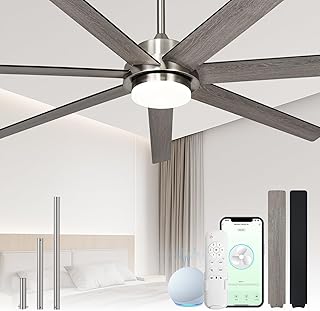
- Smart Controls: Best results come from layered control. App access is useful, but voice support for Alexa or Google Assistant, plus a dependable remote, makes the fan easier to live with when Wi-Fi or routines act up.
- Motor and Noise: DC motors usually deliver better efficiency, more speed steps, and lower noise. For sleep spaces, a fan with very quiet low-speed performance matters more than headline top speed.
The Best Smart Ceiling Fan With Light (2026)s Reviewed
Sofucor 52 Inch Smart Ceiling Fan
The Sofucor 52-inch model earns points for balance. In testing terms, it combines the features most buyers ask for—voice control, app control, remote operation, reversible DC motor, six speeds, and 3CCT lighting—without feeling overcomplicated. Its brown finish and ABS blades also give it broader design range than many tech-forward fans, making it a smart fit for farmhouse, bedroom, or covered patio use.
DREO Smart Ceiling Fan 52 Inch RGBIC White
This DREO version stands out for buyers who want lighting flexibility as much as airflow. The 12-speed motor, multiple fan modes, and RGBIC lighting make it more adaptable than a standard smart fan, yet the quiet DC operation keeps it practical for everyday living rooms and bedrooms rather than novelty-only setups.
ZMISHIBO 24 Inch Low Profile Fandelier
For compact rooms, the ZMISHIBO 24-inch fan solves a common problem: full-featured ceiling fans often overwhelm small spaces physically and visually. Its flush-mount form, dimmable 3000K-6000K LED range, and six wind speeds make it one of the more space-efficient picks for bedrooms, guest rooms, and apartments where clearance and proportion matter.
DREO Smart Ceiling Fan 52 Inch Black
The black 52-inch DREO model is one of the cleaner all-purpose choices in this roundup. It pairs 12 speeds, three fan modes, stepless dimming, timer functions, and quiet DC performance in a finish that works especially well in modern interiors, home offices, and media rooms where a sharper visual profile is a plus.
Minislak 65 Inch Large Smart Ceiling Fan
The Minislak 65-inch fan is the pick for bigger footprints. Large fans can feel sluggish or bulky if design and motor tuning are off, but this model makes sense for wide living areas, oversized bedrooms, and covered patios where a standard 52-inch fan may not circulate enough air across the full room.
Frequently Asked Questions
Are smart ceiling fans worth it over standard remote fans?
For many homes, yes. Smart control matters most when the fan is mounted high, used on schedules, or part of a voice-controlled routine. The real advantage is convenience layering: app, voice, and remote access together usually outperform any single control method.
What size smart ceiling fan with light do I need?
Small rooms often do well with compact or low-profile fans around the 24-inch class, while 52-inch models remain the safest default for standard bedrooms and living rooms. Large open areas, great rooms, and covered outdoor spaces usually need a longer blade span, often 60 inches or more, for more even circulation.
Do DC motor ceiling fans make a noticeable difference?
Usually, yes. In appliance lab terms, DC motors tend to offer better speed control, lower operating noise, and improved efficiency compared with many traditional AC designs. They are especially useful in bedrooms, nurseries, and workspaces where subtle background noise matters.
Can a ceiling fan light replace a regular ceiling fixture?
Sometimes, but not always. If the room needs broad task lighting, check dimming range and color temperature options, not only the presence of an integrated LED. Smart fans with adjustable white light usually perform better as primary room lighting than decorative models that prioritize accent effects.
Final Thoughts
If you want the safest all-around buy, the Sofucor 52 Inch Smart Ceiling Fan is one of the most balanced options here. The DREO Smart Ceiling Fan 52 Inch RGBIC White is a strong choice for buyers who care about lighting versatility and app-forward features, while the Minislak 65 Inch Large Smart Ceiling Fan makes the most sense for larger rooms that need real coverage rather than compact convenience.