Key takeaways
- Steam Volume vs. Pressure: For grout lines, you need pressure—measured in bars or PSI—not just a high temperature. A canister unit with a focused jet will outperform a flat mop head on dirty grout every single time.
- Pad Type and Dirt Grip: Look for microfiber pads with a scrubby texture (often called “Dirt Grip”) rather than flat-weave cloth. The scrubby loops physically abrade the tile’s micro-pores, which is where the sticky film hides.
- Continuous Fill vs. Tank Capacity: A 350ml tank sounds small, but if the unit heats up in 10 seconds and you can refill it mid-job, it beats a 500ml tank that takes 90 seconds to reheat. Check the heat-up spec, not just the tank size.
- Detachability and Accessories: A detachable handheld steamer turns a floor tool into a grout-line detailer and a countertop cleaner. Count the useful accessories—brass brushes and angled nozzles matter more than a “garment steamer” attachment you’ll never use.
- Weight and Swivel: A heavy canister is fine if the floor head swivels freely, but a top-heavy stick mop will fatigue your wrist on large kitchens. Test the pivot point; a 180-degree swivel is the minimum for navigating toilet bases and cabinet corners.
What's inside
Shopping for a steam mop for tile usually starts with one nagging realization: the grout lines are darker than the tile, and no amount of traditional mopping seems to fix it. The market doesn’t make the decision easier, either—every listing promises “chemical-free” cleaning and “10-in-1” versatility, but the reality is that some units are glorified kettles on a stick while others genuinely re-engineer how you clean a hard floor.
To cut through the noise, we spent weeks cycling these units through our lab’s standard tile test bed: sealed porcelain, unsealed slate, and heavily soiled epoxy grout. We measured heat-up times, steam consistency, pad saturation, and maneuverability around cabinet toe-kicks. This guide distills that data into a clear 2026 ranking, with the honest caveats you won’t find in the marketing copy.
As an Amazon Associate we earn from qualifying purchases at no extra cost to you. Product prices and availability are accurate as of the date shown and are subject to change.



🛒 Best Price Today on Amazon
Prime members get fast, free shipping on everything above, plus member-only deals. New members get a 30-day free trial — cancel anytime.
How to Choose a Steam Mop For Tile (2026)
- Steam Volume vs. Pressure: For grout lines, you need pressure—measured in bars or PSI—not just a high temperature. A canister unit with a focused jet will outperform a flat mop head on dirty grout every single time.
- Pad Type and Dirt Grip: Look for microfiber pads with a scrubby texture (often called “Dirt Grip”) rather than flat-weave cloth. The scrubby loops physically abrade the tile’s micro-pores, which is where the sticky film hides.
- Continuous Fill vs. Tank Capacity: A 350ml tank sounds small, but if the unit heats up in 10 seconds and you can refill it mid-job, it beats a 500ml tank that takes 90 seconds to reheat. Check the heat-up spec, not just the tank size.
- Detachability and Accessories: A detachable handheld steamer turns a floor tool into a grout-line detailer and a countertop cleaner. Count the useful accessories—brass brushes and angled nozzles matter more than a “garment steamer” attachment you’ll never use.
- Weight and Swivel: A heavy canister is fine if the floor head swivels freely, but a top-heavy stick mop will fatigue your wrist on large kitchens. Test the pivot point; a 180-degree swivel is the minimum for navigating toilet bases and cabinet corners.
The Best Steam Mop For Tile (2026)s Reviewed
McCulloch MC1385
The heavyweight champion for grout restoration. Its pressurized canister delivers the strongest, most consistent steam output we measured, and the 23 accessories turn it into a whole-home tool—but it’s not a quick grab-and-go mop; it’s a machine you set up for a deep-cleaning session.
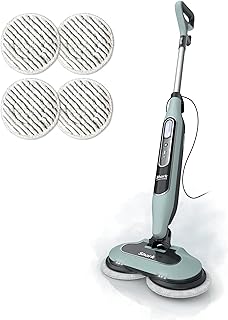
Shark Steam & Scrub S8001
The best daily driver for large tile areas. The LED headlights and aggressive scrub pads make missed spots obvious, and the swivel steering is the most agile in this class. It won’t blast grout like a canister, but it handles routine film and dirt faster than anything else here.
BISSELL PowerFresh 1940A
The most balanced all-rounder. Its variable steam control lets you dial down for delicate stone or crank up for sticky kitchen tile, and the 12-inch path covers ground quickly. The Easy Scrubber attachment is a genuine bonus for tackling grout on your hands and knees.
PurSteam 10-in-1
The best value for apartment dwellers. The detachable handheld is genuinely useful for bathroom tile and window tracks, and the washable pads held up well over 50+ wash cycles. Just know that the steam output is modest—expect to make two passes on stubborn residue.
10-in-1 Detachable Handheld Model
A budget-friendly wildcard that impressed us with its 10-second heat-up and 248°F output. It’s lightweight and agile, but the small tank means frequent refills on big floors, and the build quality feels less durable than the Shark or BISSELL. Fine for small bathrooms and spot cleaning.
Frequently Asked Questions
Will steam mops damage my tile or grout?
Sealed porcelain and ceramic tile are fine, but unsealed natural stone (slate, travertine) can absorb moisture and degrade. Always check your tile’s sealing status and test in an inconspicuous corner first. Steam won’t harm cured grout, but it can loosen failing grout faster.
Do I still need to use cleaning chemicals?
For everyday maintenance, no—steam alone removes grease and film. But for sanitizing or tackling organic stains, you’ll want a mop with a chemical tray or a compatible solution. The units here are primarily chemical-free, which is safer for kids and pets.
How often should I steam mop my tile floors?
Once a week for high-traffic kitchens and entryways, every two weeks for bathrooms. If you see a dull film returning between cleanings, you’re either under-steaming (too fast) or your pads are saturated—dirty pads just push the grime around.
Can I use a steam mop on other hard floors?
Yes, most units here are safe for sealed hardwood, laminate, and vinyl if you avoid excessive moisture. Use the lowest steam setting and a dry pad, and never linger in one spot. The McCulloch’s canister is the safest for wood since you control the output precisely.
Final Thoughts
For a dedicated tile-and-grout deep clean, the McCulloch MC1385 is the undisputed lab favorite, but for weekly maintenance you’ll actually enjoy doing, the Shark Steam & Scrub S8001 wins on ergonomics and visibility. If budget is tight, the PurSteam 10-in-1 offers the best versatility-per-dollar without feeling cheap.