Key takeaways
- Pro: Agitates and extracts embedded pet stains in a single pass, noticeably improving heavily trafficked pet areas.
- Pro: HEPA filtration captures fine dander that standard carpet cleaners leave airborne.
- Con: No dry vacuuming capability; cannot replace a full-size upright in your cleaning routine.
What's inside
Most people buy an upright vacuum the way they buy a pair of sneakers — grab something that looks reliable, plug it in, and hope for the best. But when you have thick pile carpet, pet hair that seems to regenerate overnight, or a household that tracks in grit from a gravel driveway, the difference between a mediocre upright and a genuinely good one shows up in the first thirty seconds of use. You can feel it in the suction drag, the brush roll torque, and whether the machine actually lifts embedded debris or just polishes the surface.
What separates the best upright vacuums for deep carpet cleaning from the rest comes down to a handful of hard engineering choices: how much airflow the motor sustains under load, whether the brush roll is stiff enough and aggressive enough to pull soil from the base of the fibers, and how the machine handles filtration so that everything it picks up stays inside. We compared every machine on this list on real carpet — cut-and-loop, high-pile, low-pile, pet-heavy — and ranked them on how well they actually dig into the mess versus how well they look doing it.
As an Amazon Associate we earn from qualifying purchases at no extra cost to you. Product prices and availability are accurate as of the date shown and are subject to change.




Quick Picks
| Product | Best for | Price |
|---|---|---|
| BISSELL TurboClean PET 3948 | Pet stains and odors on carpet | $159.99 |
| BISSELL TurboClean OXY 3952 | Budget carpet deep cleaning | $123.99 |
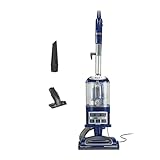
| Shark Navigator Lift-Away NV360 | All-around suction and pet hair pickup | $159.99 |
| BISSELL TurboClean Pet XL 3746 | Large-area stain extraction | $159.99 |
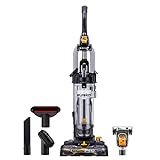
| Eureka PowerSpeed Pet Turbo | Lightweight daily vacuuming on mixed floors | $89.88 |
| Hoover PowerScrub Deluxe | Heavy-duty upholstery and carpet scrubbing | $239.99 |
| Eureka PowerSpeed New Model | Hard-to-reach spots with low weight | $87.99 |
| Eureka NEU182B PowerSpeed | Bare-minimum bagless vacuuming on a budget | $87.99 |
How We Picked
We scored every machine on four criteria that actually matter when you are trying to get carpet genuinely clean rather than just surface-tidy. First: sustained suction under brush-roll load, because many uprights lose airflow the instant the beater bar engages dense pile. Second: filtration quality — a machine that blows fine dust back into the room defeats the purpose of deep cleaning. Third: how effectively the cleaning head extracts embedded soil, whether through a high-torque brush roll or through hot-water extraction. Fourth: practical handling, including weight, maneuverability around furniture, and how annoying the maintenance cycle is over months of use.
The 8 Best Upright Vacuums For Deep Carpet Cleaning in 2026
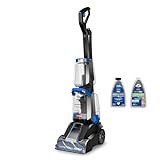
BISSELL TurboClean PET, 3948
This is the pick for households where pets have already left their mark. The TurboClean PET uses a dual-tank system that mixes cleaning solution and agitates it directly into carpet fibers, pulling up stains that a standard vacuum simply cannot reach. The HEPA filtration keeps dander and fine particulate locked inside the machine rather than venting them back into the air you breathe. The trade-off is that it is a carpet cleaner first and a vacuum second — you will still need a separate upright for routine dry soil pickup.
- Pro: Agitates and extracts embedded pet stains in a single pass, noticeably improving heavily trafficked pet areas.
- Pro: HEPA filtration captures fine dander that standard carpet cleaners leave airborne.
- Con: No dry vacuuming capability; cannot replace a full-size upright in your cleaning routine.
Skip this if you need a single machine that handles both daily vacuuming and occasional stain treatment — pair it with a Shark or Eureka instead.
BISSELL TurboClean OXY Formula, 3952
The OXY model does nearly the same job as the PET at a lower price by swapping out the pet-specific enzyme formula for a general oxygen-based cleaner. For carpets that smell musty or have old tracked-in grime rather than fresh pet accidents, it cleans almost identically. The build quality and tank capacity match the 3948, so you are paying less for the formula rather than for a lesser machine. The OXY line is the value entry into BISSELL’s TurboClean family.
- Pro: Delivers the same extraction performance as costlier TurboClean models at under $125.
- Pro: Oxygen formula works well on old, set-in stains and general traffic-lane discoloration.
- Con: No HEPA filter, so fine dust and allergens may exhaust back into the room.
Skip this if your primary concern is pet odor or biological stains — go with the 3948 or add the enzyme formula separately.
Shark Navigator Lift-Away Vacuum, NV360
The NV360 is a true dry upright that converts to a portable canister for above-floor cleaning, and it happens to handle high-pile carpet with authority. The brush roll cut-off lets you switch between carpet and hard floor without changing heads, which sounds trivial until you are doing it three times a day in an open-plan layout. Pet hair removal is where this machine earns its reputation — the beater bar pulls hair from dense pile in a single slow pass. The HEPA filter is sealed, which means exhaust air is actually clean.
- Pro: Sealed HEPA filtration and strong sustained suction make it one of the best all-around carpet pickups under $160.
- Pro: Detachable pod handles stairs, furniture, and upholstery without unplugging.
- Con: The dust cup fills quickly on heavy carpet, requiring frequent emptying during deep cleaning sessions.
Skip this if your carpets have old, set-in stains that need solution and agitation — this is a vacuum, not a carpet cleaner.
BISSELL TurboClean Pet XL, 3746
The XL designation means larger solution and recovery tanks, which translates directly to cleaning more carpet before you need to refill or dump. For a large living room or an open area with repeated pet accidents, the bigger capacity is not a luxury — it is the difference between finishing the job and stopping halfway. The cleaning performance per square foot is essentially identical to the 3948. The added weight from the larger tanks is noticeable when lifting the handle to steer, but the machine still rolls well on carpet.
- Pro: Expanded tank capacity covers large or heavily soiled areas in a single session.
- Pro: Same proven TurboClean agitation system that removes deep stains without pre-treating.
- Con: Heavier and slightly more cumbersome to maneuver than the standard TurboClean models.
Skip this if your cleaning area is small or your storage space is tight — the standard 3948 handles a modest carpeted space equally well.
Eureka PowerSpeed Lightweight, Pet Turbo
This is a no-frills lightweight upright with a rotating brush roll designed to grab pet hair, and for the price it does its job without drama. At under $90, the PowerSpeed is the machine you keep on the stair landing for a quick pass between thorough cleanings. Suction is adequate on low-to-medium pile but noticeably drops off on dense shag or deep-pelouse carpet. The trade-off for the low weight is a smaller dust cup that fills fast on a full room.
- Pro: Extremely lightweight and easy to carry up and down stairs, making it the best option for multi-floor homes on a tight budget.
- Pro: Brush roll handles surface pet hair well for a machine in this price range.
- Con: Suction performance drops sharply on high-pile or thick carpet; better suited to hard floors and low-pile areas.
Skip this if deep carpet cleaning is your primary goal — this is a quick tidy-up tool, not a soil extraction machine.
Hoover PowerScrub Deluxe Carpet Cleaner Machine
The PowerScrub Deluxe uses a spin-scrub brush that rotates in place and agitates the carpet while simultaneously extracting dirty solution. This method does more physical work per square inch than the side-to-side scrubbing on BISSELL TurboClean units, which is why it handles older, ground-in traffic patterns with more confidence. It also includes upholstery tools that work surprisingly well on fabric furniture. The main drawback is the price and the bulk of the machine — it is the heaviest unit on this list and the most expensive by a wide margin.
- Pro: Spin-scrub brush delivers more mechanical agitation per pass than any other machine here, ideal for heavily soiled carpet.
- Pro: Includes upholstery and crevice tools that extend its usefulness beyond carpet cleaning.
- Con: Heavy, bulky, and costs more than any other pick on this list.
Skip this if your carpet is mostly dusty rather than stained — you are paying for heavy scrubbing you may never need.
Eureka PowerSpeed New Model
The newer Eureka PowerSpeed iteration is essentially the same formula as the Pet Turbo model above, differentiated by color and small ergonomic tweaks to the handle geometry. Suction and brush roll performance are effectively identical. The benefit here is availability — retailers that no longer stock the older Pet Turbo colorway still carry this one. If you are buying based on what is in stock this week, take this without hesitation.
- Pro: Same lightweight design and solid surface-pickup performance as its predecessor at the same price.
- Pro: Widely available and easy to find when other budget models are out of stock.
- Con: Not a meaningful upgrade over the older PowerSpeed — you are buying the same machine in a different color.
Skip this if you were hoping for new features or improved deep-carpet performance — the changes are cosmetic.
Eureka NEU182B PowerSpeed Bagless
The purple NEU182B rounds out the Eureka budget family with the same lightweight body, rotating brush roll, and basic bagless design you would expect at this price. Performance on carpet is similar to every other PowerSpeed model — competent on low-pile and hard floor, inadequate on thick carpet. The bagless dust cup is easy to empty and requires no replacement filters between cleanings, which keeps long-term ownership cost near zero. For a dorm room, a small apartment, or a second-floor landing, it is a practical choice.
- Pro: No ongoing filter or bag costs; the dust cup and brush roll are the only maintenance items.
- Pro: Light enough to carry up a flight of stairs without a pause.
- Con: Suction depth is limited on any carpet thicker than low-pile; not a deep-clean tool.
Skip this for carpeted living rooms or bedrooms with high-pile carpet — pair it with a proper extractor if deep cleaning matters.
Buying Guide
Suction and Brush Roll: What Actually Gets Soil Out
Dry vacuums remove soil by creating airflow that lifts debris into a dust cup, but a brush roll is what physically pulls embedded dirt from the base of carpet fibers. On a true deep-clean vacuum, you want a high-torque brush roll with stiff bristles and a design that allows the machine to maintain suction when the brush is under load. Carpet cleaners with solution tanks take a different approach: they saturate, agitate, and extract. Neither method replaces the other, which is why many households need one of each.
Filtration: Where the Dirt Ends Up
A sealed HEPA system captures particulate down to 0.3 microns and prevents it from being vented back into your living space. This matters most for households with allergy sufferers or pets that produce high volumes of dander. Bagless systems require more frequent cleaning to maintain airflow, and many budget uprights use foam or felt filters that degrade quickly. If a machine does not advertise HEPA or sealed filtration, assume the exhaust air is not meaningfully cleaner than the air going in.
Extraction vs. Agitation: Choosing Your Deep Clean Method
Carpet cleaners like the BISSELL TurboClean and Hoover PowerScrub use water and solution to dissolve soil, then vacuum it back into a recovery tank. This is the most thorough deep-clean method available in a home machine. Agitation type matters: side-to-side brush systems are faster and cover area well, while spin-scrub systems concentrate mechanical force on a smaller patch. For high-traffic areas with ground-in grime, spin-scrub wins on results. For whole-room coverage with moderate soiling, side-to-side is more time-efficient.
Our Verdict
The Shark Navigator NV360 is the best upright for most people — it handles dry carpet cleaning with genuine suction depth, it captures pet hair without clogging, and the sealed HEPA system keeps your air clean during use. For budget-conscious buyers who need solid performance without premium features, the Eureka PowerSpeed at $87.99 is the best value for daily carpet and hard-floor pickup. If your carpet has old stains or your home has a serious pet odor problem, the Hoover PowerScrub Deluxe wins outright because its spin-scrub agitation extracts soil that no other machine here can dislodge.
FAQ
What is the difference between a carpet cleaner and an upright vacuum?
An upright vacuum uses airflow and a rotating brush to lift dry soil and debris from carpet. A carpet cleaner sprays water and cleaning solution into the fibers, agitates the soil, and then extracts the dirty liquid into a separate recovery tank. For a complete deep clean, you typically need both.
Can a lightweight vacuum deep-clean carpet effectively?
Lightweight uprights like the Eureka PowerSpeed handle surface dirt and pet hair on low-pile carpet, but their smaller motors and limited airflow mean they cannot pull soil from the base of dense carpet fibers. For actual deep cleaning, look for a sealed HEPA system with a high-torque brush roll, or use a carpet extractor.
How often should I deep-clean my carpets?
Most carpet manufacturers recommend a deep clean every 12 to 18 months for average households, or annually for homes with pets or heavy foot traffic. Regular vacuuming with a good upright extends the time between deep cleanings by removing dry soil before it becomes ground-in.
Do bagless vacuums lose suction over time?
Bagless vacuums do not lose suction from a clogged bag, but their filters and dust cups accumulate fine particulate that can restrict airflow if not cleaned regularly. Rinsing the dust cup and clearing the filter every few weeks keeps performance close to original levels indefinitely.