Key takeaways
- General dirt and seasonal dinginess: Mild cleaner, soft brush, hose rinse.
- Mold, mildew, green film, black spotting: Outdoor mildew cleaner or peroxide-based formula.
- Small food, drink, or pet spots: Targeted spot cleaner first.
- Large patio rug with heavy growth: Full-surface treatment after colorfastness check.
What's inside
Outdoor rugs catch more abuse than almost any soft surface around home. In lab-style wear and wash testing, biggest cleaning failures usually come from two mistakes: using too much water too late in season, and picking cleaners stronger than rug’s backing or dyes can handle. Good method lifts grit, treats organic stains fast, rinses clean, and dries rug before mildew gets second chance.
This guide breaks down best way to clean outdoor rug in 2026, based on fiber type, stain level, and tools you already own. You’ll learn when dry cleaning steps matter more than soap, when a hose-end cleaner saves time, when spot treatment beats full saturation, and which outdoor cleaners make sense for mildew, algae, food spills, and general grime.
As an Amazon Associate we earn from qualifying purchases.



Start With Dry Soil Removal Before Any Cleaner
Most outdoor rugs look “stained” when real problem is packed-in dust, pollen, sand, and leaf residue. In testing, removing loose soil first makes wet cleaning faster and reduces muddy runoff that can redeposit into fibers. Shake small rugs hard, then vacuum both sides with brush roll off if pile is looped or low-profile. For larger patio rugs, hang over railing or driveway edge and beat out grit with broom handle, then sweep surface in direction of weave.
If rug sits under dining set or grill, check for greasy debris lodged near edges. Lift furniture, clear solid messes, and scrape dried food with dull plastic tool before adding water. This step matters because wet organic residue can smear and spread instead of releasing.
Match Cleaning Method to Rug Material and Stain Type
Outdoor rugs usually use polypropylene, polyester, recycled plastic blends, or treated natural fibers. Polypropylene handles most routine washing well. Painted or printed designs need gentler scrubbing. Jute, sisal, or mixed natural-fiber outdoor rugs need minimal saturation and faster drying.
- General dirt and seasonal dinginess: Mild cleaner, soft brush, hose rinse.
- Mold, mildew, green film, black spotting: Outdoor mildew cleaner or peroxide-based formula.
- Small food, drink, or pet spots: Targeted spot cleaner first.
- Large patio rug with heavy growth: Full-surface treatment after colorfastness check.
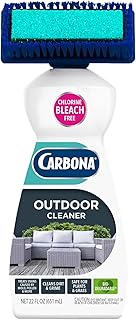
For quick spot work, Carbona Oxy Powered Outdoor Cleaner with Built-In Brush works well on localized marks because applicator limits over-wetting. For broad cleaning across rugs, deck edges, and nearby concrete, Simple Green Oxy Solve Total Outdoor Cleaner Concentrate gives more control if you want either manual dilution or pressure washer use. If main issue is mold and mildew staining, 30 SECONDS Outdoor Cleaner hose-end sprayer is convenient for full-rug coverage, while 30 SECONDS Outdoor Mold & Mildew Stain Remover Spray is more practical for targeted trouble zones.
Use Right Wash Sequence: Test, Apply, Agitate, Rinse, Dry
Best cleaning results come from fixed order, not harder scrubbing. First, test cleaner on small hidden corner and wait for drying. Check for dye lift, backing softness, or surface fuzzing. Next, wet rug lightly with hose unless product directions call for dry application. Apply cleaner evenly but do not flood backing.
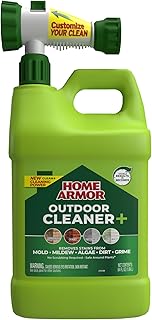
For mold and algae staining, Home Armor Outdoor Cleaner+ is useful when you want fast visual change with little manual labor. Wet & Forget Outdoor Cleaner & Stain Remover suits situations where patient treatment is better than aggressive scrubbing, especially on rugs near patios, fences, or hardscape that also need attention. For routine grime and oxidation-style dullness, peroxide-based formulas like Simple Green Oxy Solve can clean effectively without bleach smell.
Agitate with soft- to medium-bristle deck brush in short passes. Focus on traffic lanes and stain edges, not random whole-surface scrubbing. Let chemistry work for product’s stated dwell time, keeping surface from drying too fast in hot sun unless label says otherwise. Rinse thoroughly until runoff loses foam and soil tint. In testing, incomplete rinsing leaves rug stiffer, attracts new dirt faster, and can irritate bare feet.
Then dry rug flat or draped so both face and backing get airflow. Flip once during drying if underside still cool or damp. Never slide furniture back onto rug until fully dry.
Avoid Common Mistakes That Shorten Rug Life
Biggest damage usually comes from pressure, heat, or trapped moisture. Pressure washers can work on some tough synthetic rugs, but only on low pressure with wide fan tip and extra distance. Too close, and fibers fray or backing delaminates. Steam cleaning rarely helps outdoors; it adds moisture load and can set some stains deeper into backing.
Avoid chlorine bleach unless manufacturer explicitly allows it. It may brighten mildew stains short-term but can weaken stitching, fade pattern, and harm surrounding plants or finishes. Also skip dish soap overload. Heavy suds are hard to rinse from dense weave and leave sticky residue.
If rug smells musty after cleaning, problem is usually drying failure, not cleaner failure. Rewash only if needed, then elevate rug over slats, sawhorses, or clean railing so underside can breathe.
When To Clean, and How Often, for Best Results
From maintenance testing, easiest clean happens early, before visible staining becomes established growth. Sweep or vacuum high-use outdoor rugs weekly in peak season. Hose-rinse monthly if rug sits under trees, near pool, or beside garden beds. Do deeper cleaning at start and end of outdoor season, plus any time mildew dots appear.
Climate changes schedule. Humid regions need faster response to black or green spotting. Dry, dusty climates need more dry-soil removal and fewer full washdowns. If rug stores for winter, clean and dry completely first, then roll rather than fold to reduce backing stress.
Tips
- Clean on mild, breezy day. Fast drying lowers mildew risk and prevents soil from settling back into damp fibers.
- Rinse surrounding patio first if dusty. Cleaner works better when runoff does not mix with loose grit.
- Use white towels to blot test spots. Any transferred dye means scrub less and shorten dwell time.
- Place rug on slight slope for washing so dirty water moves off surface instead of pooling in weave.
Frequently Asked Questions
Can I clean an outdoor rug without scrubbing?
Sometimes. Light dirt and mild organic staining may respond well to products designed for low-effort cleaning, such as Wet & Forget Outdoor Cleaner & Stain Remover or Home Armor Outdoor Cleaner+, depending on surface condition and label directions. Heavier soil still benefits from at least light brushing because grit binds to fibers mechanically, not only chemically.
What is safest for a colorful polypropylene outdoor rug?
Start with a colorfastness test, then use a mild outdoor cleaner or peroxide-based formula rather than harsh bleach. Simple Green Oxy Solve Total Outdoor Cleaner Concentrate is solid for broad cleaning where you want controlled dilution. For isolated stains, Carbona Oxy Powered Outdoor Cleaner keeps treatment focused.
How do I remove mold and mildew from an outdoor rug?
First dry-remove debris and move rug into open airflow. Then treat affected area or full surface with an outdoor mildew cleaner. 30 SECONDS Outdoor Cleaner works well for larger coverage with hose-end convenience, while 30 SECONDS Outdoor Mold & Mildew Stain Remover Spray fits smaller stained sections. Rinse if directions require it, then dry rug fully on both sides.
Can I leave the rug in place while cleaning?
Only if drainage is good and surface underneath will not trap moisture. Cleaning in place is fine on open decking or sloped concrete in fair weather. If rug sits on wood that stays damp, or on delicate stone that may react to runoff, move it first for better rinse control and faster drying.
Conclusion
Best way to clean outdoor rug is simple: remove dry grit first, match cleaner to stain and fiber, avoid over-wetting, rinse well, and dry fast. For small marks, spot tools like Carbona keep job tidy. For whole-rug cleaning, 30 SECONDS, Home Armor, Wet & Forget, and Simple Green each fit different stain loads and effort levels. Use right sequence, and outdoor rug stays brighter, cleaner, and in service longer.