Key takeaways
- Routine maintenance: Choose a teak cleaner, soft brush, garden hose, gloves, and protective eyewear.
- Gray, tired-looking wood: A cleaner-and-brightener system is more suitable than oil alone. The Furniture Clinic Teak Care Kit combines those stages with a protective oil.
- Small furniture or occasional use: A 16- or 17-ounce bottle, such as Bayes High Performance Teak Cleaner & Restorer or Furniture Clinic Teak Cleaner, limits leftover product.
- Furniture exposed to frequent moisture: The EcoDecors Teak Cleaner & Teak Sealer Kit may suit buyers seeking both cleaning and sealing steps, provided the finish matches their preferred appearance.
What's inside
Teak patio furniture is built for outdoor life, but it still needs thoughtful cleaning. Sun, pollen, airborne grit, food spills, and mildew can leave the surface dull or uneven, while aggressive scrubbing can remove soft fibers and create a rough, weathered feel. In our home-appliance and household-care testing approach, the best method is the one that removes contamination without forcing water into joints or stripping more wood than necessary.
This guide explains how to clean teak patio furniture safely, when to use a brightener or oil, and which features matter when choosing a cleaner. It also covers the gear we would reach for first, from ready-made teak systems to gentler maintenance options, so you can restore a clean, even appearance without turning routine care into a refinishing project.
As an Amazon Associate we earn from qualifying purchases.



Start with a careful inspection
Before applying any product, remove cushions and accessories, then brush loose dirt away with a soft-bristle brush. Look for cracked timber, lifting grain, loose fasteners, black mildew spots, and areas where a previous sealer or oil is flaking. A cleaner cannot correct structural damage, and saturated wood around a failed finish may need extra drying time.
Check the product label for compatibility with teak and previously treated wood. The Furniture Clinic Teak Care Kit is useful when you want a coordinated cleaner, brightener, and oil in one system. For a single cleaning job, a dedicated product such as Furniture Clinic Teak Cleaner or STAR BRITE Premium Outdoor Teak Cleaner may be more practical. Always test on an inconspicuous underside first.
Use the least aggressive cleaning method
Move the furniture onto a surface where runoff will not stain masonry, decking, or plants. Wet the teak lightly with clean water, but do not soak cushions, woven seats, or nearby unsealed materials. Apply the cleaner according to its instructions, working in manageable sections. A soft nylon brush is generally safer than a stiff wire brush, which can score the grain and leave dark lines.
Brush with the grain using moderate pressure. Let the product do the work rather than scrubbing continuously. Pay particular attention to table edges, slats, screw heads, and the underside of seat rails, where grime accumulates. Rinse thoroughly with a gentle stream of water. A pressure washer is usually a poor choice for routine teak care: even a relatively low setting can erode softer fibers, drive water into joints, or produce a visibly fuzzy surface.
Brighten weathered or uneven teak
Natural teak commonly turns silver-gray outdoors. That color is a normal result of ultraviolet exposure and does not automatically mean the wood is damaged. If you prefer the original honey-brown appearance, use a teak brightener after cleaning, following the stated dilution and contact time. Brighteners can also help even out blotchy color, but they should not be treated as a substitute for removing grease, mildew, or embedded dirt.
Products marketed as cleaners and restorers, including Bayes High Performance Teak Cleaner & Restorer, can be convenient for furniture that has been neglected. Keep expectations realistic: a cleaner may improve color and remove surface contamination, while deeply weathered fibers, stains, and old finish may require light sanding or professional restoration. Never combine cleaners, brighteners, bleach, or oils unless the manufacturer specifically says they are compatible.
Decide whether teak oil is appropriate
Teak oil is optional, not a requirement for outdoor teak. Leaving well-cleaned furniture untreated allows it to weather naturally to silver-gray. Oil can deepen the color and give a warmer appearance, but it may attract dust, require repeat applications, and darken unevenly if the wood is not uniformly clean and dry.
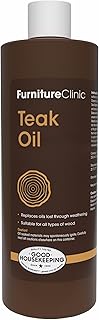
If you choose oil, wait until the furniture is completely dry—often at least 24 to 48 hours, depending on weather and wood thickness. Apply a thin, even coat with a lint-free cloth or suitable brush, then wipe away excess according to the label. Furniture Clinic Teak Oil is one option for a natural matte finish. Do not leave oil-soaked cloths crumpled: spread them flat outdoors to dry safely or dispose of them as directed, since drying oils can generate heat.
Choose gear by the condition of the furniture
- Routine maintenance: Choose a teak cleaner, soft brush, garden hose, gloves, and protective eyewear.
- Gray, tired-looking wood: A cleaner-and-brightener system is more suitable than oil alone. The Furniture Clinic Teak Care Kit combines those stages with a protective oil.
- Small furniture or occasional use: A 16- or 17-ounce bottle, such as Bayes High Performance Teak Cleaner & Restorer or Furniture Clinic Teak Cleaner, limits leftover product.
- Furniture exposed to frequent moisture: The EcoDecors Teak Cleaner & Teak Sealer Kit may suit buyers seeking both cleaning and sealing steps, provided the finish matches their preferred appearance.
Tips
- Clean on a cool, overcast day when possible; direct sun can dry cleaner onto the wood before you rinse.
- Lift furniture rather than dragging it, especially after wet cleaning when joints and feet may be more vulnerable.
- Use a clean brush for teak only. Residue from metal, rust, or harsh household cleaners can discolor the grain.
- Rinse until runoff is clear, then let every surface—including undersides and end grain—dry fully before covering.
Frequently Asked Questions
How often should teak patio furniture be cleaned?
For most homes, a thorough clean once or twice a year is sufficient, with spot cleaning as needed. Furniture beneath trees, near a pool, or exposed to heavy pollen may need more frequent rinsing and brushing.
Can I use a household detergent on teak?
A small amount of mild, pH-balanced soap may be suitable for fresh spills, but strong degreasers, chlorine bleach, and abrasive powders can discolor or roughen the wood. A purpose-made teak cleaner offers clearer instructions for outdoor timber.
Should I sand teak after cleaning?
Only if the surface remains rough after it has dried or if localized stains need correction. Use fine-grit sandpaper with the grain and remove all dust before applying any finish. Avoid sanding simply to remove normal silver-gray weathering.
Is sealing better than oiling teak?
Neither is universally better. Oil changes the color and may need regular renewal, while a sealer can provide a more controlled appearance but may be harder to remove later. Choose based on whether you want natural weathering, a warm brown tone, or a more uniform finish.
Conclusion
The best way to clean teak patio furniture is deliberately gentle: remove loose grit, use a teak-compatible cleaner, brush with the grain, rinse thoroughly, and allow the wood to dry completely. Add a brightener only when you want to refresh the color, and use oil or sealer as an appearance choice rather than an automatic requirement. With the right brush, cleaner, and patience, routine care can keep teak comfortable, attractive, and ready for many more seasons outdoors.