Key takeaways
- For straight cuts in wood-fiber pegboard: a jigsaw or circular saw with a fine wood blade offers the best balance of speed and control.
- For small notches and outlet openings: a jigsaw, jab saw, or compact oscillating cutter is easier to steer than a full-size saw.
- For occasional manual work: the 8-In-1 Multi Blades Hand Saw can be useful because its interchangeable blades cover drywall, wood, plastic, and related materials. Expect more effort and take care to keep the blade square.
- For compact powered cutting: the SEESII Mini Circular Saw is worth considering for short, controlled cuts in suitable wood-based sheet material. Its small format can improve handling, but use the correct blade and do not treat a compact saw as a substitute for a full-size saw on large, unstable panels.
- For soft materials only: the Multi-Cut 401 Cutting Tool is intended for materials such as cardboard, rope, leather, and soft wood—not hardwood or compressed wood. Standard pegboard is generally too dense for this to be the first choice.
What's inside
Cutting pegboard looks straightforward until a clean, useful panel turns into a chipped edge, a bowed sheet, or a cloud of fine dust. In a home-appliance testing lab, we judge tools by more than whether they can make a cut: control, repeatability, edge quality, noise, cleanup, and the effort required all matter. Pegboard may be made from tempered hardboard, wood fiberboard, or plastic, and each material responds differently.
This guide explains how to measure and support pegboard, choose the right cutting method, protect the holes and finish, and work safely indoors. It also clarifies which compact cutters are genuinely useful and which tools are better suited to cardboard, soft materials, flooring, or occasional DIY work rather than pegboard.
As an Amazon Associate we earn from qualifying purchases.


Best Way To Cut Pegboard (2026)
Choose the cutting method first
For most home projects, a fine-tooth jigsaw is the easiest all-around choice for cutting pegboard to length or making openings for outlets. Use a blade designed for wood or laminate, with roughly 10 to 20 teeth per inch. A finer blade reduces breakout but cuts more slowly; an aggressive blade is faster but can tear the face veneer and leave a rough edge.
A circular saw is preferable when you need a long, straight cut across a full sheet. Clamp a straightedge as a guide and use a sharp, fine-finish blade. A handsaw works for one or two small cuts, especially where electricity or dust collection is inconvenient. For thin plastic pegboard, a fine-tooth blade or utility knife scored repeatedly along a straightedge may be sufficient, depending on the manufacturer’s instructions.
Measure and support the sheet
Measure the wall twice and mark the cut on the back of the panel when possible. A pencil line is usually easier to see than marker and less likely to show through holes or on a finished surface. Account for trim, corner gaps, mounting cleats, and the thickness of any frame before cutting.
Support the entire panel on a flat work surface or sacrificial foam board. Unsupported pegboard can vibrate, causing splintering and an uneven line. Keep the cut line close to, but not directly over, a support edge. If the panel has a decorative or smoother face, place painter’s tape over the line and cut through the tape; test this on a scrap first, since some finishes can lift.
Match the tool to the job
- For straight cuts in wood-fiber pegboard: a jigsaw or circular saw with a fine wood blade offers the best balance of speed and control.
- For small notches and outlet openings: a jigsaw, jab saw, or compact oscillating cutter is easier to steer than a full-size saw.
- For occasional manual work: the 8-In-1 Multi Blades Hand Saw can be useful because its interchangeable blades cover drywall, wood, plastic, and related materials. Expect more effort and take care to keep the blade square.
- For compact powered cutting: the SEESII Mini Circular Saw is worth considering for short, controlled cuts in suitable wood-based sheet material. Its small format can improve handling, but use the correct blade and do not treat a compact saw as a substitute for a full-size saw on large, unstable panels.
- For soft materials only: the Multi-Cut 401 Cutting Tool is intended for materials such as cardboard, rope, leather, and soft wood—not hardwood or compressed wood. Standard pegboard is generally too dense for this to be the first choice.
Tools that are easy to misapply
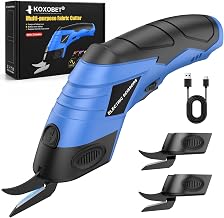
Several compact cutters look versatile because they include multiple blades or advertise broad material compatibility. That does not mean they are suitable for hardboard pegboard. The Fanttik C10 Pro BowGuide Electric Cardboard Cutter is designed around cardboard and flexible materials such as fabric, carpet, and leather. The 2026 Upgrade Cordless Cutting Tool Cardboard Cutter is similarly aimed at cardboard, fabric, felt, and leather. These may be handy for packaging or upholstery projects, but their shearing action is not the right match for dense pegboard.
Likewise, a 13In Laminate Floor Cutter with Wheel is made for laminate, vinyl plank, engineered wood, and related flooring products. It is not a general-purpose pegboard cutter. A flooring guillotine can crush or deform a fiberboard panel rather than producing the clean, supported cut you want.
Make the cut, then finish the edge
Secure the panel with clamps, keeping them clear of the cutting path. Start the saw before entering the material, let the blade reach full speed, and advance steadily without forcing it. For a jigsaw, keep the shoe flat and avoid twisting through corners. Drill a starter hole inside each corner of an internal opening, then cut between the holes to reduce stress and prevent overcutting.
After cutting, inspect both faces for loose fibers. Smooth the edge with 120- to 180-grit sandpaper, working lightly so you do not enlarge the panel or damage the holes. A thin coat of compatible paint or edge sealer can reduce moisture uptake, particularly on raw hardboard. Vacuum dust rather than blowing it around the room.
Tips
- Wear safety glasses and hearing protection; a dust mask or properly fitted respirator is sensible when cutting fiberboard indoors.
- Check for nails, screws, wiring, or hidden hardware before cutting a panel that has already been installed.
- Use a scrap piece to test blade choice, tape, cutting speed, and finish direction.
- Leave a small clearance around outlets and trim rather than forcing the panel tightly into place.
Frequently Asked Questions
Can I cut pegboard with a utility knife?
Usually not if it is standard hardboard pegboard. You may score thin plastic pegboard or very thin fiberboard, but repeated knife passes can wander and leave a ragged edge. A fine-tooth saw is safer and more predictable for dense panels.
Which side of pegboard should face up while cutting?
Cutting from the back can place visible breakout on the less important side, but the best orientation depends on the tool. With a jigsaw, test the blade’s direction on scrap and protect the finished face with tape. Always support the sheet to limit vibration.
How do I cut around an electrical outlet?
Turn off power at the breaker and verify that the circuit is dead before working near an outlet. Mark the box carefully, drill starter holes inside the corners, and cut the opening slightly oversized so the cover plate can conceal the edge. If the box or wiring must be altered, use a qualified electrician.
Is a circular saw better than a jigsaw for pegboard?
For a long, straight cut, yes: a circular saw is faster and can be very clean with a guide and fine blade. A jigsaw is more versatile for short cuts, curves, notches, and openings. The better choice is the one that provides stable support and controlled movement for your particular cut.
Conclusion
The best way to cut pegboard is to support it fully, mark from the back, use a sharp fine-tooth blade suited to the panel, and finish the edge after cutting. A jigsaw is the most flexible household option, while a guided compact circular saw is useful for straight cuts. Choose tools by their tested material range rather than by the number of attachments, and reserve cardboard or soft-material cutters for the jobs they were designed to handle.