Key takeaways
- Dust ceiling fans before vacuuming or mopping so fallen debris is removed at the end.
- Use a pillowcase over a blade for heavy buildup: slide it over the blade, wipe gently, then pull it off while keeping the dust enclosed.
- Clean the duster between rooms, especially after cleaning a kitchen fan where grease may collect.
- Do not spray cleaner directly onto blades, the motor, or the duster head; apply a small amount to a cloth only when the finish permits damp cleaning.
What's inside
In our home-appliance testing lab, ceiling fans consistently prove that “out of sight” does not mean “out of mind.” Dust collects on the upper edge of each blade, then drops into the room when the fan starts. That buildup can also affect airflow, create an uneven appearance, and spread fine particles through a space. The safest cleaning method is simple, but the right tool makes a noticeable difference.
This guide explains the best way to dust a ceiling fan in 2026, from choosing a suitable duster to controlling loose debris and cleaning delicate finishes. We’ll also cover extension length, microfiber design, washable parts, and when a ladder is genuinely necessary.
As an Amazon Associate we earn from qualifying purchases.



Choose the Right Fan Duster
For routine dusting, use a soft, washable microfiber head rather than a stiff household brush. Microfiber grabs fine particles instead of merely pushing them along the blade. A shaped or bendable head is especially useful because it can contact the top and bottom surfaces without requiring you to twist your wrist.
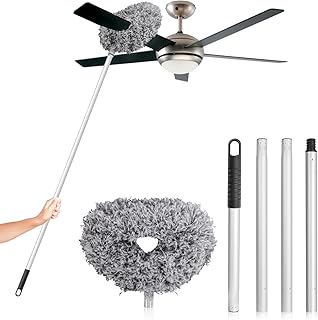
Extension length is the next consideration. In testing, poles that adjust from roughly 13 to 50 inches were useful for standard-height ceilings, while longer tools reduced the need to reposition a step stool. The DRQ Ceiling Fan Cleaner Duster, for example, has a removable microfiber head and an adjustable 13-to-48-inch pole. The similar FONUNO Ceiling Fan Cleaner Duster reaches up to 50 inches and is designed for fans as well as walls, doors, and bookshelves.
Check the locking mechanism before buying. A pole that gradually collapses while you clean is frustrating and can cause the head to strike the fan. Telescoping sections should tighten securely without excessive force.
Prepare the Room and Fan
Switch the fan off at the wall control and wait until the blades have stopped completely. For extra caution, turn off the fan’s circuit at the breaker, particularly if you will be wiping the motor housing, light kit, or electrical controls. Do not clean a moving fan, even at its lowest setting.
Place a sheet, towel, or old pillowcase beneath the fan to catch falling dust. Move furniture and decorative objects out of the drop zone. If the fan has a light fixture, allow recently used bulbs to cool before cleaning around them. A quick vacuum of the floor afterward is usually easier than trying to keep every particle airborne.
Before applying any cleaner, inspect the blades for peeling laminates, loose screws, or moisture-sensitive wood. Dusting should come first; damp cleaning is a separate step.
Dust the Blades Without Spreading Debris
Start with the blade closest to you and work from the center outward, supporting the duster lightly rather than pressing hard. Use slow, overlapping passes along the blade’s length. Excessive pressure can flex the blade, rotate the fan, or force dust into the blade holder.
A pocket-style microfiber head can be effective because it encloses dust as you pull it toward the tip. For broad household use, the Storystore Ceiling Fan Cleaner Duster combines an adjustable pole with a microfiber head and a brush intended for cobwebs, walls, doors, and windows. Keep a second dry microfiber cloth nearby for the blade edges and mounting brackets.
Rotate the blades by hand only when the fan is fully isolated from power. Otherwise, clean the accessible portion of each blade and reposition yourself. Never use the blade as a handhold or put your weight against it.
Handle High Ceilings and Other Surfaces
A long pole is convenient, but it should not be treated as a substitute for safe access in every room. From the floor, the tool should reach the blade comfortably without forcing you to lean, stretch, or stand on tiptoe. If you cannot see the cleaning head, you are more likely to miss the blade’s upper surface or hit the light fixture.
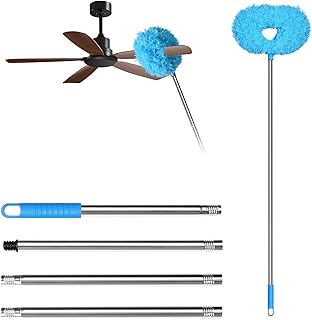
The Eyliden 68-inch Adjustable Ceiling Fan Duster is suited to higher ceilings and uses a dual-sided microfiber head that rotates through 360 degrees. Its lightweight construction can reduce arm fatigue, but long tools still require controlled movements. For a compact option, the blue Ceiling Fan Cleaner Duster with a 13-to-49.7-inch adjustable pole is useful for fans, furniture tops, and shelving.
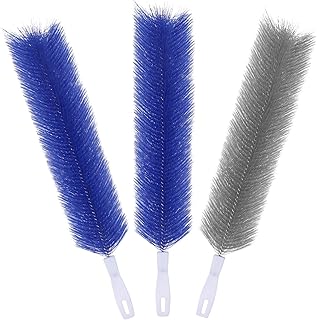
For vents, curtains, cars, and narrow gaps, a small brush may be more maneuverable than a full fan duster. The 3 Pcs Fan Cleaning Brush Bendable Cobweb Duster set provides washable microfiber heads that can be shaped around edges. Use these brushes gently on painted surfaces and avoid scrubbing dusty blades with a dry, abrasive bristle.
Wash and Maintain the Cleaning Tool
Remove loose dust outdoors or over a trash bag before washing the microfiber head. Follow the manufacturer’s care label; many heads can be rinsed in warm water and machine-washed without fabric softener. Fabric softener can coat the fibers and reduce their ability to capture dust.
Let the head dry completely before storing it. A damp duster can develop an odor and transfer moisture to wood, fabric, or painted surfaces. Inspect the pole joints, clips, and head attachment periodically. Replace a head when its fibers become matted, gritty, or permanently discolored, since trapped grit can scratch glossy blade finishes.
Tips
- Dust ceiling fans before vacuuming or mopping so fallen debris is removed at the end.
- Use a pillowcase over a blade for heavy buildup: slide it over the blade, wipe gently, then pull it off while keeping the dust enclosed.
- Clean the duster between rooms, especially after cleaning a kitchen fan where grease may collect.
- Do not spray cleaner directly onto blades, the motor, or the duster head; apply a small amount to a cloth only when the finish permits damp cleaning.
Frequently Asked Questions
How often should I dust a ceiling fan?
Most fans benefit from dusting every two to four weeks during regular use. Homes with pets, open windows, allergies, or renovation dust may need weekly cleaning. A visible gray line along the blade edge is a useful reminder.
Should I dust the top or bottom of the blades?
Prioritize the top, where dust settles, but clean both sides when practical. The underside is visible and can collect airborne residue, particularly near kitchens. Use separate passes rather than dragging heavily soiled dust across both surfaces.
Can I use a vacuum cleaner on a ceiling fan?
Yes, provided the vacuum has a soft brush attachment and the fan is switched off. Keep the nozzle from contacting the blade with force. A vacuum works well for loose dust, while microfiber is generally better at lifting the thin film left behind.
Do I need a ladder to clean a ceiling fan?
Not always. An adequately long, stable duster is often safer for ordinary dusting from the floor. Use a properly positioned step ladder only when necessary, never stand on a chair, and have another person steady the ladder if the manufacturer recommends it.
Conclusion
The best way to dust a ceiling fan is to cut power, protect the room, use a soft microfiber head, and work slowly from the blade base toward the tip. An adjustable pole makes routine cleaning safer and more consistent, while washable heads and secure joints determine whether a duster remains useful over time. Choose reach based on your ceiling height, keep pressure light, and finish by cleaning the floor and the tool itself.