Our Top Picks
 Gymreapers Leather Weightlifting Belt for BodybuildingMedium28 x 4 x 0 inches1.19 poundsCheck on Amazon
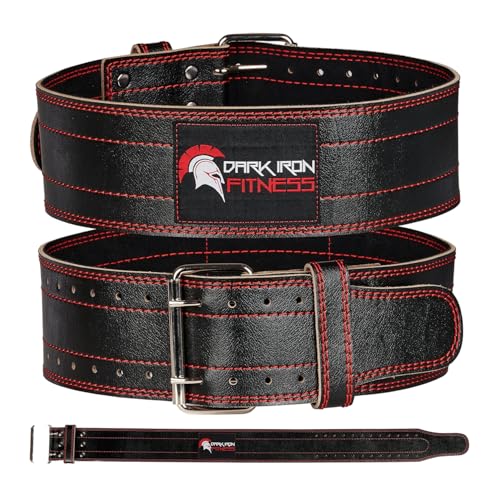 Dark Iron Fitness Genuine Leather Weightlifting BeltMedium31 x 4 x 0 inches1.39 poundsCheck on Amazon
Best Weightlifting Belts for Stronger Training
The best weightlifting belts are the ones that match your lifting style, torso shape, preferred bracing pressure, and the amount of support you actually need—not simply the thickest or most expensive belt.
A belt does not replace good technique or make a heavy lift safe by itself. Its main job is to give your abdominal muscles something firm to brace against, helping you create pressure around your trunk during demanding squats, deadlifts, presses, and Olympic lifts. The right choice should feel supportive without restricting your breathing, hip movement, or setup.
Gymreapers Leather Weightlifting Belt for Bodybuilding, Squatting, Lower Back Support & Back Pain - Real Leather, Adjustable Buckle Sizing - Men Women
Chosen because it specifies Squatting and Lower Back Support & Back Pain.
View on Amazon
Powerlifting Lever Belt - 9mm IPF Thick Leather Weight Lifting Belt - Ideal for Gym, Training, Squats and Deadlifts (Medium 32"-38")
Chosen because it specifies 9mm IPF Thick Leather Weight Lifting Belt and Ideal for Gym.
View on Amazon
RDX Weight Lifting Belt Gym Fitness, Cowhide Leather, 4” 6” Padded Lumbar Back Support, 10 Adjustable Holes, Weightlifting Powerlifting Bodybuilding Deadlift Squat Workout Strength Training, Men Women
Chosen because it specifies Cowhide Leather and 4” 6” Padded Lumbar Back Support.
View on AmazonDark Iron Fitness Genuine Leather Weightlifting Belt, 4 Inch Wide for Men Women with Double Prong Buckle Reinforced Stitching, Powerlifting Deadlift Squat Training Core Support Gym Strength Workout
Picked as a relevant option in this category.
View on AmazonQuick picks by lifting situation
| Lifter or training situation | Best belt type | Useful specification | Why it fits |
|---|---|---|---|
| Powerlifting and maximum squats or deadlifts | Rigid leather power belt | 10–13 mm thick, 4 inches wide | Provides consistent bracing and resists rolling under heavy loads |
| General strength training | Contoured leather or supportive nylon belt | 3–4 inches wide, 6–10 mm thick | Balances support, comfort, and everyday versatility |
| Olympic weightlifting or CrossFit-style training | Contoured nylon belt | 4 inches at the back, tapered to 2–3 inches at the front | Allows deeper receiving positions and rapid movement |
| Smaller torso or limited hip mobility | Narrow or tapered belt | 2.5–3 inches wide, moderate flexibility | Reduces contact with the ribs and hip crease |
| Beginners learning to brace | Flexible nylon or medium-stiff leather | 3–4 inches wide, 4–8 mm thick | Offers feedback without making positioning unnecessarily difficult |
Width: support versus freedom of movement
Most lifting belts are between 2.5 and 4 inches wide. A wider belt gives more surface area for your abdomen to brace against, but it also takes up more space between your ribs and pelvis. A 4-inch belt is a strong default for many powerlifters with a longer torso. It can feel too tall for shorter lifters or anyone whose hip bones and lower ribs are close together.
A tapered belt is wider at the back and narrower at the front. This design preserves rear support while leaving more room for the hip crease during cleans, snatches, front squats, and deep squats. Some tapered belts measure about 4 inches at the back and 2–3 inches in front.
If a belt digs into your ribs when you inhale, interferes with the bottom of a squat, or forces you to change your deadlift setup, it is probably too wide, too low on your torso, or poorly shaped for you. Width should be measured against your body, not chosen solely by the largest number.
Thickness and stiffness: how much structure do you need?
Thickness is commonly listed in millimeters. A 10–13 mm leather belt is highly rigid and can provide excellent support for heavy powerlifting, but it may require a break-in period. A 6–10 mm belt generally conforms more easily to the body and is more practical for mixed training. Nylon belts are usually thinner and lighter, although some include stiff internal panels or dense padding.
- 4–6 mm: Flexible and comfortable for general gym work, machines, moderate lifting, and beginners.
- 6–10 mm: A versatile range for recreational strength training, squats, deadlifts, and pressing.
- 10–13 mm: Maximum rigidity for serious powerlifting, provided the fit and body shape are compatible.
More thickness does not automatically mean better bracing. A very stiff belt can make it harder to find a natural breathing and bracing rhythm, particularly if you lift several times per week or perform movements that require torso flexion.
Leather, nylon, and hybrid construction compared
| Material or construction | Advantages | Trade-offs | Best suited to |
|---|---|---|---|
| Single-layer leather | Firm, durable, predictable under load | Can be stiff, heavy, and slow to break in | Powerlifting and heavy barbell training |
| Layered leather | Strong structure with a refined finish | Usually costs more; stitching and edges can wear over time | Frequent strength trainees wanting long-term support |
| Nylon or polyester | Light, adjustable, flexible, and comfortable | Less rigid; may stretch or lose hook-and-loop grip | Olympic lifting, functional fitness, and general training |
| Hybrid leather-nylon | Combines a structured support panel with easier adjustment | More seams and components can create additional wear points | Lifters who mix heavy work with dynamic exercises |
Closure systems: prong, lever, or hook-and-loop?
Single- or double-prong
Prong belts use holes spaced along the front and provide a familiar, secure closure. Double-prong designs distribute the tension across two prongs, but they are not necessarily stronger than a well-made single-prong belt. They can also take longer to fasten and remove, especially between sets.
Lever
Lever belts offer fast, repeatable tightening. They are useful when you want the same setting on every set and do not want to pull a thick leather belt tight by hand. The downside is adjustment: changing the circumference often requires moving the lever hardware with a screwdriver. A lever belt is a good choice for a consistent waist measurement, but less convenient if your waist changes substantially during a session or across a weight-loss phase.
Hook-and-loop
Hook-and-loop nylon belts are the easiest to adjust and usually the most comfortable for mixed workouts. They are practical for beginners, travel, and sessions that move between squats, rows, carries, and machines. The closure may become less secure if the hook material fills with lint or the loop fabric becomes worn. Repeatedly yanking the belt open can also damage the stitching.
How to measure and choose the right size
Measure around the area where you will actually wear the belt, usually across the navel or slightly above the hip bones. Do not use your trouser size. Keep the tape snug but do not pull it tight enough to compress your waist. Take a second measurement after a normal exhale and compare it with the manufacturer’s sizing chart.
- Measure your waist in the intended belt position.
- Check that your measurement sits near the middle of the belt’s adjustment range.
- Leave enough room to tighten the belt for heavy sets and loosen it between exercises.
- Confirm the belt’s actual width and thickness, not only its listed size.
- Check the return policy before buying, because body shape and belt curvature are difficult to judge from measurements alone.
A properly fitted belt should permit a deep breath and allow you to brace against it. It should feel snug rather than painfully tight. If you cannot expand your abdomen in all directions, loosen it or reposition it. Many lifters wear the belt slightly above the hip bones for squats and at a different height for deadlifts.
Which style is best for your training?
Best for powerlifting
Choose a 10–13 mm, 4-inch leather belt with a prong or lever closure. A rigid belt is particularly useful for low-repetition squats and deadlifts, where consistent trunk stiffness matters more than rapid movement. Brands such as Inzer, SBD, Eleiko, and Rogue make established strength-training belts, but compare each model’s dimensions and sizing rather than relying on the brand name.
Best for Olympic lifting and dynamic workouts
Choose a tapered nylon belt or a moderately flexible leather belt. The reduced front width makes it easier to receive a clean, catch a snatch, squat deeply, and move between exercises. A hook-and-loop closure is convenient when the belt must be loosened quickly.
Best for general gym training
A 3–4-inch belt in the 6–10 mm range is usually the most adaptable option. Medium-stiff leather gives stronger support for barbell work, while nylon is lighter and more comfortable for high-volume sessions. If you perform both heavy deadlifts and bodybuilding-style exercises, avoid an ultra-rigid belt that you will not want to wear for most of the workout.
Comfort, durability, and care details that matter
Inspect the inside edge for smooth finishing or padding. Rough leather edges can irritate the waist, while thick foam can absorb sweat and eventually compress. Rivets, stitching around the closure, and hook-and-loop material are common wear points. Leather should be kept dry and wiped clean rather than soaked; nylon can usually be cleaned more easily, but it still needs to dry fully before storage.
Expect a rigid leather belt to feel uncomfortable during its initial break-in period. Do not sharply fold it, overheat it, or force it into a shape that damages the leather. Store it flat or loosely coiled. For most lifters, a supportive belt is worth buying only when it complements their bracing practice, fits without restricting movement, and matches the lifts they perform most often.