Key takeaways
- Pulse, do not run: short pulses give you control and prevent turning chopped vegetables into mush.
- Do not overfill: keep liquids below the bowl’s fill line, since a too-full processor leaks and purees unevenly.
- Cut to uniform size first: rough-chopping ingredients to similar sizes helps the blade process them evenly.
- Buy for your real habits: if you chop small amounts most days, a mini plus an occasional large bowl beats one oversized machine.
A good food processor collapses the most tedious prep work, mincing onions, shredding cheese, pureeing sauces, into seconds, but the market runs from tiny mini-choppers to 12-cup machines with a wall of attachments, and the right choice depends entirely on what you actually make. Buy too small and you will process in frustrating batches; buy too big and a hulking bowl sits unused for a weeknight handful of garlic.
This guide breaks down the decisions that matter, bowl size, power, blades, and features, using real machines like the Ninja PrecisionPro 9-Cup and compact Proctor Silex choppers to anchor the trade-offs. By the end you will know exactly which size and capability set fits your kitchen and your cooking.
Our top picks




As an Amazon Associate we earn from qualifying purchases at no extra cost to you. Ratings are shown as listed on Amazon.
⚡ Save on Your Next PC — Amazon Prime
Prime members get fast free shipping on the systems above, plus early access to Prime Day & Black Friday PC deals. New members get a 30-day free trial.
Watch: Buying Guide: Selecting a Food Processor for Chopping and Pureeing — Video Review
Size the Bowl to How You Cook
Bowl capacity is the first decision. A mini processor around 1.5 to 3 cups, like the Proctor Silex Durable chopper, is perfect for garlic, herbs, nuts, and small sauces, and it stores easily. A mid-size 7-cup like the La Reveuse handles most family recipes, while a large 9 to 12-cup machine such as the Ninja PrecisionPro or FIMEI 12-Cup tackles big batches, doughs, and shredding a block of cheese in one go. Match the bowl to your most common job: if you mostly chop small amounts, a giant bowl just means more to wash.
Weigh Motor Power
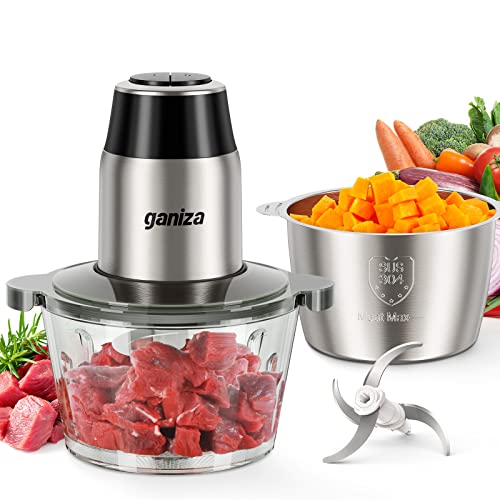
Power determines what the machine can handle without straining. Compact choppers run a few hundred watts, fine for soft vegetables and herbs. For denser work, dough, hard cheese, nut butters, look for 450 watts and up: the Ganiza runs 450 watts, and the Ninja PrecisionPro delivers 1000 peak watts with a dough setting. As a rule, more power means smoother purees and the ability to push through tougher ingredients without the motor bogging down.
Check the Blades and Discs
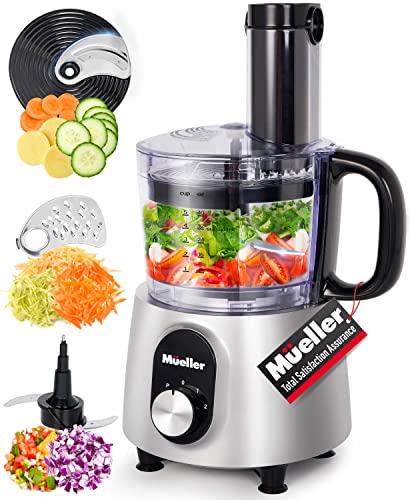
The right cutting tools decide versatility. A stainless S-blade is standard for chopping and pureeing, but reversible slicing and shredding discs turn a processor into a prep powerhouse for salads, gratins, and cheese. Some machines, like the Mueller Ultra Prep, bundle dicing, slicing, and shredding tools, while a mini-chopper may include just the S-blade. Decide whether you need slicing and shredding or only chopping and pureeing, and buy accordingly rather than paying for discs you will never touch.
Consider Convenience and Safety
Details make daily use pleasant. Look for dishwasher-safe bowls and blades, a wide feed tube so you are not pre-cutting everything, and a secure lid-lock safety system that only runs when assembled correctly. A model with two bowl sizes, like the Ganiza with its two bowls, gives you a small and large option in one purchase. Nonslip feet keep the machine planted during heavy pureeing.
Tips
- Pulse, do not run: short pulses give you control and prevent turning chopped vegetables into mush.
- Do not overfill: keep liquids below the bowl’s fill line, since a too-full processor leaks and purees unevenly.
- Cut to uniform size first: rough-chopping ingredients to similar sizes helps the blade process them evenly.
- Buy for your real habits: if you chop small amounts most days, a mini plus an occasional large bowl beats one oversized machine.
Frequently Asked Questions
What size food processor do I need?
A 1.5-3 cup mini suits herbs and small jobs, a 7-cup handles most family cooking, and a 9-12 cup machine is for big batches, dough, and shredding. Match it to your most frequent task.
How much power should a food processor have?
A few hundred watts is fine for soft vegetables and herbs. For dough, hard cheese, and smooth purees, look for 450 watts or more, and 1000 peak watts for heavy use.
Do I need slicing and shredding discs?
Only if you make salads, gratins, or shred cheese often. If you mostly chop and puree, an S-blade alone is enough, so do not pay extra for discs you will not use.
Can a food processor puree soups and sauces?
Yes, the S-blade purees cooked vegetables, sauces, and dips well. For very smooth, silky results with hot liquids, a blender or immersion blender can edge it out.
Conclusion
Start with bowl size matched to your typical batch, then choose power based on whether you tackle dough and hard ingredients, and finally decide if you need slicing and shredding discs or just an S-blade. A compact Proctor Silex covers everyday chopping, while the Ninja PrecisionPro 9-Cup handles serious prep and dough. Buy for the cooking you actually do, and the machine will earn its counter space every week.