Key takeaways
- No open flame and a surface that cools within seconds to minutes after the pan is removed, which is critical where fire codes are strict.
- Built-in auto shutoff and pan detection: if no compatible pan is detected for 30 to 60 seconds, the unit powers down automatically.
- Precise low-heat control for simmering and precise high-heat for searing, without the uneven hot spots of basic hot plates.
- Compact footprint, usually 11 to 14 inches wide and under 8 pounds, so it stores in a closet or under a bed.
Living in a dorm in 2026 means cooking in tight quarters with strict safety rules, limited outlets, and almost no ventilation. A portable induction cooktop solves most of those problems: it heats only the pan, stays cool to the touch, and can boil water or simmer soup on a desk or cart without an open flame. For students who want to eat healthier and save money without a full kitchen, it is the most practical electric option.
This guide explains how to choose the right model for dorm life, what features actually matter, and how to use it safely and efficiently. We evaluated key factors like wattage, temperature control, safety locks, size, and cleanup to help you find a burner that fits your space, your schedule, and your campus housing policies.
Our top picks




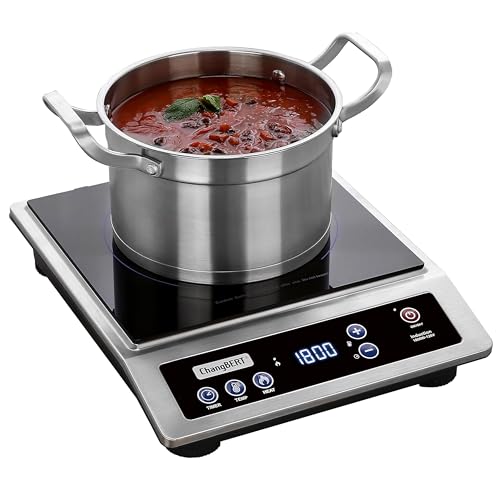
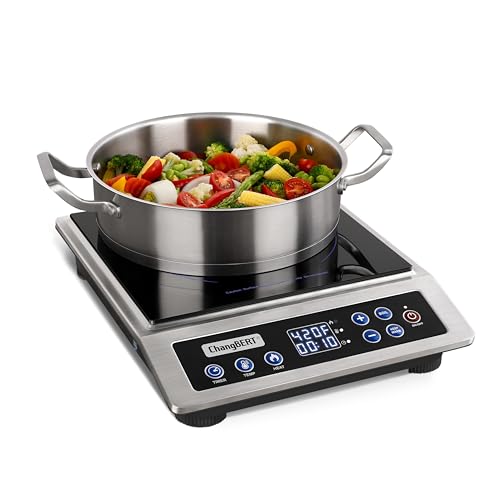
As an Amazon Associate we earn from qualifying purchases at no extra cost to you. Ratings are shown as listed on Amazon.
⚡ Save on Your Next PC — Amazon Prime
Prime members get fast free shipping on the systems above, plus early access to Prime Day & Black Friday PC deals. New members get a 30-day free trial.
Watch: The Ultimate Guide to Portable Induction Cooktops for Dorms — Video Review
Why Induction Is Ideal for Dorm Life
Induction uses electromagnetic energy to heat the cookware itself, not the glass surface. That makes it faster and safer than traditional hot plates or microwaves for most dorm tasks, from oatmeal and pasta to stir-fry. A typical 1800W unit can bring 1.5 quarts of water to a boil in about 3 to 4 minutes, while using roughly 85 to 90 percent of its energy for cooking compared to about 65 to 75 percent for radiant electric burners.
- No open flame and a surface that cools within seconds to minutes after the pan is removed, which is critical where fire codes are strict.
- Built-in auto shutoff and pan detection: if no compatible pan is detected for 30 to 60 seconds, the unit powers down automatically.
- Precise low-heat control for simmering and precise high-heat for searing, without the uneven hot spots of basic hot plates.
- Compact footprint, usually 11 to 14 inches wide and under 8 pounds, so it stores in a closet or under a bed.
What to Look For: Power, Size, and Safety Features
Most dorm rooms have standard 120V outlets on a 15-amp breaker, which limits you to a maximum of 1800W and often works best at 1200W to 1500W to avoid tripping the breaker. Check your housing handbook first, as many dorms cap appliances at 1800W. Size and controls are the next biggest factors.
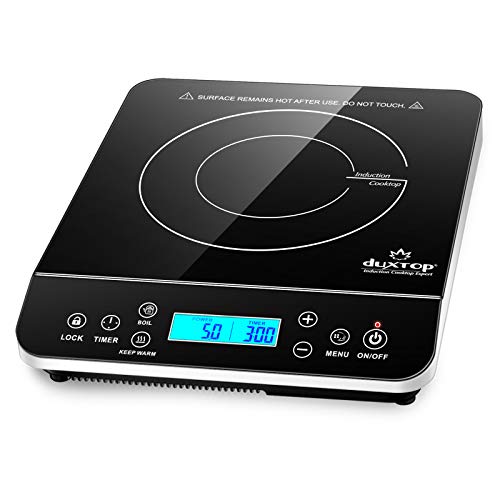
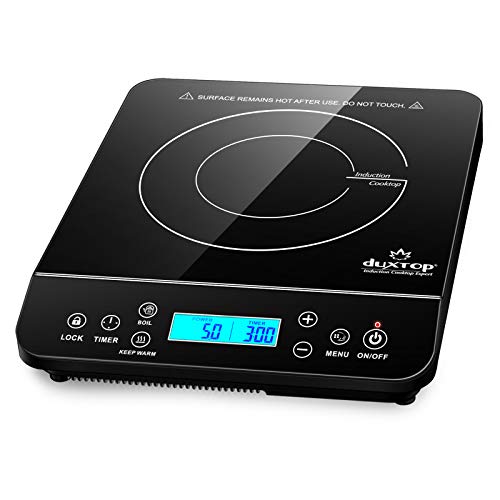
- Wattage and power sharing: Models like the Duxtop 9600LS and Duxtop 9610LS both run at 1800W with 20 power levels, giving you fine control from 200W for gentle warming to full power for boiling. The WAATFEET 1700W is a good alternative if your dorm has older wiring, drawing slightly less peak current.
- Dimensions and cord length: Look for a unit under 14 x 11 inches with a cord of at least 3.5 feet so you can place it safely away from the wall.
- Safety essentials: Child safety lock, auto shutoff after 60 to 180 minutes of inactivity, overheat protection, and residual heat indicators. The OMEO induction cooktop includes all four plus an LED display that shows error codes clearly.
- Noise and ventilation: All induction burners have a cooling fan that runs for 1 to 3 minutes after cooking. Check that the fan vents are not blocked when placed on a desk mat.
Temperature and Power Levels: How Much Control Do You Need?
Power levels control wattage, while temperature modes hold a specific surface temperature, usually between 120°F and 460°F. More levels give you more repeatable results, especially for delicate tasks like melting chocolate or keeping sauces from breaking.
- 10 levels is functional for basics: The OMEO induction cooktop and WAATFEET 1700W offer 10 temperature levels, which covers boiling, frying, and simmering for most student meals.
- 20 levels is noticeably more precise: The AAOBOSI induction cooktop provides 20 temperature and 20 power levels along with a timer up to 4 hours, making it easier to hold 140°F for warming or 300°F for a steady pan-fry without cycling too hot or too cold.
- Timer functions matter in a dorm: A 3-hour timer like on the WAATFEET or a 10-hour timer on some Duxtop models lets you simmer without hovering, and auto shutoff prevents accidental overnight operation.
- Sensor-touch vs. push-button: The Duxtop 9610LS uses sensor-touch controls with an easy-to-read display that locks with one button, while the Duxtop 9600LS uses a similar layout in a silver finish that resists fingerprints.
Cookware, Setup, and Cleanup in a Small Space
Induction only works with magnetic cookware. If a magnet sticks firmly to the bottom of the pan, it will work. You do not need a full set; one 8 to 10 inch skillet and one 2 to 3 quart pot with a lid handles 90 percent of dorm cooking.
- Best materials: Cast iron, enameled cast iron, and most stainless steel with a magnetic base. Aluminum and copper will not work unless they have a bonded magnetic bottom.
- Pan size matters: The heating coil is typically 6 to 8 inches in diameter. Use pans with a bottom diameter of 5 to 10 inches for even heating and reliable detection.
- Setup tips: Place the cooktop on a stable, heat-resistant, flat surface with 3 to 6 inches of clearance on all sides. Avoid extension cords and power strips; plug directly into a wall outlet and do not share the circuit with a fridge or microwave.
- Cleanup: Because the glass does not get as hot as a radiant burner, spills do not bake on. The generic 1800W induction burner and most others have a smooth glass top that wipes clean with a damp cloth once the residual heat light turns off.
Tips
- Confirm your dorm policy in writing before buying. Many schools allow induction but prohibit open-coil hot plates, and some require UL or ETL certification and auto shutoff.
- Test your cookware with a fridge magnet and measure the bottom. A pan that is too small (under 4.5 inches) or non-magnetic will trigger an E0 or no-pan error.
- Preheat the pan, not the empty cooktop. Add oil after the pan reaches temperature, then add food. This prevents warping and gives better nonstick performance.
- Store it safely: Let the fan finish its 1 to 3 minute cool-down cycle, then unplug, wrap the cord loosely without crimping, and store vertically or flat where it will not be knocked off a shelf.
Frequently Asked Questions
Are portable induction cooktops allowed in dorms in 2026?
Policies vary by campus, but most dorms that allow microwaves and fridges now permit portable induction cooktops because they have no open flame, include auto shutoff, and shut down when no pan is present. Always check your housing agreement for wattage limits, certification requirements, and whether cooking is restricted to certain areas.
Do I need special pans?
You need induction-compatible pans, which means a magnetic base. Cast iron and magnetic stainless steel work well. If your existing aluminum nonstick pan does not attract a magnet, it will not heat. Many students buy one induction-ready skillet and one pot to start, which keeps cost and storage low.
How much electricity does a dorm induction burner use?
At full 1800W, one hour of continuous cooking uses 1.8 kWh, which costs about $0.20 to $0.35 depending on local rates. Real-world use is lower because you rarely cook at full power continuously. Boiling water for 5 minutes at 1500W uses about 0.125 kWh, or roughly 2 to 4 cents.
Is it safer than a hot plate or electric skillet?
Yes, for small-space living. The glass surface stays much cooler than a hot plate, typically cooling below 100°F within a few minutes of removing the pan, and the burner will not sustain heat without a pan. Features like child safety locks, timers, and overheat protection on models like the OMEO and WAATFEET add an extra layer of protection in shared rooms.
Conclusion
For dorm cooking, an 1800W portable induction cooktop offers the best mix of speed, safety, and control, provided you pair it with one or two magnetic pans and respect your room’s electrical limits. If you want maximum precision for everyday meals, choose a 20-level model like the Duxtop 9600LS, Duxtop 9610LS, or AAOBOSI. If you prioritize simple controls and safety features on a smaller circuit, the OMEO or WAATFEET 1700W are strong fits. With the right setup and a quick magnet test for your cookware, you can cook cleanly and confidently in even the smallest dorm.