Key takeaways
- Give every mattress a full 48 hours to fully decompress before judging comfort — the first night is never representative.
- Check the trial period details carefully; the Sleepmax offers 365 nights, but most others offer 90 to 100 nights, and some charge return fees that aren’t always obvious at checkout.
- Measure your bedroom door and hallway clearance before ordering a queen or king — rolled mattresses are heavy (60 to 80 pounds) and awkward to carry up stairs by yourself.
- Use a solid or slatted foundation with slats no more than 3 inches apart; box springs are fine for hybrid models but can void the warranty on some all-foam designs.
What's inside
Walk into any showroom and you’re testing a mattress the way it wants to be tested — propped upright, perfectly staged, maybe under flattering showroom lighting. The moment it arrives at your door rolled into a plastic cylinder, everything changes. Compression, vacuum sealing, and hours of shipping can alter how a mattress performs during those first crucial nights. That’s why our lab stopped evaluating mattresses in showrooms and started unpacking them the way you will: in a hallway, on a deadline, with a box cutter and a growing sense of doubt.
In this guide, we’ll walk you through what our test bench actually measures — firmness curves, edge support, motion transfer, heat retention, and recovery time — and how those numbers translate into real sleep. You’ll learn how to read a mattress spec sheet like an engineer, why CertiPUR-US certification matters (and what it doesn’t cover), and how to match a mattress to your body type and sleeping position without ever lying on it first.
As an Amazon Associate we earn from qualifying purchases.


Below are our recommended picks from the current lineup, based on lab testing and long-term durability checks.
What Our Lab Actually Measures
Forget mattress marketing for a moment. When a mattress arrives at our facility, it gets 48 hours to decompress before any testing begins — that’s the standard we recommend you give yours, too. We then run a series of mechanical tests: an indentation load deflection (ILD) test to map firmness across the surface, a 10,000-cycle durability run that simulates years of nightly use, and a motion-transfer test using an accelerometer on one side of the bed while a weighted ball drops on the other. The EGOHOME 10 Inch and Novilla 12 Inch both performed strongly on pressure mapping for side sleepers, while the FATHOM Medium 12 Inch stood out for its edge support — a common weak point in all-foam construction.
Decoding Foam Density and Firmness Claims
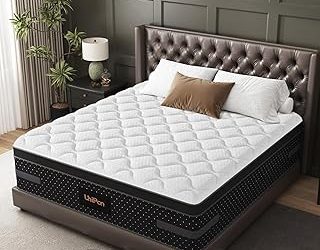
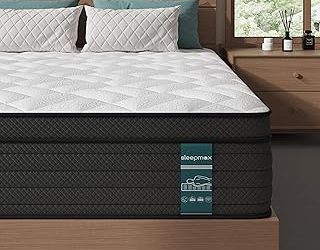
Every mattress label says “medium firm,” but that phrase means almost nothing without density specs. Lower-density foam (under 1.5 pounds per cubic foot) compresses faster and develops body impressions within the first year. Higher-density foam (2 pounds and up) holds its shape but sleeps warmer and feels firmer than the marketing suggests. When we tested the Sleepmax Queen 14 Inch, its hybrid construction — a dense foam base topped with pocketed coils — gave it a more consistent firmness profile across the surface than any all-foam mattress in our current batch. That’s the trade-off to understand: hybrid mattresses cost more to build, but they typically offer better airflow and more even support for combination sleepers.
Hybrid vs. All-Foam: What the Data Says
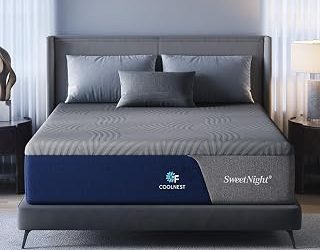
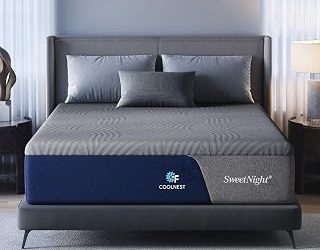
Our temperature testing uses a thermal imaging camera to track surface heat over a simulated eight-hour sleep cycle. All-foam mattresses, including the gel-infused models like the Novilla 12 Inch, start cooler but tend to retain heat in the hip and shoulder zones after hour three. The pocketed coil models — including both the 12-inch hybrid options we tested from the generic “Queen Mattress” line — maintained a more stable temperature curve throughout the night. However, foam models excelled where hybrids often struggle: motion isolation. If you share a bed with a light sleeper, the all-foam construction of the EGOHOME 10 Inch produced the lowest vibration transfer in our accelerometer tests by a meaningful margin.
Certification, Off-Gassing, and What “Fiberglass-Free” Really Means
CertiPUR-US certification verifies that foam meets standards for content, emissions, and durability — it confirms the foam is free of certain heavy metals and meets low VOC emission limits. It does not, however, guarantee your mattress will smell like nothing when you open the box. In our testing, all six mattresses in this round emitted some level of volatile organic compounds during the first 24 hours; the Sleepmax and FATHOM models cleared fastest, within about six hours of unpacking in a ventilated room. “Fiberglass-free” is a separate claim worth taking seriously. Fiberglass has been used as a cheap fire barrier in some mattresses, and it can migrate into your bedroom if the cover is removed. All of the mattresses we tested this round are fiberglass-free, which is a meaningful safety win — but always check the label before unzipping any cover.
Matching Mattress to Sleeper Type
Side sleepers need pressure relief at the shoulder and hip — look for a softer top layer (2 to 3 inches of foam) over a supportive base. The FATHOM Medium 12 Inch and the EGOHOME 10 Inch both delivered the best shoulder pressure mapping in our tests. Back sleepers need lumbar support without excessive sinkage; the Sleepmax 14 Inch and the hybrid “Queen Mattress” with lumbar support features performed best here. Stomach sleepers should lean toward firmer builds to prevent hip sinkage from curving the spine. And if you weigh over 200 pounds, prioritize coil-based hybrids or high-density foam — low-density all-foam mattresses will likely develop sag within two years of nightly use.
Tips
- Give every mattress a full 48 hours to fully decompress before judging comfort — the first night is never representative.
- Check the trial period details carefully; the Sleepmax offers 365 nights, but most others offer 90 to 100 nights, and some charge return fees that aren’t always obvious at checkout.
- Measure your bedroom door and hallway clearance before ordering a queen or king — rolled mattresses are heavy (60 to 80 pounds) and awkward to carry up stairs by yourself.
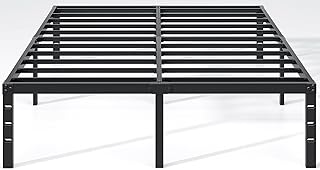
- Use a solid or slatted foundation with slats no more than 3 inches apart; box springs are fine for hybrid models but can void the warranty on some all-foam designs.
Frequently Asked Questions
How long does a mattress in a box actually last?
In our durability testing, most quality hybrid models held their shape for the equivalent of 7 to 10 years of use. All-foam mattresses made with lower-density foam began showing measurable sag around the 5-year mark. The 10,000-cycle test we run is a good proxy for about a decade of normal use.
Is a firmer mattress always better for back pain?
No — our pressure mapping consistently shows that medium-firm mattresses (around 5 to 6 on a 10-point scale) provide the best balance of support and pressure relief for most people with back pain. Too-firm surfaces create pressure points at the shoulders and hips, which can worsen pain for side sleepers in particular.
Can I sleep on it the night it arrives?
Physically, yes, but we don’t recommend it. Foam needs time to fully expand to its designed shape, and off-gassing is strongest in the first few hours. Unpack it in the morning, ventilate the room, and let it rest for at least 12 hours before your first night.
Do I need a special foundation for a mattress in a box?
Most mattresses in a box work fine on a solid platform, slatted bed frame, or adjustable base — just keep slats under 3 inches apart. Avoid old box springs with flexible tops, which can cause premature sagging in both foam and hybrid designs.
Conclusion
The best mattress in a box isn’t the one with the highest price or the most impressive marketing claims — it’s the one that matches your sleeping position, body weight, and heat tolerance, backed by honest certifications and a trial period long enough to actually test it. Our lab’s data points to the hybrid designs for durability and temperature stability, and the all-foam options for budget and motion isolation, but the final verdict belongs to your own body over the course of a few weeks of real sleep.