Key takeaways
- White, 40-degree nozzle: The safest starting point for furniture, vehicles, painted surfaces, and general rinsing.
- Green, 25-degree nozzle: A useful middle ground for outdoor furniture frames, fences, siding, and moderately dirty concrete.
- Yellow, 15-degree nozzle: Suitable for tougher hard-surface buildup, but use caution around paint, wood, and joints.
- Red, 0-degree nozzle: A highly concentrated stream that can gouge materials and should not be used casually on furniture or siding.
- Black, low-pressure nozzle: Intended for applying detergent rather than blasting dirt away.
What's inside
Choosing the best PSI for a pressure washer is less about finding the biggest number and more about matching cleaning force to the surface. Too little pressure can make a job frustrating; too much can strip paint, scar wood, damage outdoor furniture, or drive water into seams and electrical components. In our home-appliance testing lab, we evaluate pressure washers by how controllable they feel in real household tasks—not simply by their maximum specification.
This guide explains the practical PSI ranges for cars, patio furniture, decking, fences, driveways, and other home surfaces. We’ll also cover why gallons per minute (GPM), nozzle choice, spray distance, and detergent performance matter just as much as pressure. The products below are useful starting points, but always follow the manufacturer’s instructions for the surface and machine.
As an Amazon Associate we earn from qualifying purchases.


Recommended PSI by Cleaning Task
For delicate household items, start conservatively. Cars, painted furniture, wicker, and softwood generally need about 1,000 to 1,500 PSI at the nozzle. Composite decking, vinyl siding, fences, and patio furniture made from durable plastic can often tolerate roughly 1,500 to 2,000 PSI when the spray is kept moving. Concrete patios, masonry, and driveways may require 2,000 to 3,000 PSI, especially when removing embedded grime. Gas models rated above 3,000 PSI are best reserved for stubborn hard surfaces and experienced users.
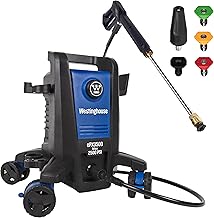
These figures are working ranges, not automatic settings. A pressure washer’s advertised maximum is usually measured under specific conditions, and the force delivered to a surface changes with nozzle type and distance. For furniture, a controllable electric model such as the Westinghouse ePX3500 is often more appropriate than a high-powered gas unit. Its 2,500-PSI maximum leaves useful headroom while remaining easier to manage for ordinary home cleaning.
PSI Versus GPM: What Actually Does the Cleaning?
PSI describes pressure; GPM describes water flow. PSI helps break up dirt, while GPM carries loosened soil away and speeds up rinsing. A machine with a moderate PSI and healthy flow can clean more effectively than one with an impressive PSI rating but restricted water delivery. For general home use, a washer producing around 1.5 to 2.5 GPM is typically a practical balance between cleaning speed, water use, and ease of handling.
Gas washers commonly offer more flow and sustained power. The Westinghouse WPX3400, rated at 3,400 PSI and 2.6 GPM, is aimed at driveways, patios, fences, and larger exterior jobs. The DeWalt DXPW3300-S provides a similar homeowner-oriented option at 3,300 PSI and 2.4 GPM. Either can be excessive for delicate furniture unless you use a wider nozzle, maintain distance, and reduce the intensity of the pass.
How to Choose the Right Nozzle
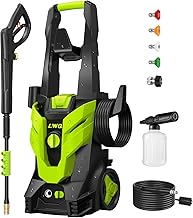
- White, 40-degree nozzle: The safest starting point for furniture, vehicles, painted surfaces, and general rinsing.
- Green, 25-degree nozzle: A useful middle ground for outdoor furniture frames, fences, siding, and moderately dirty concrete.
- Yellow, 15-degree nozzle: Suitable for tougher hard-surface buildup, but use caution around paint, wood, and joints.
- Red, 0-degree nozzle: A highly concentrated stream that can gouge materials and should not be used casually on furniture or siding.
- Black, low-pressure nozzle: Intended for applying detergent rather than blasting dirt away.
Nozzle color conventions are common but not universal, so confirm the markings supplied with your machine. Accessories can also change the spray pattern. The Short Wand Foam Cannon kit is useful for applying a blanket of detergent to cars and outdoor furniture before rinsing. A foam cannon does not automatically make a washer safer, however; the rinse stage still requires an appropriate nozzle and pressure.
Pressure Washer Features That Matter at Home
Look for smooth trigger control, a dependable hose connection, easy nozzle storage, and a detergent system that does not require awkward refilling. Anti-tipping designs are valuable on uneven patios, while an onboard soap tank simplifies smaller jobs. Electric washers are usually quieter, lighter, and easier to start, making them convenient for furniture and nearby surfaces. Gas washers make more sense when you need longer sessions, greater flow, or portability away from an outlet.
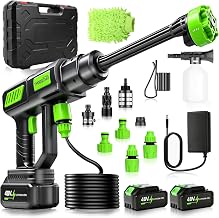
Replacement guns and wands can improve comfort, but compatibility is not guaranteed. The Sooprinse High Pressure Washer Gun includes quick-connect nozzles and an M22-14 connector; check your hose fitting before ordering. The GDHXW High Power Washer Gun is marketed with broad compatibility and a higher pressure rating, but the washer, hose, and adapters must all be rated for the operating pressure. Never treat an accessory’s maximum rating as permission to exceed your machine’s limits.
How to Pressure-Wash Furniture Safely
Remove cushions, decorations, and loose dirt first. Test an inconspicuous area using the widest nozzle, the lowest practical pressure, and a distance of at least 18 to 24 inches. Keep the wand moving in smooth passes rather than holding the stream on one spot. Spray with the grain on wood and avoid forcing water into cushions, joints, electrical controls, bearings, or the underside of upholstered pieces.
Apply a suitable detergent at low pressure, allow it to work according to its label, and rinse from top to bottom. Let furniture dry completely before storing cushions or covering the piece. For delicate finishes, hand washing may be safer than pressure washing, regardless of the machine’s specifications.
Tips
- Begin with the widest nozzle and lowest effective pressure, then increase intensity only when necessary.
- Keep the spray wand moving and maintain a consistent distance from the surface.
- Inspect paint, seals, grout, and wood before cleaning; pressure can worsen existing damage.
- Use clean water and an outdoor-rated extension setup, and never spray electrical outlets or powered equipment.
Frequently Asked Questions
Is 2,000 PSI enough for home use?
Yes. Around 2,000 PSI is suitable for many household tasks, including patio furniture, vinyl siding, fences, vehicles, and light concrete cleaning when paired with the correct nozzle and adequate water flow.
What PSI is safe for outdoor furniture?
Start between 1,000 and 1,500 PSI with a wide spray pattern. Plastic and metal furniture may tolerate more, while painted wood, wicker, and older finishes require extra distance and gentler pressure.
Is higher PSI always better?
No. Higher PSI can shorten cleaning time on durable masonry but increases the chance of stripping finishes, splintering wood, breaking seals, or damaging soft materials. Control and the correct nozzle are more important than maximum output.
Should I buy an electric or gas pressure washer?
Choose electric for quieter, simpler cleaning around the home and for furniture or vehicles. Choose gas when you regularly clean large driveways, extensive patios, or areas where electrical access is limited.
Conclusion
The best PSI for a pressure washer depends on the material, not the marketing headline. For most home furniture and mixed household tasks, a controllable electric washer in the roughly 1,500-to-2,500-PSI class is a sensible choice. Reserve 3,000 PSI and above for durable surfaces, use a wide nozzle first, and let water flow, detergent, and careful technique do much of the work.