Key takeaways
- Pull and rinse the filter weekly under hot running water.
- Wipe the door seal and lower edge where gunk collects.
- Clear the spray-arm nozzles with a toothpick if water pressure feels weak.
A dishwasher is one of the hardest-working appliances in any kitchen, running four or five loads a week and quietly enduring grease, food debris, and mineral-heavy water year after year. Yet the average unit only lasts around nine to ten years, and many fail far sooner simply because of neglect. The good news is that a handful of small habits can push that lifespan well past the decade mark and keep wash results looking factory-fresh.
This guide walks through the real culprits behind premature dishwasher failure and the practical, low-cost fixes that address each one. From taming hard water scale to rescuing a rusting rack, these are the maintenance steps that actually move the needle in 2026, along with the products worth keeping on hand.
Our top picks




As an Amazon Associate we earn from qualifying purchases at no extra cost to you. Ratings are shown as listed on Amazon.
⚡ Save on Your Next PC — Amazon Prime
Prime members get fast free shipping on the systems above, plus early access to Prime Day & Black Friday PC deals. New members get a 30-day free trial.
Watch: How to Extend the Life of Your Dishwasher — Video Review
Understand What Actually Kills a Dishwasher
Most dishwashers do not die from a single dramatic breakdown. They wear out from cumulative damage: limescale clogging the spray arms and heating element, rust creeping across chipped rack coatings, and a slow decline in wash performance that pushes owners toward replacement. Hard water is the single biggest accelerant. In areas above 7 grains per gallon, scale can coat the internal components within two to three years, forcing the pump and heater to work harder and shortening their service life dramatically.
A whole-system approach beats spot fixes. Treating the incoming water, keeping the interior clean, and repairing physical damage the moment it appears together do more than any single tactic.
Tackle Hard Water at the Source
If your glasses come out cloudy and the interior develops a chalky white film, mineral scale is already building up where you cannot see it. An inline softening solution like the NuvoH2O Dishwasher System addresses the problem before water ever enters the tub, using a salt-free citric-acid approach that both prevents new scale and gradually dissolves existing deposits. Because it is compact and connects to the supply line, it protects the heating element and pump seals that are the most expensive parts to replace.
Softeners are not maintenance-free forever. Plan to swap the NuvoH2O Dishwasher Replacement Cartridge on the manufacturer’s schedule, typically every few months depending on water volume and hardness, so protection stays continuous rather than trailing off.
Keep the Interior Clean and Odor-Free
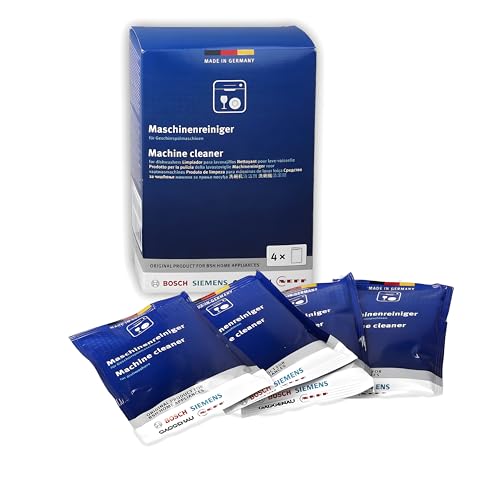
Grease and detergent residue accumulate in the filter, spray arms, and door gasket, breeding odors and dragging down cleaning power. A monthly deep clean with a dedicated product such as the Bosch 312477 Dishwasher Cleaner cuts through limescale and grease buildup that ordinary rinse cycles leave behind. Run it on an empty hot cycle and you will often notice quieter operation and better drying afterward.
- Pull and rinse the filter weekly under hot running water.
- Wipe the door seal and lower edge where gunk collects.
- Clear the spray-arm nozzles with a toothpick if water pressure feels weak.
Repair Rack Damage Before It Spreads
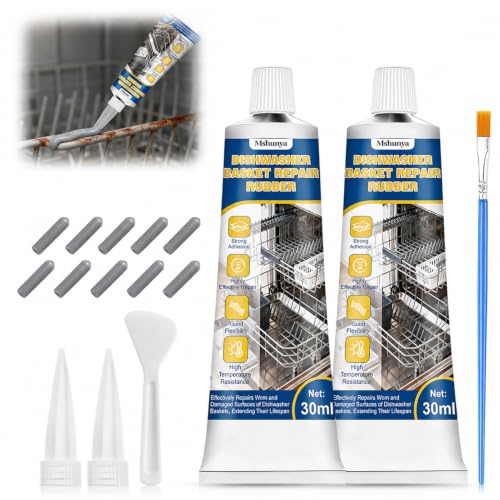
Once the vinyl coating on a rack tine chips, the bare metal underneath rusts fast, and rust flakes can stain dishes and even jam the drain. A rack repair coating such as the INNOVAYOU Grey Dishwasher Rack Repair Coating seals exposed tips in minutes, while a full Dishwasher Rack Repair Kit handles wider damage across multiple tines. For racks that no longer roll smoothly, a replacement set like the 4Pcs 10016657 Extended Lower Rack Wheel Kit restores easy glide and prevents the strained tugging that cracks the rack frame.
Load and Run It the Right Way
Everyday operating habits matter as much as any repair. Scrape rather than pre-rinse so the detergent enzymes have something to grab onto, avoid overloading the arms so water can circulate, and use a rinse aid to reduce spotting and ease the strain on the drying element.
Tips
- Run hot: Start the kitchen tap until it runs hot before a cycle so the wash begins at full temperature.
- Monthly reset: Schedule a cleaner cycle on the first of each month so it never slips your mind.
- Inspect racks quarterly: Catch chipped coating early with a rack pen before rust takes hold.
- Leave the door ajar: Cracking it open after a cycle lets moisture escape and stops gasket mildew.
Frequently Asked Questions
How often should I clean my dishwasher?
A dedicated cleaner cycle once a month is ideal for most households, with a quick filter rinse every week or two. Homes with hard water or heavy use may benefit from a cleaner every three weeks.
Is a water softener really worth it for a dishwasher?
In hard water regions, yes. Scale is the leading cause of heating-element and pump failure, and a salt-free system like NuvoH2O costs a fraction of a repair call while extending the appliance’s usable years.
Can I fix a rusty dishwasher rack instead of replacing it?
Absolutely. A rack repair coating or kit seals exposed metal and stops the rust, and replacement wheels restore smooth movement, often for under twenty dollars versus a hundred-plus for a new rack.
Does pre-rinsing dishes help or hurt?
Modern detergents rely on food residue to work properly, so heavy pre-rinsing can actually reduce cleaning performance. Scrape off large scraps and let the machine do the rest.
Conclusion
Extending a dishwasher’s life in 2026 comes down to consistency rather than complexity: soften the water, clean the interior monthly, repair rack damage the moment it appears, and load thoughtfully. Invest a few dollars and a few minutes each month, and the appliance that would have quit at year eight can easily serve you past year twelve, saving hundreds in premature replacement costs.