Key takeaways
- Tape out the footprint: mark the microwave’s dimensions plus ventilation clearance on your counter before buying.
- Check your plate fits: measure your most-used plate against the model’s turntable diameter, not just its cubic feet.
- Adjust cook times for wattage: a 700-watt oven needs longer than the 1000-watt times printed on packaging.
- Mind the door swing: make sure the door has room to open fully without hitting a wall or backsplash.
Buying a countertop microwave sounds simple until you get it home and discover it either swallows half your counter or is too small to fit a dinner plate. Microwaves are sized two ways at once, by interior capacity in cubic feet and by power in watts, and the two do not always move together. Getting both right for your space and your cooking is what separates a microwave you love from one you resent.
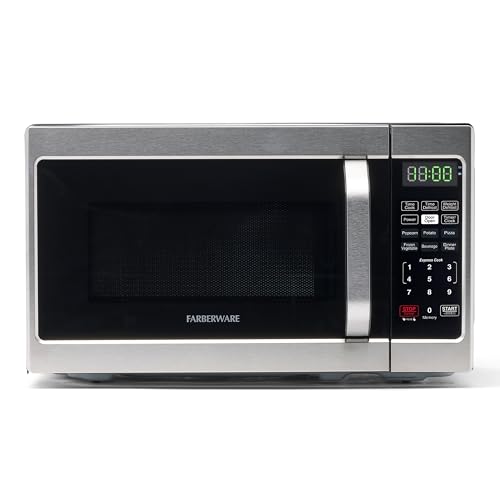
This guide explains how to measure your counter, match capacity to what you actually heat, and read wattage so your food cooks in the time the package says. Real models like the Toshiba 1.2 Cu.Ft and the Farberware 0.7 Cu. Ft. show where the size and power lines fall so you can pick with confidence.
Our top picks





As an Amazon Associate we earn from qualifying purchases at no extra cost to you. Ratings are shown as listed on Amazon.
⚡ Save on Your Next PC — Amazon Prime
Prime members get fast free shipping on the systems above, plus early access to Prime Day & Black Friday PC deals. New members get a 30-day free trial.
Watch: How to Choose the Right Size Microwave for Your Countertop — Video Review
Measure Your Counter First
Before anything else, measure the space: width, depth, and the height to the underside of any cabinet above. Then remember microwaves need breathing room, typically about 3 inches of clearance on the sides and back and a few inches on top for the vents, or the unit overheats and shuts off. A compact 0.7-cubic-foot model like the Chefman or COMFEE’ 0.7 fits tight galley counters, while a 1.2-cubic-foot Toshiba needs a genuinely open stretch. Sketch the footprint on your counter with tape before you buy so there are no surprises.
Match Interior Capacity to Your Dishes
Capacity decides what fits inside. A 0.7-cubic-foot cavity handles mugs, bowls, and single plates and suits one or two people, but it may not take a large dinner plate or a casserole dish. A 1.1 to 1.2-cubic-foot model like the Chefman 1.1 Cu. Ft. or Toshiba 1.2 comfortably rotates a full dinner plate and fits leftovers containers. The honest test: measure your largest regularly used plate or dish and confirm it fits on the turntable with room to spin.
Understand Wattage and Cooking Speed
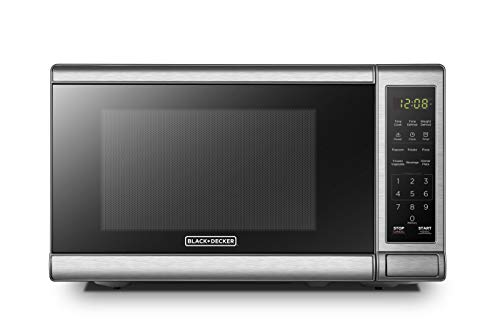
Wattage is the power rating, and it directly controls how fast and evenly food heats. Compact microwaves often run 700 watts (Farberware, BLACK+DECKER, COMFEE’ 0.7 models), which is fine but slower, so package cook times written for 1000-watt ovens will need adjusting. Mid-size units like the 1000-watt Chefman and Toshiba heat faster and more evenly, which matters if you reheat dense leftovers. If speed and even results are a priority, favor 1000 watts; if the microwave is mostly for popcorn and coffee, 700 watts saves counter space.
Weigh Features Against Footprint
Bigger and more powerful means larger, so decide which features justify the space. Preset buttons, an ECO mode like COMFEE’ offers for standby power savings, and one-touch options add convenience without much size. A larger cavity gives flexibility but eats counter you may not have. Be honest about how you cook: many households find a 0.7 or 1.1-cubic-foot model does everything they need, and the extra capacity of a big unit sits empty.
Tips
- Tape out the footprint: mark the microwave’s dimensions plus ventilation clearance on your counter before buying.
- Check your plate fits: measure your most-used plate against the model’s turntable diameter, not just its cubic feet.
- Adjust cook times for wattage: a 700-watt oven needs longer than the 1000-watt times printed on packaging.
- Mind the door swing: make sure the door has room to open fully without hitting a wall or backsplash.
Frequently Asked Questions
What size microwave fits a standard dinner plate?
Look for at least 1.1 cubic feet with a turntable around 12 inches. Many 0.7-cubic-foot models are too small to spin a full dinner plate freely.
Is 700 watts enough for a microwave?
For popcorn, drinks, and reheating single portions, yes. For faster, more even heating of dense leftovers or larger meals, 1000 watts is noticeably better.
How much clearance does a countertop microwave need?
Typically about 3 inches on the sides and back and a few inches on top for ventilation. Blocking the vents causes overheating and can shorten the unit’s life.
Does higher wattage cook food better?
Higher wattage cooks faster and usually more evenly, reducing cold spots. It will not improve flavor, but it makes reheating quicker and more consistent.
Conclusion
Choose your microwave in three steps: measure the counter and add ventilation clearance, match interior capacity to your largest plate, and pick wattage based on how fast you want food heated. A 0.7-cubic-foot 700-watt unit saves space for light users, while a 1.1 to 1.2-cubic-foot 1000-watt model like the Toshiba suits families who reheat full meals. Nail those three and the microwave fits both your counter and your cooking.