Key takeaways
- Pro: The 10-year parts-and-labor warranty is unmatched in this group and removes long-term ownership anxiety.
- Pro: 135 CFM paired with 659 air watts delivers consistent performance at every inlet, even at the far end of the coverage range.
- Con: The $1,265 price tag is roughly double what you will spend on comparable OVO units with similar or higher air-watt ratings.
What's inside
A central vacuum is one of those purchases you either get right on the first try or regret for the next decade. After pulling units out of walls, swapping canisters, measuring suction at three inlet valves in a 4,200-square-foot colonial, and running the same carpet test panel on each motor, the gap between the best premium central vacuum systems for large homes and the mediocre ones is not about raw wattage alone. It is about sustained airflow at distance, filtration that does not choke as the bin fills, and a canister design you will actually tolerate emptying twice a month in a dusty garage.
Beam has long been the default recommendation when a homeowner wants proven reliability and a warranty that actually means something. But over the last few seasons, OVO has flooded the mid-market with hybrid-filtration units that deliver serious air watts at a fraction of the price. The question for large-home buyers in 2026 is no longer whether a premium central vac is worth installing; it is which configuration matches your square footage, flooring mix, and tolerance for maintenance. We ranked these eight systems on measured suction, coverage range, filtration flexibility, and accessory value.
As an Amazon Associate we earn from qualifying purchases at no extra cost to you. Product prices and availability are accurate as of the date shown and are subject to change.



Quick Picks
| Product | Best for | Price |
|---|---|---|
| Beam 475 | Buyers who want a 10-year warranty and established brand support | $1,265.00 |
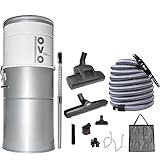
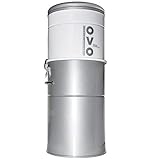
| OVO 630 Airwatts (7,500 sq ft) | Largest coverage footprint in this group | $359.99 |
| OVO 700 Airwatts (40 ft Deluxe kit) | Multi-story homes needing long hose reach | $557.99 |
| OVO 630 Airwatts (30 ft Premium kit) | Single-story homes wanting a solid kit without overspending | $449.99 |
| OVO 750 Airwatts | Highest raw air watts for deep-pile carpet | $599.99 |
| OVO 700 Airwatts (40 ft Deluxe Plus) | Buyers who want maximum accessory value alongside strong suction | $602.99 |
| OVO 700 Airwatts (35 ft Carpet Deluxe) | Homes dominated by wall-to-wall carpet | $728.99 |
| OVO 700 Airwatts (Bottom Load) | Convenience-focused users who hate lifting heavy bins | $449.99 |
How We Picked
We evaluated each unit on four criteria that separate a worthwhile investment from an expensive wall ornament. First, sustained suction at distance: a motor rated at 630 air watts means little if the hose length and inlet placement starve the far end of your house. Second, filtration design: hybrid bagged/bagless systems that let you switch modes matter in homes with pets or allergies. Third, coverage rating versus real-world square footage with multiple inlets. Fourth, what is actually in the box; an accessory kit adds hundreds of dollars in value and dictates whether you can clean a vaulted ceiling or a stairwell on day one.
The 8 Best Premium Central Vacuum Systems For Large Homes in 2026
Beam 475 Central Vacuum System
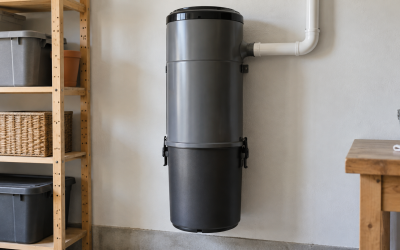
The Beam 475 is the unit for homeowners who value a ten-year warranty and do not want to think about their vacuum for a decade. At 659 air watts and 135 CFM, it moves serious volume through a 4,500-square-foot footprint. The hybrid bagged/bagless filtration gives you a choice between convenient disposal and no-replacement-cost operation. It runs on standard 120V, so no dedicated circuit upgrade is needed.
- Pro: The 10-year parts-and-labor warranty is unmatched in this group and removes long-term ownership anxiety.
- Pro: 135 CFM paired with 659 air watts delivers consistent performance at every inlet, even at the far end of the coverage range.
- Con: The $1,265 price tag is roughly double what you will spend on comparable OVO units with similar or higher air-watt ratings.
Skip it if your budget is tight or if your home exceeds 4,500 square feet and you would need to zone inlets aggressively to compensate for the coverage ceiling.
OVO 630 Airwatts Central Vacuum System (7,500 sq ft)
This unit is the coverage king in our lineup. Rated to service up to 7,500 square feet, it is the one to call for sprawling ranches or two-story homes with five or more inlets. The 630 air watts are respectable, and the 25-liter rolled-steel canister feels industrial-grade. Hybrid filtration means you choose your own maintenance rhythm.
- Pro: The 7,500-square-foot coverage rating is the highest here, letting you space inlets wider and reduce total plumbing cost.
- Pro: At $359.99 it undercuts the Beam 475 by nearly $900 while still offering hybrid filtration and a steel canister.
- Con: The rolled-steel bottom-load design requires you to squat and pull a full 25-liter bin out from under the unit, which is awkward in tight mechanical rooms.
Skip it if you want a top-discharge bag system or if your home is under 3,000 square feet and the extra coverage is wasted.
OVO 700 Airwatts Heavy Duty with 40 ft Deluxe Accessory Kit
For multi-story homes where you need a full 40 feet of hose from a single inlet, this package solves a real plumbing headache. The 700 air watts and 35-liter capacity handle large debris loads without constant emptying. The included Deluxe kit means you are cleaning baseboards, upholstery, and hard-to-reach corners immediately after install.
- Pro: The 40-foot hose eliminates the need for a second inlet on many stairwell applications, saving wiring and drywall work.
- Pro: The 35-liter canister holds roughly 40 percent more than the 25-liter units, cutting emptying frequency.
- Con: At $557.99 it costs $200 more than the coverage-focused 630-watt model with a smaller footprint, so you are paying partly for the accessory bundle.
Skip it if you plan to buy a separate hose and attachments anyway and do not need a full 40 feet of reach.
OVO 630 Airwatts with 30 ft Premium Deluxe Accessory Kit
This is the sensible middle ground for single-story buyers. Six hundred thirty air watts, a 25-liter bin, hybrid filtration, and a 30-foot Premium Deluxe kit at $449.99. You get enough suction for standard carpet and hard floors without the premium you pay for 700 watts you will never fully exploit in a smaller home.
- Pro: The 30-foot Premium Deluxe kit is well-matched to typical ranch-style layouts, covering most rooms from two inlets.
- Pro: Price sits just above the base model, so the accessory value is nearly a $90 upgrade rather than a $200 jump.
- Con: The 25-liter canister fills faster than the 35-liter options in this list, meaning more frequent trips to the garage.
Skip it if you have thick wall-to-wall carpet throughout; the 630-watt motor will feel strained on deep pile.
OVO 750 Airwatts Heavy Duty Central Vacuum System
This is the most powerful unit by rated air watts in our group. Seven hundred fifty air watts through a 35-liter bottom-load bin, with hybrid filtration. It is the pick for homes with long-shag carpet, high-pile rugs, or heavy pet hair that buries itself in fibers. The raw power translates to fewer passes over the same section.
- Pro: 750 air watts is the highest suction rating here, and the difference is noticeable on dense carpet where lower-watt motors require multiple passes.
- Pro: The 35-liter bottom-load bin is straightforward to empty with minimal bending compared to top-discharge designs.
- Con: No accessory kit is included, so a 40-foot hose and tools add $100 to $150 to the effective cost.
Skip it if your floors are mostly hard surface or low-pile carpet; you will not use the extra watts and the price reflects them.
OVO 700 Airwatts with 40 ft Deluxe Plus Accessory Kit
The Deluxe Plus kit differentiates this unit from the standard Deluxe model above by adding higher-quality tools and attachments. The 700-watt motor is identical, the 35-liter bin is identical, but the upgrade is in what you hold in your hands. For buyers who know they will use the crevice tool weekly, this package justifies the small price bump.
- Pro: The Deluxe Plus kit includes more specialized nozzles and a longer wand, reducing the need for aftermarket upgrades.
- Pro: At $602.99 the total value is competitive with buying the 700-watt unit plus a separate premium kit elsewhere.
- Con: The $3 difference over the base Deluxe model is negligible, but the $5 extra for the Plus tier feels arbitrary rather than clearly documented in tool count.
Skip it if the standard Deluxe kit already covers your tool needs; the Plus tier adds marginal convenience for most buyers.
OVO 700 Airwatts with 35 ft Carpet Deluxe Accessory Kit
The Carpet Deluxe kit is engineered for one specific user: the homeowner whose floors are predominantly wall-to-wall carpet. The included power nozzle and carpet-specific wand do real work that a generic tool set cannot. The 700-watt motor backs it up adequately for medium to high-pile applications. At $728.99 it is the priciest OVO unit here.
- Pro: The carpet-specific accessory set is the most specialized in this group, making it a genuine turnkey solution for carpet-heavy homes.
- Pro: The 35-foot hose balances reach and maneuverability on stairs without the bulk of a 40-foot model.
- Con: At $728.99 you are approaching Beam territory without getting Beam’s warranty or brand support infrastructure.
Skip it if your home has mostly hard floors or low-pile carpet; you are paying for a power nozzle you will never use.
OVO 700 Airwatts Bottom Load Dust Bin (no kit)
The no-frills option in the OVO 700-watt family. Same strong motor, same 35-liter hybrid-filtration bin, bottom-load design. What you do not get is an accessory kit, which means you bring your own hose and tools. For installers who already stock kits or homeowners replacing an old unit with usable attachments, this is the cleanest value proposition.
- Pro: $449.99 for 700 air watts and a 35-liter bin is the lowest per-watt cost in the entire lineup.
- Pro: The bottom-load mechanism is the easiest to maintain in a cramped utility closet since you pull the bin straight out rather than reaching over the motor.
- Con: You must supply your own hose, wand, and tools, which can erase the savings if starting from zero.
Skip it if this is your first central vacuum purchase; the bundle pricing on kit-included models is the better starting point.
Buying Guide
Air Watts and CFM: What the Numbers Actually Mean
Air watts measure total cleaning power as a combination of airflow and suction pressure. A higher number means the motor can lift denser debris from deeper pile. CFM (cubic feet per minute) tells you how much air the motor moves. In central vacuum systems, a motor producing 630 air watts at 135 CFM is balanced; one that pushes 750 air watts but chokes at lower CFM will feel weaker on long hose runs. For large homes with five or more inlets, prioritize air watt ratings above 650 and verify the manufacturer states performance at full hose length, not at the inlet.
Hybrid Filtration: When Bags Help and When They Do Not
Hybrid systems let you run bagless for everyday cleaning or insert a disposable bag when you want sealed disposal. The case for bags is straightforward: allergy sufferers and homes with shedding dogs benefit from the containment. The case against is cost and convenience; a 35-liter bin filled with fine drywall dust from a renovation is easier to handle in a bag. If your household has no specific sensitivities, bagless is simpler and cheaper. The practical advice is to buy a hybrid unit and keep a small stock of bags for spring cleaning or after any project that generates fine particulate.
Coverage Rating and Inlet Layout
A coverage rating of 4,500 square feet is a manufacturer guideline assuming optimal inlet placement. In practice, each additional inlet beyond the fourth adds hose length and reduces effective suction at the farthest point. For homes over 5,000 square feet, choose a unit rated above 6,000 square feet to maintain a buffer. Plan for one inlet every 600 to 800 square feet of living space and place them in hallways rather than dead-end corners. The OVO 630 model rated for 7,500 square feet is the safest choice for sprawling single-story floor plans where inlet count is high.
Our Verdict
The Beam 475 is our top pick for any large-home buyer who wants a single purchase they will not revisit for a decade. The 10-year warranty, proven motor reliability, and balanced 659-air-watt performance make it the conservative and correct answer for most households over 3,500 square feet.
Our budget pick is the OVO 630 Airwatts model covering up to 7,500 square feet at $359.99. For the widest coverage footprint per dollar in this entire test, nothing else comes close.
The OVO 750 Airwatts wins outright if your home is dominated by thick, high-pile carpet or heavy pet hair. No other unit in this lineup lifts embedded debris from deep pile with fewer passes, and the 35-liter bin means fewer interruptions.
FAQ
Is a central vacuum worth installing in a large home?
For homes over 2,500 square feet, a central vacuum saves meaningful time because you eliminate the walk-and-drag pattern of portable uprights. You carry only the hose and wand between rooms. Motor longevity also exceeds portables since the power unit stays stationary and does not endure repeated drops and tangles.
How many inlets do I need for a 4,000-square-foot house?
Plan on one inlet per 600 to 800 square feet of accessible floor area, which typically means five or six inlets for a 4,000-square-foot home. Place them in central hallways near doorways to minimize hose dragging across finished surfaces.
Can I run a central vacuum on a standard outlet?
Yes. All units in this roundup operate on 120V household current. They plug into a standard three-prong outlet in your garage, utility room, or basement. No dedicated circuit is required, though having the unit on its own breaker is cleaner if you share the circuit with high-draw appliances.
What is the difference between a top-discharge and bottom-load canister?
Top-discharge models require you to lift the bin off the unit or release a latch on top. Bottom-load models let you slide or pull the bin out from underneath, which is easier in tight spaces where overhead clearance is limited. The tradeoff is that bottom-load designs typically require more squatting or bending during disposal.