Key takeaways
- Initial Hardware: $85.00
- 5-Year Filter Replacements: $350.00
- 5-Year Electricity Usage: $245.00
- Total 5-Year Ownership Cost: ~$680.00
What's inside
If you wake up every morning with a stuffy nose, scratchy throat, or watery eyes, managing indoor dust allergens is likely top of mind. Dust mite debris, microscopic pet dander, and airborne skin flakes trigger immune responses in millions of households. When shopping for indoor air quality solutions, homeowners inevitably face the decision of choosing a hepa filter vs ionic air purifier for dust allergies. While both technologies claim to deliver fresher air, they rely on completely different physical mechanisms. True HEPA filtration uses a motorized fan to push room air through a mechanical fiber matrix, while ionizers release electrical charges to alter airborne particles without traditional fan assistance.
Choosing between these two approaches comes down to whether you prioritize mechanical capture or silent, filterless operation. Placing an underpowered ionic device in a high-dust master bedroom can leave allergy triggers circulating on floors and bedding, whereas selecting an overly noisy HEPA unit might disrupt your sleep. Understanding the real-world performance, operational costs, and physical footprints of both technologies ensures you make the right investment for your home.
As an Amazon Associate we earn from qualifying purchases at no extra cost to you. Product prices and availability are accurate as of the date shown and are subject to change.


Quick Verdict
For primary dust allergy management, a mechanical True HEPA filter is unequivocally the better choice. True HEPA filters trap 99.97% of airborne dust particles down to 0.3 microns, securing triggers permanently inside a sealed media cartridge. By contrast, ionic purifiers disperse electrical charges that force dust to drop onto surrounding surfaces like floorboards, walls, and furniture, where foot traffic can easily kick them back into the breathing zone. While ionic units excel at silent operation and low power consumption, allergy sufferers need physical removal, making HEPA units or hybrid models the gold standard for long-term symptom relief in 2026.
Side by Side
| Feature / Metric | True HEPA Filter Purifier | Ionic Air Purifier (Ionizer) |
|---|---|---|
| Primary Mechanism | Mechanical interception via fibrous mesh cartridge | Electrostatic charge emission (negative ions) |
| Dust Particle Trap Rate | 99.97% down to 0.3 microns trapped inside device | Precipitates dust onto room surfaces or collection plates |
| Operational Noise Level | 20 to 55 dB (depends on fan speed setting) | 0 to 20 dB (virtually silent or fanless operation) |
| Energy Consumption | 25 to 50 Watts on medium/high speed | 2 to 10 Watts continuously |
| Filter Replacement Cost | $20 to $60 per year (requires periodic replacements) | $0 (washable plates or filterless design) |
| Average Unit Dimensions | 8″ x 8″ x 14″ to 12″ x 12″ x 24″ footprint | Compact wall-plug sized to 6″ x 6″ x 12″ towers |
| Upfront Hardware Cost | $25 to $200+ depending on room coverage | $15 to $100 depending on design |
| Ozone Generation Risk | Zero ozone emission (pure mechanical filtration) | May produce trace ozone (must comply with UL 867) |
| Dust Removal Action | Locked permanently inside disposable filter media | Requires regular vacuuming and dusting of room surfaces |
| Best For | Moderate to severe dust, pet dander, and asthma control | Ultra-quiet ambient freshening in small spaces |
Where Hepa Filter Wins
The primary advantage of mechanical HEPA filtration lies in physical allergen retention. A certified True HEPA filter forces air through a dense weave of microscopic fiberglass strands, capturing particles through interception, impaction, and diffusion. Dust mite feces typically measure between 10 and 40 microns, while fine dust particles linger around 2.5 microns. HEPA filters catch both with ease, preventing these irritants from recirculating into your living space.
Because HEPA systems rely on internal fan power, they actively pull room air through the unit at measured Clean Air Delivery Rates (CADR). A standard unit like the Levoit Air Purifier for Home Pets Hair Allergens in Bedroom Quiet Purifiers ($84.99) actively circulates bedroom air multiple times per hour, trapping floating particulate before it lands on mattress covers or nightstands. For larger spaces up to 1,000 square feet, high-efficiency options like the VOOPNU Air Purifiers for Home, High Efficiency Filter Up to 1076 Ft², White ($26.99) provide high volume turnover without relying on electrical charges to drop dust onto floorboards.
Another major advantage is safety regarding indoor air chemistry. Pure HEPA filtration is entirely mechanical; it generates zero ozone, volatile byproducts, or electrical charges. This makes HEPA filters the safest choice for individuals managing severe allergic asthma or reactive airways.
Where Ionic Air Purifier for Dust Allergies Wins
Ionic air purifiers excel when it comes to noise reduction, energy efficiency, and physical space requirements. Traditional fan-driven purifiers generate noticeable airflow noise on high settings, typically hovering between 40 and 55 decibels. Electrostatic ionizers, however, push electrically charged ions into the room with little to no fan movement, operating at near-silent levels (0 to 20 decibels).
From an energy perspective, ionic technology draws very little electricity. Where a mid-sized fan motor consumes 35 to 50 watts per hour, plug-in ionizers consume as little as 2 to 7 watts. Ultra-compact wall units—such as the Air Ionizers 4 Pack – Plug In Mini Air Purifiers for Home, Bedroom, Office ($35.63)—plug directly into standard wall outlets without taking up valuable floor or table space, making them convenient choices for tight hallways or small home offices.
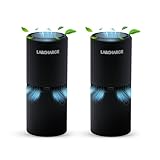
Maintenance is another highlight for ionic systems. Traditional ionizers do not require ongoing filter replacements. Rather than purchasing replacement cartridges every six months, owners wipe down integrated stainless steel collection plates or simply vacuum up the fallen dust from surrounding floors. Additionally, hybrid devices like the Lab Charge Small Ionic Air Purifier for Home & Bedroom – Silent HEPA Filter – Covers 250 Sq Ft ($98.99) seek to balance both worlds by combining an ion-generating module with a silent HEPA layer, allowing users to experience low-noise allergen control in spaces up to 250 square feet.
Cost Over 5 Years
Evaluating air purifiers based solely on upfront purchase price leads to an incomplete picture. Ongoing electricity usage and filter replacement costs alter total cost of ownership significantly over a five-year period.
A standard mid-range HEPA unit running 24 hours a day consumes approximately 35 watts. At an average electrical rate of $0.16 per kilowatt-hour, electricity costs roughly $49 per year. Combined with an average replacement filter cost of $35 every six months ($70 annually), operating a HEPA filter over five years costs:
- Initial Hardware: $85.00
- 5-Year Filter Replacements: $350.00
- 5-Year Electricity Usage: $245.00
- Total 5-Year Ownership Cost: ~$680.00
By contrast, a dedicated ionic unit consumes about 5 watts of continuous power, costing roughly $7 per year in electricity with zero filter replacement fees:
- Initial Hardware: $36.00
- 5-Year Filter Replacements: $0.00
- 5-Year Electricity Usage: $35.00
- Total 5-Year Ownership Cost: ~$71.00
While ionic purifiers offer clear long-term savings, that cost advantage must be weighed against their functional limitation: ionic units push dust onto room surfaces rather than permanently capturing it inside a sealed chamber.
Which One for Your Home
Small Apartment or Studio
In tight living arrangements under 400 square feet, floor space is premium real estate. Plug-in ionic units or small desktop HEPA filters work well here. If noise during sleep is your primary concern and dust allergies are mild, a small ionic purifier keeps air fresh without taking up floor space. However, if you have hardwood or tile floors where dust rolls easily, a compact desktop HEPA purifier is better suited to capture dust permanently.
Family Home with Kids or Pets
Homes with children and pets generate heavy amounts of heavy particulate dust, pet dander, and textile fibers. In these environments, ionic purifiers can create dark dust halos on nearby painted walls or baseboards as charged particles drop out of the air. A medium-to-large True HEPA purifier actively pulls floating pet dander and dust out of circulation before it settles into sofa fabrics or bedroom carpets.
Rental Apartment
Renters often face constraints regarding wall mounting, permanent fixtures, and space layout. Standalone fan-driven HEPA purifiers offer plug-and-play convenience that can be moved easily from room to room or transported to a new rental during moves. Furthermore, HEPA models prevent dust from clinging to rental apartment walls, eliminating extra cleanup duties during move-out inspections.
Long-Term Homeowner Setup
For long-term home layouts, strategic placement yields the best balance of comfort and performance. Installing dedicated True HEPA units in primary bedrooms and living areas ensures active allergen extraction where family members spend the most time. Lower-traffic zones, such as home offices or laundry rooms, can utilize low-wattage ionic purifiers or hybrid ionic-HEPA units to maintain quiet ambient air freshness without adding substantial recurring replacement costs.
FAQ
Do ionic air purifiers actually remove dust from the air or just drop it?
Most basic ionic air purifiers cause airborne dust particles to fall out of suspension by bonding negative ions to them. This increases the particle weight, causing dust to drop onto nearby walls, furniture, or flooring. Unless the unit includes an integrated collection plate or HEPA cartridge, the dust remains in the room and requires manual vacuuming or dusting to fully remove.
Are ionic air purifiers safe for people with asthma and dust allergies?
Certain ionic purifiers generate minor amounts of ozone as a byproduct of electrical ionization. While modern units sold in the United States must comply with strict ozone safety thresholds (under 0.05 parts per million), even trace ozone can irritate sensitive airways in individuals with severe asthma. For asthma sufferers, ozone-free True HEPA purifiers are recommended.
How often do true HEPA filters need to be replaced to maintain dust control?
In typical residential environments, True HEPA filters should be replaced every 6 to 12 months. If you live in a high-dust region, keep pets indoors, or run the unit continuously on high fan speeds, replacing the filter cartridge every 6 months ensures optimal airflow and particle retention.
Can I use a HEPA filter and an ionic air purifier together?
Yes. Many homeowners use HEPA filters in bedrooms for active overnight allergen capture, while placing quiet ionic units in small hallways or study areas. Additionally, hybrid purifiers integrate ionizers upstream of a HEPA filter, using negative charges to clump small particles together so the HEPA mesh can catch them more easily.