Key takeaways
- Single Hose Portable AC (12,000 BTU nominal, ~1,200W average draw):
- Initial Purchase Price: $320
- Seasonal Power Consumption: 1,200W x 8 hours/day x 90 days = 864 kWh/season
- Annual Electricity Cost: $138.24
- 5-Year Operating Cost: $691.20
- Total 5-Year Investment: $1,011.20
What's inside
When summer heatwaves arrive and traditional window air conditioners are ruled out by strict HOA guidelines, historic window frames, or narrow casements, portable cooling units step in to fill the gap. However, scanning product specifications quickly reveals a major engineering divide: single hose versus dual hose configurations. Understanding the mechanics behind dual hose vs single hose portable air conditioner efficiency is essential for making a smart investment that keeps your living space cool without overworking your electric meter.
The performance gap between these two designs comes down to fundamental physics and air pressure dynamics. A single hose portable air conditioner uses a single exhaust duct to push hot, moist air out of the room. However, because it relies on air drawn directly from inside the room to cool its internal condenser coils, it continuously exhausts conditioned indoor air. This process creates negative air pressure inside your home, which inevitably draws warm, unconditioned air into the room through door frames, floorboards, and window seams. Dual hose systems overcome this inefficiency by running two separate air paths: one hose pulls outside air in to cool the internal components, while the second hose vents that heated air back outside. This isolated loop preserves your indoor air pressure and prevents hot air from seeping back in.
As an Amazon Associate we earn from qualifying purchases at no extra cost to you. Product prices and availability are accurate as of the date shown and are subject to change.

![Gasbye Dual Hose Portable Air Conditioner, [2026 Upgraded] Full DC Inverter Compressor, Energy-Saving 13.6 CEER, Low Noise (45dB), Cools Room up to 500 Sq.Ft., Backlit Remote Control, 14,000BTU, White](https://m.media-amazon.com/images/I/31v+CC4UhyL._SL160_.jpg)
![Gasbye Dual Hose Portable Air Conditioner, [2026 Upgraded] Full DC Inverter Compressor, Energy-Saving 13.6 CEER, Low Noise (45dB), Cools Room up to 500 Sq.Ft., Backlit Remote Control, 14,000BTU, Black](https://m.media-amazon.com/images/I/41O9kgQPtHL._SL160_.jpg)
Quick Verdict
If your priority is maximum cooling efficiency, rapid temperature reduction, and lower long-term electric bills in medium-to-large spaces, a dual hose unit is worth the investment. By eliminating negative air pressure, dual hose models cool rooms up to 40% faster than single hose alternatives and maintain precise temperatures during severe heatwaves.
On the other hand, if you are working with a tight upfront budget, cooling a small bedroom under 250 square feet, or need a lightweight unit that moves easily between rooms, a single hose model offers practical convenience. However, for primary living areas, open-plan apartments, or hot top-floor rooms, dual hose engineering delivers superior seasonal energy savings and far better everyday comfort.
Side by Side
| Feature | Single Hose Portable AC | Dual Hose Portable AC |
|---|---|---|
| Cooling Efficiency (CEER) | Lower (Typically 6.5 to 8.5 CEER) | Higher (Typically 9.5 to 13.6 CEER) |
| Room Air Pressure | Creates negative pressure (draws outdoor heat in) | Balanced neutral pressure (keeps outdoor heat out) |
| Price Range | $250 – $380 | $420 – $550 |
| Average Power Draw | 1,100W – 1,350W (constant speed) | 750W – 1,200W (inverter-managed) |
| Dimensions & Footprint | Compact (~16″ W x 14″ D x 28″ H) | Slightly Larger (~18″ W x 17″ D x 30″ H) |
| Weight | Lighter (50 to 62 lbs) | Heavier (70 to 86 lbs) |
| Window Kit Width Needed | 5.0 to 5.9 inches (single cutout) | 10.0 to 12.0 inches (double cutout) |
| Maintenance & Drainage | Standard drain pan; frequent manual emptying | Self-evaporative or continuous drain ports |
| Resale Value | Moderate; common budget appliance | High; sought after for efficiency |
| Best For | Small rooms (<250 sq. ft.), short-term use | Larger spaces (300–500+ sq. ft.), long-term home use |
Where Dual Hose Wins
The primary advantage of dual hose units is their ability to maintain steady indoor pressure. Because the condenser intake and exhaust functions operate entirely on an outdoor air loop, the cool air generated by the evaporator coil stays inside the room. This balanced cycle allows dual hose units to achieve modern Combined Energy Efficiency Ratio (CEER) ratings that significantly outperform single hose designs.
Dual hose systems perform especially well when outdoor temperatures climb past 90°F. Under extreme outdoor heat, a single hose unit struggles because it continuously draws scorching outdoor air into the rest of the house through structural gaps. Dual hose units bypass this problem entirely, making them ideal for high-heat regions and rooms with large south-facing windows.
Modern premium models highlight how far this technology has come. For example, high-efficiency options like the Gasbye Dual Hose Portable Air Conditioner (available in sleek White for $479.99 or Black for $499.99) incorporate full DC inverter compressors to achieve a impressive 13.6 CEER rating. Pushing up to 14,000 BTU of cooling power with operational sound levels as low as 45dB, these units efficiently handle spaces up to 500 square feet without running at full wattage all day. Looking ahead in 2026, inverter-driven dual hose units represent the gold standard for portable residential cooling.
Where Single Hose Portable Air Conditioner Efficiency Wins
While single hose units take a hit on thermodynamic efficiency, they offer practical advantages in price, portability, and installation flexibility. A single hose unit generally costs $100 to $200 less upfront than a dual hose unit with equivalent BTU output, making it an appealing option for seasonal or temporary cooling needs.
Single hose units are also easier to install in tight spaces. A single 5-inch or 5.9-inch flexible exhaust hose requires minimal clearance, making it easier to position near narrow windows or crowded corners. Weighing between 50 and 62 pounds, single hose models are noticeably lighter than dual hose units, which often weigh 70 to 86 pounds due to larger dual-duct hardware and beefier compressors.
For small rooms under 250 square feet—such as a dedicated home office or guest bedroom—the negative air pressure effect is minimal. In these compact environments, a single hose unit can lower the room temperature quickly without excessive energy draw, making its lower purchase price a practical tradeoff.
Cost Over 5 Years
To evaluate the real value of dual hose vs single hose portable air conditioner efficiency, you need to look beyond the initial price tag and consider total operational costs over five summer seasons. Operating assumptions are based on running a unit for 8 hours daily over a 90-day summer season at an average electricity rate of $0.16 per kilowatt-hour (kWh).
- Single Hose Portable AC (12,000 BTU nominal, ~1,200W average draw):
- Initial Purchase Price: $320
- Seasonal Power Consumption: 1,200W x 8 hours/day x 90 days = 864 kWh/season
- Annual Electricity Cost: $138.24
- 5-Year Operating Cost: $691.20
- Total 5-Year Investment: $1,011.20
- Inverter Dual Hose Portable AC (14,000 BTU, ~800W average draw via inverter throttling):
- Initial Purchase Price: $480 (e.g., Gasbye Dual Hose Portable Air Conditioner in White at $479.99)
- Seasonal Power Consumption: 800W x 8 hours/day x 90 days = 576 kWh/season
- Annual Electricity Cost: $92.16
- 5-Year Operating Cost: $460.80
- Total 5-Year Investment: $940.80
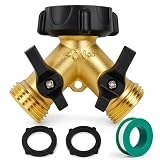
Over five years, the lower energy consumption of an inverter dual hose model offsets its higher initial cost. Furthermore, managing high-humidity climate conditions often requires continuous condensate drainage. Homeowners using continuous drain setups frequently route condensation lines outside or into utility drains using standard hardware attachments like the Biswing Garden Hose Splitter 2 Way ($9.49) or the Hourleey Brass Garden Hose Splitter 2 Way ($5.99) to manage dual drainage paths without overflow risk.
Which One for Your Home
Small Apartment
For studio apartments or single room setups under 250 square feet, a single hose unit is often sufficient. The modest square footage allows a budget single hose model to cool the space effectively, and its smaller frame takes up less valuable floor space.
Family with Kids/Pets
Busy households benefit from the quiet operation and consistent cooling of a dual hose unit. With noise levels as low as 45dB, dual hose inverter systems won’t disrupt naptime or family movie nights, while their faster cooling keeps high-traffic living areas comfortable.
Rental
If you move frequently or have smaller window frames, single hose models offer unmatched versatility. Their lighter frames (50–60 lbs) are much easier to move up and down stairs, and their single-hose window adapters fit a wider range of window configurations without custom cutting.
Long-Term Home
If you own your home or plan to stay in the same rental for several years, buy a high-efficiency dual hose unit. The energy savings, robust cooling performance, and overall durability provide better comfort and lower total ownership costs over time.
FAQ
Can I convert a single hose portable air conditioner into a dual hose unit?
While some DIY enthusiasts attempt to build intake shrouds over single hose vents using duct tape and flexible tubing, it is generally not recommended. Portable AC control boards and fan motors are calibrated for specific airflow resistance. Modifying intake paths can strain internal blower motors, void your warranty, and reduce cooling performance.
Why does a single hose air conditioner create drafts in other rooms?
Single hose units continuously push room air outdoors to cool internal coils. To replace that air, replacement air is drawn into the room through cracks under doors, electrical outlets, and around window frames. This continuous displacement creates noticeable warm drafts from adjacent hallways or non-air-conditioned spaces.
Is a dual hose portable air conditioner harder to install?
Installation is very similar, but dual hose models require slightly more window slider space. The window panel for a dual hose kit features two 5-inch diameter cutouts side-by-side, requiring a minimum window opening width or height of roughly 10 to 12 inches, compared to 5 to 6 inches for a single hose kit.
How do SACC and CEER ratings affect portable air conditioner efficiency?
Seasonally Adjusted Cooling Capacity (SACC) and Combined Energy Efficiency Ratio (CEER) account for heat infiltration and standby power draw. Dual hose units consistently achieve higher SACC and CEER ratings because their dual-pipe setup prevents warm outdoor air from seeping back into the room during operation.