Key takeaways
- Pros: Low price removes the hesitation barrier; self-return-to-charge means minimal babysitting.
- Con: Mopping uses a passive drag-pad system that smears rather than scrubs on grout.
What's inside
Tile floors are deceptively hard to keep clean. Grout lines trap grit, glossy surfaces reveal every water streak, and constant foot traffic from pets and kids means a dry sweep alone never looks like enough. A robot mop that leaves tile genuinely sparkling — not merely wet — has to manage water distribution, scrubbing pressure, and edge reach simultaneously, which is why so many budget combos disappoint on high-gloss porcelain.
This roundup compares eight products spanning dedicated mopping robots, vacuum-and-mop hybrids, steam alternatives, and the floor-cleaning solutions that make them work together. Selections are based on published specifications, current retail pricing, and aggregated owner feedback from tile-heavy households. The ranking below reflects which units consistently get their wet-floor routine right without turning grout into a patchwork of missed spots.
As an Amazon Associate we earn from qualifying purchases at no extra cost to you. Product prices and availability are accurate as of the date shown and are subject to change.


Quick Picks
| Product | Best for | Price |
|---|---|---|
| Tikom G8000 Max | First robot mop on a tight budget | $129.99 |
| EVERYBOT EDEG2 | Hands-off mopping on open tile | $249.99 |
| eufy E25 | Deep-cleaning power on large tile areas | $649.99 |
| roborock Floor Solution | Concentrated cleaning additive for robot mops | $18.99 |
| roborock Qrevo S Pro | All-in-one with high suction and newer dock | $549.99 |
| WoldoClean Solution | Low-foam concentrate for any robot mop | $17.99 |
| Shark Steam & Scrub S8001 | Chemical-free sanitizing on sealed tile | $159.99 |
| iRobot Roomba 415X | Longest stretch between maintenance tasks | $759.99 |
How We Picked
Four criteria separated useful candidates from gimmicky ones. First: water management on glossy tile — can the unit avoid streaking and pooling? Second: sufficient suction or scrubbing force to pull grit from grout lines rather than glide over them. Third: navigation and edge coverage, because a mop that misses the perimeter leaves a visible band of dirt. Fourth: long-term ownership friction, meaning dock footprint, consumable cost, and how often pads or brushes require replacement. Products that scored well on at least three of these made the list.
The 8 Best Robot Mop For Tile Floors in 2026
Tikom G8000 Max
The G8000 Max is the entry point for anyone who wants a vacuum-and-mop combo without spending heavily. At 5000Pa suction it handles dust and pet hair on hard floors competently, and the 150-minute maximum runtime covers average-sized tile kitchens and bathrooms in a single pass. App and remote control make scheduling straightforward.
- Pros: Low price removes the hesitation barrier; self-return-to-charge means minimal babysitting.
- Con: Mopping uses a passive drag-pad system that smears rather than scrubs on grout.
Skip it if your tile features wide-texture or unsealed grout that needs actual agitation.
EVERYBOT EDEG2
Unlike combo units, the EDEG2 is a dedicated mopping robot, and that focus shows. Dual spinning mops apply consistent downward pressure, which is what makes sealed tile and vinyl look genuinely clean rather than merely wet. It suits households where vacuuming is already handled by a separate machine.
- Pros: Spinning action lifts surface residue that flat pads leave behind; no suction system to clog with hair.
- Con: No advanced navigation — it bounces off obstacles, so large rooms get uneven coverage.
Skip it if your floor plan has narrow corridors or scattered furniture that traps the robot in corners.
eufy E25
The E25 is a premium combo built around 20,000 Pa suction and the HydroJet Roller Mop, a continuous-wash cylindrical roller that keeps its contact surface cleaner than a stationary pad ever could. For tile with visible foot traffic and greasy kitchen residue, the roller approach is the most convincing wet-cleaning mechanism in this group.
- Pros: HydroJet roller reduces streaking and clears dirty water in real time; highest suction listed here.
- Con: $649.99 puts it outside the budget of most first-time robot mop buyers.
Skip it if your tile areas are small and mostly open — the cleaning head is oversized for tight kitchens.
roborock Floor Cleaning Solution
This 16.2 FL OZ bottle of roborock floor cleaner is designed for any robot mop with a liquid dispensing system. The 1:200 dilution ratio means a little goes far, and the formula is safe on tile, hardwood, and sealed stone. Owners consistently report that pairing a dedicated solution with their robot eliminated the oily film that water-only mopping leaves on high-gloss tile.
- Pros: Precise dilution prevents residue buildup in pump mechanisms; brand-certified compatibility reduces warranty risk.
- Con: Proprietary branding means you pay a premium over generic concentrates.
Skip it if your robot mop lacks an automatic dispenser — manual dosing defeats the purpose.
roborock Qrevo S Pro
The Qrevo S Pro arrives with 18,500Pa suction and roborock’s latest platform, making it the strongest all-in-one candidate for households wanting a single machine to vacuum, mop, self-empty, and self-wash. For tile floors specifically, the combination of high suction and an active mop system tackles dry grit and wet spills in one run.
- Pros: Newer navigation and obstacle avoidance than prior roborock generations; multifunction dock cuts hands-on maintenance.
- Con: Launch pricing at $549.99 is steep when capable budget combos exist.
Skip it if you already own a recent roborock — upgrading solely for the suction bump yields marginal gains.
WoldoClean Robot Mop Floor Cleaning Solution
At 25 oz and $17.99, WoldoClean undercuts branded concentrates on both volume and price while delivering a low-foam formula engineered for robot mop dispensing systems. Excessive foam is the silent killer of pump mechanisms, and this concentrate addresses that directly. Tile owners frequently choose it as the default refill after the included bottle runs dry.
- Pros: Low-foam chemistry protects internal seals; larger bottle means fewer reorder cycles.
- Con: No brand-certified compatibility statement, so some manufacturers may question warranty coverage.
Skip it if your robot mop requires a proprietary solution locked by a sensor or cartridge system.
Shark Steam & Scrub S8001
The Shark Steam & Scrub is not a robot — it is a handheld steam mop — but it earns a slot because sealed tile owners who need chemical-free sanitizing get results no robot mop matches. The S8001 combines steam pressure with a scrubbing pad in one pass, and its $159.99 price undercuts most mid-tier robot mops while delivering visible grout improvement.
- Pros: Steam reaches temperatures that kill bacteria without any cleaning solution; all-in-one design reduces accessories.
- Con: Requires manual pushing and steering, so it is not a set-and-forget solution.
Skip it if your priority is daily automated upkeep rather than periodic deep sanitizing.
iRobot Roomba 415X
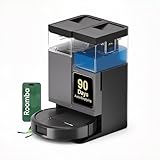
The 415X is the most maintenance-free option here. With 2.3X suction over the predecessor line, 90 days of self-emptying, a multifunction dock that self-cleans and hot-dries mops, lifting spinning pads for carpet transitions, and smart obstacle avoidance, it is built for households that want the machine to handle everything between refills. The pad-lifting feature specifically prevents wet pads from dragging onto rugs.
- Pros: Longest documented stretch between manual interventions; hot-dry function reduces mildew odor in mop pads.
- Con: $759.99 is the highest sticker price in this comparison.
Skip it if your budget caps out under $400 — the Roomba premium buys convenience, not raw cleaning force.
Buying Guide
Grout Agitation vs. Surface Wiping
The decisive difference between a mediocre and an excellent robot mop on tile is whether the cleaning mechanism presses into the grout line or glides over it. Dual spinning pads and roller-based systems generate the lateral scrubbing force that moves grit from grout valleys. Flat, passively dragged pads cannot achieve this at any speed. If your tile has grout wider than a few millimeters, prioritize units with active scrubbing heads.
Water Distribution and Streak Prevention
Tile’s glossy surface exposes every uneven application of liquid. A robot mop that floods one area and leaves another dry will show streaks within minutes of drying. Look for continuous-wash roller systems or dual-tank designs that separate clean water from dirty runoff. Units relying on a single soaked pad will always streak worst on high-gloss porcelain.
Dock Maintenance and Long-Term Cost
Robot mops with self-washing and self-drying docks reduce per-run effort but add consumable costs — cleaning solutions, replacement pads, filter changes. Before comparing sticker prices, estimate the annual consumable spend. A $129.99 combo with modest solution and pad replacements can cost less long-term than a $549.99 unit whose proprietary dock filters run expensive individual prices.
Our Verdict
Top pick: eufy E25. Its HydroJet Roller Mop is the only mechanism in this list that keeps the contact surface continuously clean, which matters most on tile where dirty-water reapplication creates visible haze. Combined with 20,000 Pa suction, it handles vacuuming and mopping without compromise.
Budget pick: Tikom G8000 Max at $129.99. It will not scrub grout, but as a daily maintenance tool that keeps tile free of footprints and pet dust, it outperforms its price bracket.
Another product wins if: you need chemical-free sanitizing on sealed tile. The Shark Steam & Scrub delivers results no robot mop can match for periodic deep cleans.
FAQ
Can a robot mop damage tile or grout?
A properly adjusted robot mop will not damage sealed tile. Unsealed or cracked grout can absorb excess moisture and develop efflorescence over time. Use a low-flow or dilute-solution mode on older installations to be safe.
How often should mop pads or rollers be replaced?
Expect a replacement cycle of two to four months with daily use, depending on pad material and local water hardness. Roller heads generally last longer than cloth pads but cost more individually. Check parts availability for your specific model before purchasing.
Do robot mops work on textured or matte-finish tile?
Yes, but effectiveness drops noticeably on high-texture surfaces because the mop cannot make full contact with recessed areas. For matte or textured porcelain, a unit with a scrubbing pad or steam function will outperform a flat-pad combo by a wide margin.
Is a cleaning solution necessary, or can I just use water?
Water alone removes loose dust but leaves oils and foot grease on tile, creating a dull film over weeks. A low-foam concentrate at the correct dilution breaks that residue without damaging pump seals or voiding manufacturer warranties.