Key takeaways
- 4K: The practical standard for 50 inches and larger. It matters less on a small bedroom screen viewed from far away.
- QLED: An LED LCD television with a quantum-dot layer, usually providing richer color and higher brightness than basic LED models.
- Mini-LED: Uses many smaller backlights for better brightness control and contrast. It can still show blooming around subtitles or bright objects.
- HDR: Dolby Vision and HDR10 support are useful, but brightness determines whether HDR looks meaningfully different from standard video.
- OLED: Offers excellent black levels and viewing angles, but usually costs more and is less common among the cheapest large TVs.
The best budget TVs are usually 43- to 65-inch models from TCL, Hisense, Roku, Vizio, Samsung, or LG with 4K resolution, a dependable smart platform, and a real 60Hz or 120Hz refresh rate—not simply the biggest screen at the lowest price.
Best budget TVs by viewing situation
| Situation | Best choice | Useful target specifications | Typical market range |
|---|---|---|---|
| Bedroom or small apartment | 43- or 50-inch 4K LED TV | 60Hz panel, simple voice remote, two HDMI inputs | $200–$400 |
| 10-by-12-foot living room | 55-inch 4K QLED or Mini-LED TV | Good upscaling, 400+ nits, eARC, low input lag | $350–$700 |
| Large family room | 65-inch 4K QLED or Mini-LED TV | 120Hz panel, wide viewing angle, four HDMI inputs | $550–$1,000 |
| Sports and fast action | 55- to 65-inch 120Hz model | Motion processing, low blur, strong brightness | $500–$900 |
| Console gaming | 50- to 65-inch gaming-friendly 4K TV | HDMI 2.1, 4K/120Hz, VRR, ALLM, low input lag | $400–$900 |
Our budget-TV picks by priority
Best overall value: a 55-inch TCL or Hisense 4K QLED
A 55-inch QLED from TCL or Hisense is the strongest all-purpose choice for many homes. Quantum-dot color improves saturation over a basic LED set, while 4K resolution keeps text, sports graphics, and streaming video sharp at normal sofa distances. These televisions commonly offer Dolby Vision, HDR10, eARC, and a game mode without reaching premium-TV pricing.

INSIGNIA 43" Class F50 Series LED 4K UHD Smart Fire TV, Voice Remote with Alexa, Stream Live TV Without Cable
Included for 'Best Budget TVs for Streaming, Sports, and Everyday Viewing' because the listing specifies Voice Remote with Alexa and Stream Live TV Without Cable, details this guide uses to compare options.
View on Amazon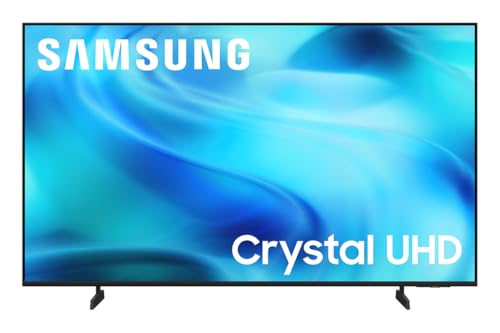
Samsung 65-Inch Class Crystal UHD U8000H Series Samsung Vision AI Smart TV (2026 Model, 65U8000H) Processor 4K, Endless Free Content, Motion Xcelerator, Color Booster, Alexa Built-in
Included for 'Best Budget TVs for Streaming, Sports, and Everyday Viewing' because the listing specifies 65U8000H) Processor 4K and Endless Free Content, details this guide uses to compare options.
View on Amazon
Amazon Ember 50" 4-Series with Fire TV (newest model), 4K Ultra HD smart TV with Alexa Remote, HDR10+, fast processor, Dolby Audio, Ambient Experience, free and live TV, find shows faster with Alexa+
Included for 'Best Budget TVs for Streaming, Sports, and Everyday Viewing' because the listing specifies 4K Ultra HD smart TV with Alexa Remote and HDR10+, details this guide uses to compare options.
View on Amazon
Roku 43-Inch Select Series Smart TV 2026-4K (2160p) HDR TV - RokuTV
Included for 'Best Budget TVs for Streaming, Sports, and Everyday Viewing' because the listing specifies RokuTV, details this guide uses to compare options.
View on AmazonExpect to pay about $350–$650 depending on brightness and backlight design. A basic QLED is suitable for a moderately lit room, while a Mini-LED version costs more but generally provides brighter highlights and better control over dark scenes. Check the exact model’s native refresh rate: some listings use motion-enhancement terminology that does not mean the panel is truly 120Hz.
Best low-cost option: a 43- or 50-inch 4K LED TV
For a bedroom, guest room, office, or small apartment, a standard 4K LED television is usually the sensible buy. Models from Roku, Hisense, TCL, Samsung, and LG often fall between $200 and $400. Picture quality is adequate for news, sitcoms, YouTube, and everyday streaming, though black levels and HDR brightness will be modest.
Choose 43 inches when the viewing distance is roughly 5 to 7 feet, or when the TV must fit on a narrow dresser. Choose 50 inches at about 6 to 8 feet. Measure the furniture before buying: a 50-inch TV is commonly about 44 inches wide, while a 55-inch model is commonly about 48 inches wide. Leave at least 2 inches of clearance on each side and several inches behind the set for ventilation and cable bends.
Best for sports: a bright 120Hz TV
Sports benefit more from brightness, motion handling, and viewing angle than from maximum resolution. A 120Hz television can refresh the image more frequently than a 60Hz model, helping pans across a football field or hockey rink appear cleaner. Look for a true native 120Hz panel rather than a product page that combines a 60Hz panel with an inflated “effective” refresh number.
A 55-inch or 65-inch QLED or Mini-LED set is a good target for a living room with windows. Models from TCL, Hisense, Samsung, and LG offer different strengths: TCL and Hisense often provide more screen for the money, while Samsung and LG may offer polished motion processing and stronger overall interface consistency at comparable sale prices.
Sports viewing also exposes poor viewing angles. If people sit more than about 25 to 30 degrees to either side of the screen, a basic vertical-alignment LED panel may lose contrast or color. A television with an improved wide-angle panel can be worth the extra cost in a large seating area, although it may produce less impressive blacks in a dark room.
Best for gaming: a TV with complete HDMI 2.1 support
Casual console players can use an affordable 4K/60Hz TV with low input lag. PlayStation 5 and Xbox Series X players who want the smoothest supported modes should look for 4K at 120Hz, variable refresh rate, and automatic low-latency mode. HDMI 2.1 is important, but verify how many HDMI ports support those features; on some budget TVs, only one port has full bandwidth.
For gaming, prioritize input lag below about 15 milliseconds at 4K/60Hz, a dedicated game mode, VRR, and clear shadow detail. A 120Hz television usually costs about $450–$900 in the 55- to 65-inch range. Avoid paying extra for decorative gaming menus if the television lacks the necessary HDMI features.
Smart platforms: usability matters more than branding
Roku TV is often the easiest platform for households that want a clean home screen and straightforward app access. Google TV offers strong search and integrates well with Android phones, Google Assistant, and casting. Hisense and some TCL models use Google TV, while Samsung uses Tizen and LG uses webOS. Samsung and LG interfaces are generally polished, but the app layout and advertising level may not suit everyone.
Before buying, check that the services you use are supported, including live-TV apps, local broadcaster apps, music services, and parental controls. Budget televisions may receive software updates for fewer years than premium models. An inexpensive external streaming device can extend usability later, but it will not fix a slow processor, weak Wi-Fi placement, or poor picture quality.
Picture quality: what the specifications really mean
- 4K: The practical standard for 50 inches and larger. It matters less on a small bedroom screen viewed from far away.
- QLED: An LED LCD television with a quantum-dot layer, usually providing richer color and higher brightness than basic LED models.
- Mini-LED: Uses many smaller backlights for better brightness control and contrast. It can still show blooming around subtitles or bright objects.
- HDR: Dolby Vision and HDR10 support are useful, but brightness determines whether HDR looks meaningfully different from standard video.
- OLED: Offers excellent black levels and viewing angles, but usually costs more and is less common among the cheapest large TVs.
Do not judge a budget TV by resolution alone. A bright 4K QLED with decent local dimming can look more convincing in a family room than a dimmer television with a longer feature list. In a dark bedroom, contrast and black uniformity matter more than peak brightness.
Sound, warranty, and ownership costs
Built-in speakers are acceptable for dialogue and casual viewing, but thin TVs rarely deliver deep bass. If the set will sit in a large room, budget another $100–$300 for a basic soundbar or compact powered speakers. Confirm that the TV has HDMI eARC or at least optical audio output if you plan to add external sound.
Most mainstream televisions include a limited one-year manufacturer warranty, though terms vary by brand and seller. A longer warranty can be useful for a heavily used main TV, but read whether it covers panel defects, labor, shipping, and accidental damage. Keep the box until the return period ends; large panels are difficult to transport safely without their molded packaging.
Moving and installation realities
A 55-inch TV may weigh roughly 30–45 pounds with its stand, while a 65-inch model may weigh about 45–70 pounds. The carton can be several inches wider and taller than the television, so measure elevators, stair turns, and doorways before delivery. A 65-inch box commonly needs a doorway opening of at least 32 inches, and carrying it upstairs is safer with two adults.
Use a stand rated for the television’s full weight, not just the screen width. The stand should be deeper than the TV feet and leave space for a soundbar if needed. If wall-mounting, attach the bracket to studs or use a properly rated masonry installation; drywall anchors alone are not suitable for a large television. Leave ventilation space around rear vents and avoid placing the screen directly above a fireplace, where heat can shorten component life.
Decision matrix for common homes
| Your priority | Recommended type | What to compromise on |
|---|---|---|
| Small apartment and limited furniture | 43-inch 4K LED or 50-inch model with narrow feet | Peak HDR brightness |
| Children or pets near the TV | Moderately priced 50- or 55-inch LED with secure wall mounting | Ultra-thin design and premium glass finishes |
| Renting | 43- to 55-inch TV on a stable, wide-base console | Wall mounting and cable concealment |
| Bright room with daytime sports | 55- or 65-inch bright QLED or Mini-LED | Perfect black levels |
| Movie watching at night | QLED with local dimming or an entry OLED when discounted | Maximum screen size within the budget |
| Frequent gaming | 120Hz TV with VRR, ALLM, and HDMI 2.1 | Lowest possible purchase price |
How to choose among the best budget TVs
Start with the viewing distance and furniture width, then decide whether sports or gaming justifies a native 120Hz panel. For general streaming, spend first on a reliable smart platform, acceptable brightness, and a return-friendly warranty. For a bright room, choose QLED or Mini-LED. For a small or dark room, a less expensive 4K LED model may provide nearly the same everyday satisfaction.
The best budget TV is the one whose screen fits the room, whose ports support your devices, and whose picture strengths match how you watch. A well-chosen 55-inch QLED is the safest all-around recommendation, while a 43-inch LED is the better value for compact spaces and a 120Hz QLED or Mini-LED is worth the upgrade for sports and current-generation gaming.