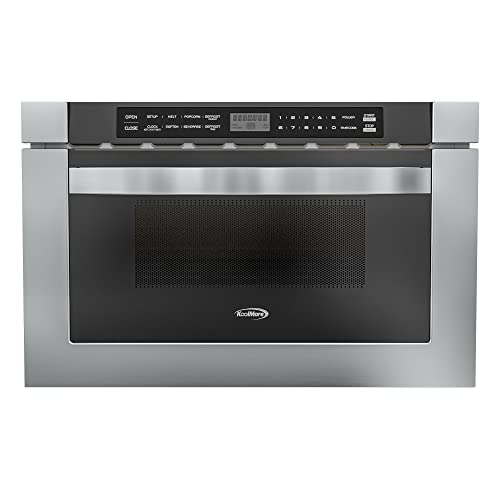
Key takeaways
- Measure the cabinet opening, countertop underside, appliance depth, and the clear path for an open drawer.
- Verify the exact cutout dimensions, ventilation location, electrical requirements, and whether the model is built-in-rated.
- Compare usable capacity and interior layout, not only the headline cubic-foot figure.
- Confirm whether one or both drawers have separate temperature controls, and check the intended use and temperature range.
- Ask about drawer load limits, soft-close availability, lock options, warranty coverage, and service access.
- Check packaged dimensions and weight before delivery; plan how the appliance will pass through doors and turns.
Best Drawer Refrigerators: The Right Fit Depends on the Opening
The best drawer refrigerators are the ones whose full installed dimensions, usable capacity, and temperature range match your cabinetry and daily routine—not just the ones that look like standard drawers. For a tight kitchen, a single-drawer unit is often simpler to fit; choose a double-drawer model when you need separate zones and have enough width, depth, and budget.
Single or Double Drawer?
A single drawer gives you one accessible compartment, typically suited to drinks, produce, snacks, or overflow groceries. It takes less cabinet width and has fewer moving parts. A double-drawer refrigerator stacks two compartments in one cabinet-height footprint, making it easier to separate categories or set different temperatures when the model supports independent control.

Tylza 24" Drawer Beverage Fridge 145 Can Stainless Quiet
Included for 'Best Drawer Refrigerators for Compact, Convenient Storage' as a relevant option in this category; details come from the product listing.
View on Amazon“Double drawer” does not always mean two independently controlled refrigerator zones. Some models divide a shared temperature system into two baskets or drawers. Check the control specifications before buying, especially if you want one compartment for beverages and another for produce or frozen items.
Compare the Fit Before Comparing Features
Drawer refrigerators are not interchangeable with ordinary base cabinets. Models vary in width, depth, height, ventilation requirements, and whether they are designed for built-in installation or freestanding use. The example dimensions below are planning targets, not universal product specifications; confirm the exact installation drawing for the model you choose.
| Planning item | Single-drawer target | Double-drawer target | Why it matters |
|---|---|---|---|
| Cabinet opening width | About 15–24 in | About 24–36 in | Allow for the manufacturer’s required opening and trim details; nominal cabinet width is not enough. |
| Appliance depth | Often about 22–27 in | Often about 22–27 in | Measure from the back wall to the cabinet face, including plugs, hoses, and any required rear air space. |
| Appliance height | Often about 24–34 in | Often about 24–34 in | Account for adjustable feet, countertop overhang, and the full drawer-front travel. |
| Capacity to compare | Roughly 2–4 cu. ft. | Roughly 4–6 cu. ft. | These are common planning ranges, not guarantees; usable space depends on drawer shape and refrigeration layout. |
| Front clearance | Reserve roughly 20–24 in in front | Reserve roughly 20–24 in in front | Check the open drawer against an island, walkway, or opposing cabinet. A deep drawer can block a narrow route. |
For a more exact check, measure the opening at the top, middle, and bottom; walls and cabinets are not always square. Measure the route into the kitchen too: the appliance may fit the final opening but not a doorway, stair turn, or elevator. Compare the packaged dimensions and weight with the narrowest doorway, and arrange help or professional delivery for a heavy unit.
Choose by Situation
| Your situation | Best starting point | Trade-off to accept |
|---|---|---|
| Small apartment or narrow kitchen | One compact drawer, if the opening and ventilation requirements fit | Less capacity and no separate compartment |
| Frequent entertaining | Double drawer with clearly specified independent temperature control | More width, higher cost, and more complex installation |
| Existing island or bar cabinetry | Built-in-rated model sized to the opening, with front ventilation if required | Cabinet modifications may be needed; verify the manufacturer’s airflow diagram |
| Renting or planning to move | Freestanding unit, only if the maker permits that installation | It may not sit flush, and it still needs a suitable outlet and airflow |
| Household with children | Look for a secure close, child-lock option, and controls that are not easily bumped | Locks and soft-close mechanisms differ by model and may not be included |
Temperature Control, Soft Close, and Construction
Temperature range and controls
Check the stated operating range and how the temperature is set: a simple dial, digital control, or separate controls for each drawer. If you plan to store food rather than just sealed drinks, verify that the manufacturer identifies the appliance for that use and provides a suitable refrigerator temperature range. A “beverage” setting or a chilled drawer is not automatically equivalent to a full food refrigerator.
Also consider where the sensor is located and whether settings can be locked. Frequent opening, warm items, and a crowded drawer can affect cooling performance. Leave space around vents inside the compartment and avoid treating the advertised gross capacity as fully usable storage.
Soft-close and slides
Soft-close hardware can reduce slamming, but it does not make a drawer safe to overload. Look for the manufacturer’s guidance on drawer loading, full-extension travel, and whether the closing action works when the drawer is lightly or heavily loaded. Slides, seals, and the closing mechanism are parts that see repeated daily movement; keep tracks clear of crumbs and avoid leaning on an open drawer.
Built-in versus freestanding
For an under-counter installation, confirm whether the unit is front-venting and approved for enclosed cabinetry. Rear- or side-venting appliances may require open space that a tight cabinet cannot provide. Follow the installation manual for top, side, rear, and floor clearances; a generic gap cannot replace the maker’s required measurements. A flush-looking front also does not guarantee that the handle clears nearby cabinet doors or that the drawer can open fully.
Buying Checklist
- Measure the cabinet opening, countertop underside, appliance depth, and the clear path for an open drawer.
- Verify the exact cutout dimensions, ventilation location, electrical requirements, and whether the model is built-in-rated.
- Compare usable capacity and interior layout, not only the headline cubic-foot figure.
- Confirm whether one or both drawers have separate temperature controls, and check the intended use and temperature range.
- Ask about drawer load limits, soft-close availability, lock options, warranty coverage, and service access.
- Check packaged dimensions and weight before delivery; plan how the appliance will pass through doors and turns.
What Drawer Refrigerators Usually Cost
As a broad 2026 market guide, compact single-drawer units often fall around $1,000–$2,000, while larger or double-drawer models commonly run about $1,500–$3,500 or more. Pricing varies with capacity, finish, temperature features, and installation type. Include delivery, cabinetry changes, and electrical work in the total budget rather than comparing appliance prices alone.
Bottom Line
Choose a single drawer for a narrow opening and one dedicated storage task. Choose a double drawer when you need more capacity or separate compartments and can verify independent temperature control. For either type, the decisive checks are the exact cutout drawing, ventilation method, full drawer clearance, and usable capacity. Those details determine whether a compact refrigerator will work comfortably under your counter rather than merely fit on paper.