Key takeaways
- After every use: run a little water through the machine if the instructions permit, then disassemble it while the pulp is still soft.
- For fine screens: use the supplied brush from both sides; do not rely on a quick rinse.
- For seals: remove and rinse silicone plugs periodically because trapped pulp can cause odors.
- For a shared kitchen: choose parts that are clearly labeled dishwasher-safe, but check the manual because heat can shorten the life of some seals.
The best masticating juicers depend on your real priority: choose a self-feeding vertical model for large batches, a compact horizontal model for a small kitchen, or a slow, adjustable machine when leafy greens and dry pulp matter most.
Best masticating juicers by situation
| Situation | Best fit | Why it makes sense | Main compromise |
|---|---|---|---|
| Small apartment or limited counter | Compact horizontal juicer such as the Tribest Shine | Narrow footprint and relatively simple storage | Smaller feed opening and slower preparation |
| Daily family batches | Self-feeding vertical juicer such as the Nama J2 | Large hopper reduces chopping and hands-on feeding | Taller cabinet clearance and more parts to wash |
| Frequent leafy-green juicing | Horizontal auger juicer such as an Omega horizontal model | Long auger path and firm compression handle kale, wheatgrass, and herbs well | More manual feeding and a wider front-to-back footprint |
| Soft fruit, citrus, and mixed produce | Vertical model with a strain-control or coarse-screen option | Good throughput and smoother transitions between ingredients | Very soft fruit can still produce thick, pulpy juice |
| Least daily effort | Easy-clean vertical model such as the Hurom H400 | Strainer design is intended to reduce scrubbing | Usually costs more than basic horizontal machines |
What “masticating” changes in everyday use
A masticating juicer crushes and presses produce through an auger rather than shredding it at high speed. The process is usually quieter and produces less foam, but it is not automatically faster or cleaner. The auger still needs time to work through fibrous ingredients, and leafy greens may need to be rolled into compact bundles.

EanOruus Juicer Machines, 3-in-1 Cold Press Juicer, Premium Gray
Included for 'Best Masticating Juicers for Fresh, Low-Waste Juicing' because the listing specifies 3-in-1 Cold Press Juicer and Premium Gray, details this guide uses to compare options.
View on Amazon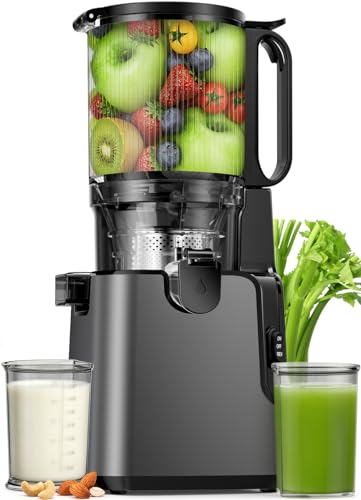
YPONE Juicer Machines 2-in-1 Cold Press Juicer Easy to Clean Titanium gray
Included for 'Best Masticating Juicers for Fresh, Low-Waste Juicing' as a relevant option in this category; details come from the product listing.
View on Amazon
Nama J2 - Cold Press Juicer - Hands-Free - Black
Included for 'Best Masticating Juicers for Fresh, Low-Waste Juicing' because the listing specifies Cold Press Juicer and Hands-Free, details this guide uses to compare options.
View on Amazon
EanOruus Juicer Machines, 3-in-1 Cold Press Juicer, Bright White
Included for 'Best Masticating Juicers for Fresh, Low-Waste Juicing' because the listing specifies 3-in-1 Cold Press Juicer and Bright White, details this guide uses to compare options.
View on AmazonFor a realistic comparison, judge five things together: the size and shape of the feed chute, the counter space and cabinet clearance, how dry the discarded pulp becomes, the number of parts that need rinsing, and how consistently the machine handles your usual produce.
Head-to-head comparison of popular designs
| Type or example | Approximate machine size | Feed experience | Pulp and produce strengths | Cleaning reality |
|---|---|---|---|---|
| Self-feeding vertical, such as Nama J2 | About 9 x 9 x 18 inches; allow at least 22 inches above the counter | Hopper accepts a large load, but hard produce still benefits from smaller pieces | Efficient with apples, carrots, cucumber, celery, and mixed batches; respectable greens performance | Several removable parts; rinsing immediately is much easier than letting pulp dry |
| Wide-mouth vertical, such as Kuvings REVO830 | About 10 x 9 x 19 inches; one of the taller options | Large chute reduces chopping; narrow celery or carrot channels help long produce | Strong throughput with firm produce and good batch capacity | Strainer and silicone seals need careful brushing |
| Easy-clean vertical, such as Hurom H400 | About 10 x 9 x 18 inches; reserve roughly 24 inches for lid removal | Large hopper and simplified straining approach reduce preparation | Very good for fruit-and-vegetable blends and everyday family juice | Typically easier to rinse than fine-mesh designs, though pulp can collect around seals |
| Horizontal auger, such as a Tribest Shine | About 6 x 5 x 18 inches; needs roughly 18 inches of forward work space | Small chute requires more cutting and active feeding | Good with leafy greens, herbs, wheatgrass, and firm vegetables | Fewer large hopper parts, but the screen may require brushing |
| Horizontal Omega-style machine | Often about 7 x 15 x 16 inches; measure the full front-to-back depth | Small opening and steady manual feeding | Excellent versatility and generally dry pulp with fibrous greens | Screen, auger, and end cap can take longer to disassemble |
These dimensions are useful planning estimates rather than universal specifications; accessories, handles, and model revisions can change the measurements. Before buying, measure the counter and the distance to the underside of an upper cabinet. A machine that fits with its lid closed may still be unusable if you cannot lift out the hopper or auger.
Feed-chute size: less chopping is not always better
A wide chute is valuable when you juice several times a week. It can accept larger pieces of apple, cucumber, or peeled citrus and makes a family batch feel less laborious. Some wide-mouth designs also include a separate narrow opening for long vegetables, which helps prevent celery and carrots from wrapping around the auger.
There is a trade-off. Large pieces can increase the chance of jamming, especially with dense carrots, beetroot, or frozen ingredients. Cutting produce into roughly 1-inch pieces remains sensible even when a chute is advertised as wide. Never push food with fingers; use the supplied pusher and stop the machine if the auger begins to stall.
Horizontal juicers usually have smaller openings. They take longer to load, but the controlled feed can give leafy greens and fibrous vegetables more consistent compression. If preparation time bothers you more than counter space, choose a vertical self-feeding design. If you dislike jams and mainly juice greens, a horizontal design may be the better fit.
Pulp dryness and juice quality
Drier pulp generally means the auger is extracting more liquid, but it is not a perfect measure of quality. Celery, watermelon, ripe pear, and very soft berries naturally leave wetter waste than carrots or kale. A machine with adjustable pressure or interchangeable screens gives you more control over the result.
For firm produce, look for pulp that leaves the machine in separate, fibrous strands rather than a wet paste. With leafy greens, fold or roll the leaves and alternate them with a small piece of cucumber or apple. This helps carry the fibers through the auger. For soft fruit, use a coarse screen when available, or alternate fruit with firmer produce to reduce clogging.
Do not expect any consumer juicer to make every ingredient equally efficient. Ripe bananas, avocado, and mango are better suited to smoothies because they contain little free juice and can turn into puree.
Cleaning effort is a buying criterion
The easiest juicer to clean is the one you will rinse immediately. Most masticating machines have an auger, strainer or screen, hopper, pusher, juice outlet, pulp outlet, and several silicone plugs or seals. Fine screens produce smooth juice but can hold pulp in tiny openings. Newer easy-clean designs often use larger straining channels, which reduce brushing but may produce a slightly more textured drink.
- After every use: run a little water through the machine if the instructions permit, then disassemble it while the pulp is still soft.
- For fine screens: use the supplied brush from both sides; do not rely on a quick rinse.
- For seals: remove and rinse silicone plugs periodically because trapped pulp can cause odors.
- For a shared kitchen: choose parts that are clearly labeled dishwasher-safe, but check the manual because heat can shorten the life of some seals.
Counter space, moving, and durability
Vertical machines save front-to-back space but are usually tall and awkward beneath cabinets. Horizontal machines occupy more depth and may need to be moved forward before each use. A practical setup needs about 3 inches of clearance on each side, room for a collection cup, and enough space to remove the pulp container without scraping the wall.
Expect many home juicers to weigh roughly 10–18 pounds. That is manageable for occasional storage, but not pleasant to lift from a low cabinet every morning. Store the machine near the counter if you juice daily. Keep the motor base dry and avoid carrying a fully assembled unit by its hopper or pulp outlet.
The parts most likely to show wear are silicone seals, the strainer, and the plastic auger—not usually the motor. Frequent beetroot, frozen produce, or hard seeds can accelerate staining and abrasion. Replacement parts are therefore more important than a small difference in advertised motor wattage. Confirm that screens, augers, and seals are available before committing to an unfamiliar brand.
Which one should you buy?
Choose the Nama J2 if you want a high-capacity, self-feeding workflow and have enough vertical clearance. Choose the Kuvings REVO830 if a wide opening and strong firm-produce throughput matter more than a compact footprint. Choose the Hurom H400 if cleaning convenience is your top concern and you mostly make mixed fruit-and-vegetable juice.
Choose a Tribest Shine or another compact horizontal juicer for a small apartment, occasional use, or easy cupboard storage. Choose an Omega horizontal model if leafy greens, herbs, wheatgrass, and dry pulp are more important than fast loading.
Typical prices range from about $150–$300 for compact or basic horizontal machines, $300–$600 for many capable vertical models, and roughly $500–$800 for premium self-feeding or easy-clean designs. The best masticating juicers are not simply the most expensive; they are the ones whose feed system, footprint, cleanup routine, and produce strengths match how you will actually juice.