
Key takeaways
- Identify your limiting joint: Knees favour cycling with a high seat and shallow flexion; backs favour cycling and stepping over rowing; shoulders rule out climbers. Choose around the joint that complains, not around the training benefit you want most.
- Start with a resistance range that goes low: Machines whose easiest setting is still hard are the ones that get abandoned. A wide adjustment range matters far more when returning to exercise than a high maximum.
- Prioritise seat and handle adjustability: Fixed geometry forces your joints into whatever position the designer assumed. Adjustable seat height on a bike, in particular, is what determines whether your knees are comfortable.
- Plan for short, frequent sessions: Fifteen minutes daily builds more capacity than an hour once a week and is far kinder to tissue that is not yet adapted. Choose a machine you can set up in under a minute.
- Watch for hidden loading: Rowing looks joint-friendly and is, provided your technique keeps the back neutral. Poor form under fatigue turns it into a lumbar exercise. If your back is the issue, be honest about this.
What's inside
Coming back to exercise after a long gap, or after a knee that never quite recovered, changes what “good cardio equipment” means. The machine that produces the best conditioning is irrelevant if it aggravates a joint on day three and sits unused from day four. What you actually need is something that lets you accumulate consistent, moderate work without loading the joints that are already unhappy — and that lets you start much easier than your ego wants to.
Low-impact does not mean low-value. Stepping, cycling, climbing and rowing all remove the repeated ground-strike that makes running problematic for many people, while still driving heart rate and building aerobic capacity. They differ in which joints they involve, though, and that is the detail that matters. Cycling loads the knee in flexion but takes the hip and ankle out of it. Rowing spares the knees under compression but demands a healthy lower back. Stepping is gentle on everything but limits how hard you can work. Match the machine to your specific limitation rather than to a general idea of what is easy.
As an Amazon Associate we earn from qualifying purchases at no extra cost to you. Product prices and availability are accurate as of the date shown and are subject to change.

#1 Pick

#2 Pick

#3 Pick

#4 Pick

#5 Pick

#6 Pick

#7 Pick

Quick Comparison
| Product | Best For | Standout Feature | Watch Out For |
|---|---|---|---|
| Sunny Health Mini Stepper | Very gentle restarts | Small range of motion, easy on knees | Resistance fades as cylinders warm |
| Niceday Stair Stepper | Larger or deconditioned users | 300 lb rating, wide stable base | Intensity ceiling is low |
| RELIFE Stair Stepper | Gradual progression | Resistance adjusts as you improve | Minimal performance data |
| Relife Vertical Climber | Full-body, no impact | Metal guide rails, smooth travel | Demands shoulder mobility |
| Foldable 5-in-1 Exercise Bike | Knee rehabilitation work | 16 levels, multiple riding positions | Firm seat on longer rides |
| Sunny Health Hydraulic Rower | Building capacity efficiently | Joint-friendly, 12 resistance levels | Needs a healthy lower back |
How to Choose
- Identify your limiting joint: Knees favour cycling with a high seat and shallow flexion; backs favour cycling and stepping over rowing; shoulders rule out climbers. Choose around the joint that complains, not around the training benefit you want most.
- Start with a resistance range that goes low: Machines whose easiest setting is still hard are the ones that get abandoned. A wide adjustment range matters far more when returning to exercise than a high maximum.
- Prioritise seat and handle adjustability: Fixed geometry forces your joints into whatever position the designer assumed. Adjustable seat height on a bike, in particular, is what determines whether your knees are comfortable.
- Plan for short, frequent sessions: Fifteen minutes daily builds more capacity than an hour once a week and is far kinder to tissue that is not yet adapted. Choose a machine you can set up in under a minute.
- Watch for hidden loading: Rowing looks joint-friendly and is, provided your technique keeps the back neutral. Poor form under fatigue turns it into a lumbar exercise. If your back is the issue, be honest about this.
Top Picks Reviewed
Gentlest Starting Point: Sunny Health Mini Stair Stepper
The short step range keeps knee flexion shallow, which makes this one of the few pieces of cardio equipment usable by someone with an irritable knee. It also takes almost no setup — you step on and start, which removes the friction that stops people training on low-motivation days.
Its hydraulic cylinders soften as they warm, so a twenty-minute session gets progressively easier rather than harder. That is not a problem when you are rebuilding a habit, but it does mean the machine stops challenging you sooner than expected.
Best for Larger Users: Niceday Stair Stepper
Stability matters enormously when your balance is not what it was. The 300 lb rating here reflects a wider, better-braced base than typical mini steppers, and the resistance bands add a gentle upper-body element without any joint loading.
The intensity ceiling is genuinely low. Once your fitness improves you will find it difficult to get your heart rate up, at which point this becomes a supplementary tool rather than your main cardio.
Best for Progression: RELIFE Stair Stepper
Adjustable resistance is the feature that keeps a machine relevant as you improve. Starting on the lightest setting and working up over weeks gives you a measurable sense of progress, which is a significant motivator when results are otherwise slow to appear.
The display offers little beyond a step count and a timer, so if you want to track heart rate or output you will need a watch. Not a dealbreaker, but worth knowing before you rely on it.
Best Full-Body Low Impact: Relife Vertical Climber
Climbing distributes effort across arms, back and legs, which means each joint takes a smaller share of the total work while your heart rate still climbs. The metal guide rails make the motion smooth and predictable, with no jarring at either end.
It requires overhead shoulder mobility. Anyone with impingement or a stiff shoulder will find the top of the stroke uncomfortable, and pushing through that is exactly the wrong approach when returning from injury.
Best for Knees: Foldable 5-in-1 Exercise Bike
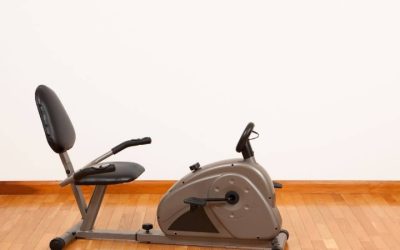
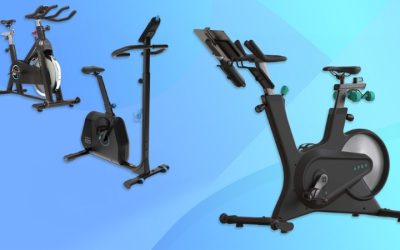
Cycling is the standard recommendation after knee problems for good reason — the load is smooth, continuous and controllable, and raising the seat reduces flexion depth substantially. Sixteen magnetic resistance levels give a genuinely easy bottom end, and the multiple riding positions let you shift posture as you fatigue.
The stock saddle is firm and narrow. On rides beyond twenty minutes that becomes the reason you stop, rather than your legs. A gel cover is an inexpensive and effective fix.
Most Efficient Conditioning: Sunny Health Hydraulic Rower
Rowing recruits more muscle than anything else in this comparison, which means you build aerobic capacity faster per minute spent. The hydraulic system is quiet, the twelve levels cover a useful range, and there is no impact through the legs at all.
It does place demand on the lower back, and technique degrades as you tire. If back pain is your limitation, this is the wrong machine regardless of how joint-friendly the marketing describes it as being.
Frequently Asked Questions
Which cardio machine is easiest on the knees?
A stationary bike with the seat set high enough to keep flexion shallow is generally the gentlest, followed by a mini stepper with a short step range. Both avoid the impact loading that makes running difficult after knee problems.
How long should I train when starting again?
Ten to fifteen minutes at an easy effort, most days, is a better starting point than longer sessions twice a week. Tissue adapts to frequency more readily than to volume, and short sessions are far easier to sustain.
Is rowing safe with a bad back?
Rowing with good technique is generally fine, but form deteriorates under fatigue and the lower back takes the consequences. If back pain is your primary limitation, cycling or stepping is the safer choice.
Do resistance bands on a stepper actually add much?
They add a light upper-body element that raises heart rate slightly and helps posture. They are not strength training, and the resistance is modest, but they make a legs-only machine into something closer to a full-body session.
Final Thoughts
If knees are the limiting factor, the Foldable 5-in-1 Exercise Bike gives you the most controllable, lowest-impact option with a resistance range that starts genuinely easy. For someone rebuilding a habit from close to zero, the Sunny Health Mini Stair Stepper removes every barrier to starting. And once your capacity returns and you want the most conditioning per minute, the Sunny Health Hydraulic Rower does more work in less time than anything else here.
Write Your Review
No reviews yet. Be the first to share your experience!