
Key takeaways
- Match the geometry to your spine, not your ambition. Indoor cycles put you forward over the bars, which is fine for trained hips and hard on stiff ones. If you have disc issues, sciatica, or you’re returning to movement after a long layoff, a recumbent with a seat back removes most of the excuses.
- Prefer magnetic resistance if you’ll ride early or late. Friction pads work and cost less, but they wear, squeak when dusty, and eventually need replacing. Magnetic systems are near-silent and effectively maintenance-free, which matters in an apartment or a room sharing a wall with a sleeping kid.
- Check whether the bike broadcasts data or hoards it. Bikes that transmit cadence, speed, and heart rate over Bluetooth let you ride Zwift, Peloton’s app, Kinomap, or nothing at all. Closed ecosystems can be excellent, but you’re renting the experience — factor the monthly fee into the real price.
- Read the weight capacity and the flywheel spec together. A heavier flywheel (roughly 30 lb and up on friction bikes) smooths the pedal stroke and reduces dead spots. A higher user weight rating usually signals a stiffer frame that won’t sway when you stand and sprint.
- Confirm the adjustments you actually need. Four-way adjustable seats (up/down and fore/aft) plus adjustable handlebars are the difference between one rider and a whole household using the same machine. Also check pedal type: caged pedals take sneakers, SPD-compatible sides take clip-in shoes.
What's inside
The exercise bike that gets used is rarely the most impressive one in the showroom. It’s the one that sits eight feet from where you already are at 6:15 a.m., with a saddle that doesn’t punish you and a resistance knob that responds the way your legs expect. I’ve watched too many people spend heavily on a screen-first machine and then quietly drape a towel over it by March, while a neighbor logs 200 miles on a $350 belt-drive bike parked next to the laundry basket.
So this guide is organized around fit and friction rather than hype. Below you’ll find bikes that span roughly $300 to $2,500, split across three body positions — aggressive indoor cycling, upright commuter-style, and recumbent — because a bike that aggravates your lower back is a $2,000 clothes rack. Prices shift constantly, so treat the tiers as ranges and check the current listing before you commit.
As an Amazon Associate we earn from qualifying purchases at no extra cost to you. Product prices and availability are accurate as of the date shown and are subject to change.


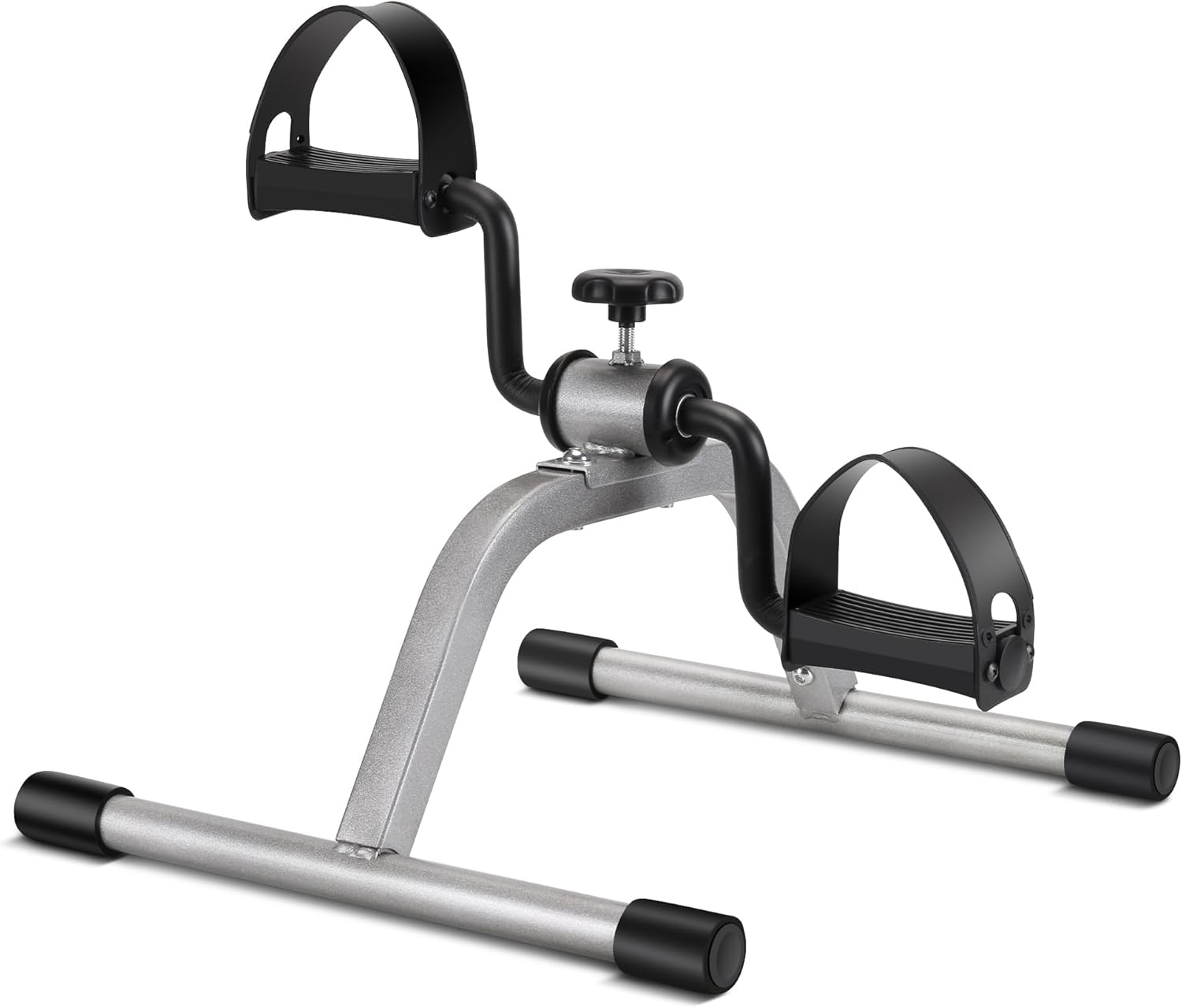

As an Amazon Associate we earn from qualifying purchases at no extra cost to you. Product prices and availability are accurate as of the date shown and are subject to change.
Quick Comparison
| Model | Style | Resistance | Stands Out For | Price Tier |
|---|---|---|---|---|
| YOSUDA Indoor Cycling Bike | Indoor cycle | Friction pad | Lowest cost of entry | $ |
| Sunny Health & Fitness Belt Drive Cycle | Indoor cycle | Friction pad | Heavy flywheel, quiet belt | $ |
| Schwinn IC4 | Indoor cycle | Magnetic | App-agnostic Bluetooth | $$ |
| Schwinn 270 Recumbent | Recumbent | Magnetic | Back support, easy mount | $$ |
| NordicTrack Commercial S22i | Studio cycle | Magnetic | Incline and decline tilt | $$$ |
| Keiser M3i | Indoor cycle | Magnetic | Commercial-grade longevity | $$$ |
How to Choose
- Match the geometry to your spine, not your ambition. Indoor cycles put you forward over the bars, which is fine for trained hips and hard on stiff ones. If you have disc issues, sciatica, or you’re returning to movement after a long layoff, a recumbent with a seat back removes most of the excuses.
- Prefer magnetic resistance if you’ll ride early or late. Friction pads work and cost less, but they wear, squeak when dusty, and eventually need replacing. Magnetic systems are near-silent and effectively maintenance-free, which matters in an apartment or a room sharing a wall with a sleeping kid.
- Check whether the bike broadcasts data or hoards it. Bikes that transmit cadence, speed, and heart rate over Bluetooth let you ride Zwift, Peloton’s app, Kinomap, or nothing at all. Closed ecosystems can be excellent, but you’re renting the experience — factor the monthly fee into the real price.
- Read the weight capacity and the flywheel spec together. A heavier flywheel (roughly 30 lb and up on friction bikes) smooths the pedal stroke and reduces dead spots. A higher user weight rating usually signals a stiffer frame that won’t sway when you stand and sprint.
- Confirm the adjustments you actually need. Four-way adjustable seats (up/down and fore/aft) plus adjustable handlebars are the difference between one rider and a whole household using the same machine. Also check pedal type: caged pedals take sneakers, SPD-compatible sides take clip-in shoes.
Top Picks Reviewed
YOSUDA Indoor Cycling Bike — the low-risk experiment
If you’re not yet sure you’ll stick with cycling, spending three figures instead of four is the smart hedge. The YOSUDA gives you a caged-pedal indoor cycle with a friction brake, a basic LCD tracking time and estimated distance, and a tablet shelf so your phone or iPad handles the entertainment. It assembles in under an hour with the included tools. Expect a firm saddle and a modest console — most owners swap in a gel cover within a week and never touch the display again, using a free app instead.
Sunny Health & Fitness Belt Drive Cycle — best value under $400
Sunny’s belt-drive cycles are the workhorses of home gyms: a substantial flywheel, a quiet belt rather than a rattling chain, and a frame that tolerates standing climbs better than the price suggests. Resistance is analog, so you learn your effort by feel and quarter-turns rather than numbered levels, which is genuinely fine for steady-state riding. The trade-off is no connectivity and no cadence sensor. Add a $30 Bluetooth cadence sensor to the crank arm and you’ve built a legitimate app-ready bike for a fraction of studio-bike money.
Schwinn IC4 — the smartest mid-range buy
The IC4 is where most riders should land. It pairs magnetic resistance with 100 numbered levels, dual-sided pedals for both sneakers and clip-ins, and — critically — Bluetooth output that talks to nearly any training app. That openness means your bike outlives any single subscription. It ships with a dumbbell rack and a media shelf, and the flywheel spins with the kind of inertia that makes 45-minute rides tolerable. It’s heavy to move alone; plan the placement before assembly.
Schwinn 270 Recumbent — kindest to joints and backs
Step-through frame, ventilated seat back, and a pedal path in front of you rather than beneath you. The 270 is the pick for anyone rehabbing a knee, managing arthritis, or riding while reading, and it’s the version of “exercise bike” that older family members will actually use. You get a couple dozen preset programs, dual displays, and magnetic resistance that’s quiet enough for a shared living room. Recumbents won’t deliver a sprint-heavy studio workout, and that’s the point.
NordicTrack Commercial S22i — most immersive ride
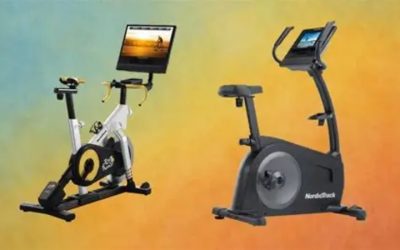
The S22i’s party trick is mechanical, not cosmetic: the frame tilts through a wide incline range and a genuine decline, so a virtual climb loads your quads and glutes the way real terrain does. The large rotating touchscreen handles iFIT classes and studio-shot global routes, with a trainer adjusting your resistance automatically. It’s a large, heavy, subscription-dependent machine, and without the membership the experience shrinks considerably — but for riders motivated by scenery and coaching, nothing else feels as much like being somewhere.
Keiser M3i — buy once, ride for a decade
Keiser bikes live in commercial studios because they refuse to die. The rear-positioned magnetic resistance mechanism sits away from the sweat that destroys lesser bikes, the belt drive is nearly silent, and the V-shaped frame accommodates riders of wildly different heights on one machine. Its compact wireless computer shows watts, cadence, and heart rate, and it broadcasts to third-party apps. There’s no built-in screen and no included classes; you’re paying purely for engineering. If you ride five days a week, the cost-per-ride math wins.
Frequently Asked Questions
Do I need a subscription to use a smart bike?
Not usually. Bikes that broadcast standard Bluetooth data — the IC4 and M3i among them — work with free or low-cost apps, or with no app at all. Subscription lock-in mainly applies to bikes whose built-in touchscreen is the only interface, where an expired membership can reduce the console to a basic metrics readout.
How much space should I plan for?
Budget roughly a 4 ft by 2 ft footprint for an indoor cycle, plus two feet of clearance on each side for mounting and for airflow from a fan. Recumbents are longer, closer to 5 ft. Most bikes include transport wheels, but a 100 lb-plus machine is not something you’ll happily relocate daily — pick a permanent spot.
Friction or magnetic resistance — does it really matter?
For the ride itself, less than you’d think. For ownership, quite a bit. Friction pads are consumable and get noisy as they wear; magnetic systems have no contact point, so they stay quiet and consistent for years. If your budget is tight, friction is a perfectly honest compromise.
Is an exercise bike enough on its own?
For cardiovascular fitness, endurance, and lower-body conditioning, yes. It won’t load your bones or upper body, so pair riding with two short strength sessions a week — even bodyweight work or a pair of dumbbells — for a balanced program.
Final Thoughts
Pick by position first, resistance type second, and screens last. A rider who needs a seat back should buy the 270 and ignore every studio bike on the market; a rider who wants an open platform and no monthly bill should buy the IC4; a rider who craves coaching and terrain should accept the S22i’s subscription as part of the price. And if you’re still unsure whether cycling is your thing, start cheap, put the bike where you’ll trip over it, and let 30 days of actual riding tell you what to upgrade to.
FAQ
Do I need a subscription to use a smart bike?
How much space should I plan for?
Friction or magnetic resistance — does it really matter?
Is an exercise bike enough on its own?
Best Exercise Bike Workout for Weight Loss: 5 Bike Setups
Best exercise bike workout for weight loss planning runs into a hardware...
Best Exercise Bike for Weight Loss: 5 Consoles Compared
Best exercise bike for weight loss listings advertise app connectivity while many...
Best Exercise Bike for Losing Weight: 5 Models Compared
Exercise bike best for losing weight shortlists rarely mention the two things...
Best Bike Exercise to Lose Weight: 6 Frame Styles Compared
Best bike exercise to lose weight comparisons usually pit models against each...
Best Exercise Bike for Fat Loss: 5 Picks by Flywheel Weight
Best exercise bike for fat loss listings compete on features and stay...
Best Cheapest Exercise Bike: 6 Budget Picks Under Review
Best cheapest exercise bike shopping turns on two numbers most listings bury:...
Best Inexpensive Exercise Bike: 6 Picks by Riding Position
Best inexpensive exercise bike comparisons usually put four completely different machines on...
Best Low Price Exercise Bike: 6 Picks and What Fails First
Best low price exercise bike reviews describe how a machine feels in...
Best Exercise Bike on a Budget: 6 Picks and Total Costs
Best exercise bike on a budget planning goes wrong in two places:...
Best Home Exercise Bike: 6 Picks for Small Flats and Noise
Best cheap home exercise bike choices are decided by the room long...
Write Your Review
No reviews yet. Be the first to share your experience!