
Key takeaways
- Buy quantity before quality: Two or three inexpensive ropes at different lengths serve a household far better than one premium rope everyone has to resize. Sharing friction is what ends jump rope habits.
- Label the handles: Once each rope is set to a person’s height, a strip of tape with a name on it prevents the whole system collapsing back into shared adjustment.
- Treat handles as the wear item: On budget ropes the foam grips fail long before the cable does. That is fine if replacements are cheap, and it is the main argument for multipacks.
- Upgrade when you hit a real limit: Spend more only when a specific limitation is blocking you — bearings binding at speed, or a cable wearing through outdoors. Buying premium before that point is money that buys nothing.
- Add variety rather than expense: A second rope with different characteristics, such as a weighted one, adds more to your training than an upgraded version of the rope you already have.
What's inside
Jump ropes are one of the few pieces of fitness equipment where spending more buys you very little for the first year. A twelve-dollar rope and a sixty-dollar rope do the same job for someone doing single unders three times a week, and the expensive one will not make you fitter. What the premium actually buys is smoother bearings at high cadence and a cable that survives outdoor abrasion — both real, and both irrelevant until your technique gets there.
Where a modest budget goes further is in buying more than one. Multiple ropes solves the two problems that actually stop people using them: sharing, and length. In a household or a small group, one rope means constant readjustment and someone always waiting, which is enough friction to end the habit within a month. Several cheap ropes, each set to one person’s height, removes that entirely. It is a better use of forty dollars than a single premium cable. Here is how the options compare when cost per useful session is the metric.
As an Amazon Associate we earn from qualifying purchases at no extra cost to you. Product prices and availability are accurate as of the date shown and are subject to change.




Quick Comparison
| Product | Best For | Standout Feature | Watch Out For |
|---|---|---|---|
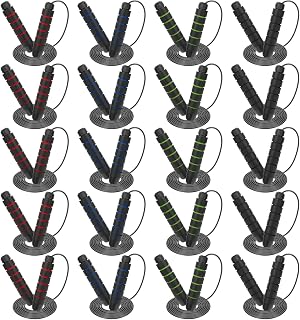
| 20-Pack Weighted Steel Ropes | Groups and families | Lowest cost per rope by far | Foam handles wear out |
| Amazon Basics Jump Rope | Cheap second ropes | 118 in, fits any household member | Thin, uncushioned handles |
| SPORTBIT Adjustable Rope | Best budget single rope | Comfortable grip at a low price | Basic bearings limit speed |
| BOOMIBOO Adjustable Rope | Shared use with set lengths | Adjustment that holds reliably | Slim handle profile |
| Tangle-Free Speed Rope | The one to upgrade to | Ball bearings, tangle-free cable | Costs more than it needs to early on |
| Redify Weighted Rope | Adding variety cheaply | 1 lb weight for a harder session | Tires the arms before the legs |
How to Choose
- Buy quantity before quality: Two or three inexpensive ropes at different lengths serve a household far better than one premium rope everyone has to resize. Sharing friction is what ends jump rope habits.
- Label the handles: Once each rope is set to a person’s height, a strip of tape with a name on it prevents the whole system collapsing back into shared adjustment.
- Treat handles as the wear item: On budget ropes the foam grips fail long before the cable does. That is fine if replacements are cheap, and it is the main argument for multipacks.
- Upgrade when you hit a real limit: Spend more only when a specific limitation is blocking you — bearings binding at speed, or a cable wearing through outdoors. Buying premium before that point is money that buys nothing.
- Add variety rather than expense: A second rope with different characteristics, such as a weighted one, adds more to your training than an upgraded version of the rope you already have.
Top Picks Reviewed
Best for Groups: 20-Pack Weighted Steel Cable Ropes
For a household, a class, or anyone running group sessions, this is the obvious answer. Everybody gets a rope, each one can be set to its owner’s height, and the per-unit cost is low enough that losing or wearing one out is meaningless. The steel cable with weighted feel is also more substantial than the cheapest plastic ropes.
The foam handles are the compromise. They compress, absorb sweat and eventually split with regular use. With a pack this size that is an accepted cost rather than a problem.
Best Cheap Extra: Amazon Basics Jump Rope
At 118 inches it adjusts down to suit anyone in a household, and the price is low enough that having two or three around the house is a trivial decision. Keep one in a bag, one in the garage, one by the door.
The handles are thin and offer almost no cushioning, so long sessions become uncomfortable. Best treated as an extra rope rather than a primary one.
Best Budget Single Rope: SPORTBIT Adjustable Jump Rope
If you want one decent rope without spending much, this is the sensible pick. The grips are genuinely comfortable, the adjustment is easy, and nothing about it will frustrate you during ordinary single-under work.
The bearings are basic and will bind slightly if you push cadence hard. For steady conditioning that never comes up; for double unders it eventually will.
Best for Set-and-Forget Sharing: BOOMIBOO Adjustable Jump Rope
When two people of similar height share a rope, an adjustment that actually holds prevents the slow drift that makes a rope feel wrong for both of them. This one keeps its setting session after session.
The slimmer handle profile suits smaller hands better than larger ones, so consider who will be using it most before choosing.
Best Upgrade Path: Tangle-Free Rapid Speed Rope
When you eventually hit the limits of a budget rope — bearings stuttering at speed, a cable that will not stay straight — this is the natural step up. The rotation is smoother and the cable is ready to use the moment you pick it up.
Bought at the outset it is money spent on capability you cannot yet use. Start cheaper and upgrade when a specific limitation is genuinely holding you back.
Best Variety Buy: Redify Weighted Jump Rope
Adding a pound of weight is a cheap way to make an existing routine feel new and to raise the intensity of a short session. As a second rope alongside a light one it adds more than a more expensive version of what you already have.
The arms fatigue before the legs, so it does not work as an everyday rope. Rotate it in for shorter, harder blocks and keep a lighter rope for volume.
Frequently Asked Questions
Is an expensive jump rope worth it?
Not until your technique demands it. Premium ropes buy smoother bearings at high cadence and better outdoor durability. For single unders a few times a week, an inexpensive rope performs identically.
Why buy a multipack of jump ropes?
Because sharing one rope means constant readjustment, and that friction is the main reason household jump rope habits fail. Individual ropes at individual lengths remove the problem entirely for very little money.
What fails first on a cheap jump rope?
Almost always the handles. Foam grips compress, absorb sweat and split before the cable wears out. Replacing handles is rarely practical, which is why cheap ropes are best bought in quantity.
When should I upgrade my rope?
When something specific is limiting you: the handles binding as you try to turn faster, or a cable wearing through from outdoor use. Upgrading before you hit a real constraint buys nothing you can use.
Final Thoughts
For a household or any group, the 20-Pack Weighted Steel Cable Ropes solves the sharing problem more effectively than any single premium rope could. If you just want one good, inexpensive rope, the SPORTBIT Adjustable Jump Rope covers everything a beginner or intermediate jumper needs. And when you eventually outgrow a budget rope, the Tangle-Free Rapid Speed Rope is the upgrade that will actually feel like one.



Write Your Review
No reviews yet. Be the first to share your experience!