Key takeaways
- Dimensions: Measure the usable floor area rather than the entire hallway, leaving enough clearance at doors and turns for smooth opening and walking.
- Backing: Rubber or textured non-slip backing can improve traction, but it should still be paired with a rug pad when the manufacturer recommends one or when the floor is especially slick.
- Washability: Confirm the cleaning instructions, machine capacity, and drying requirements. A washable rug is most convenient when it can be handled without overcrowding a standard washer.
- Pile height: Low-pile runners are generally easier to vacuum and less likely to interfere with doors, robot vacuums, and furniture legs.
- Traffic and color: Abstract patterns and mid-tone shades can disguise everyday debris, while solid light colors provide a cleaner look but may show stains sooner.
What's inside
Runner rugs have to do more than fill a narrow strip of floor. They need to stay put near doors, tolerate tracked-in grit, fit beneath furniture without catching, and remain easy to clean when kitchen spills or muddy shoes take their toll. The challenge is finding the right balance of dimensions, pile height, backing, softness, and visual wear.
From a home-appliance testing lab perspective, we assess these rugs by the practical details that matter in daily use: washable construction, traction, edge stability, low-profile clearance, stain resistance, and suitability for busy areas. This guide compares five strong options for hallways, kitchens, bedrooms, laundry rooms, and entryways, with special attention to how their advertised features translate into real household maintenance.
As an Amazon Associate we earn from qualifying purchases.



How to Choose a Runner Rug (2026)
- Dimensions: Measure the usable floor area rather than the entire hallway, leaving enough clearance at doors and turns for smooth opening and walking.
- Backing: Rubber or textured non-slip backing can improve traction, but it should still be paired with a rug pad when the manufacturer recommends one or when the floor is especially slick.
- Washability: Confirm the cleaning instructions, machine capacity, and drying requirements. A washable rug is most convenient when it can be handled without overcrowding a standard washer.
- Pile height: Low-pile runners are generally easier to vacuum and less likely to interfere with doors, robot vacuums, and furniture legs.
- Traffic and color: Abstract patterns and mid-tone shades can disguise everyday debris, while solid light colors provide a cleaner look but may show stains sooner.
The Best Runner Rugs (2026) Reviewed
2×6 Hallway Washable Runner Rug
This vintage-style 2-by-6-foot runner is a versatile choice for compact hallways, bedside spaces, kitchens, and laundry areas. Its distressed farmhouse pattern should help mask minor marks between washes, while the non-slip backing and stain-resistant construction address two common trouble spots in high-use rooms.
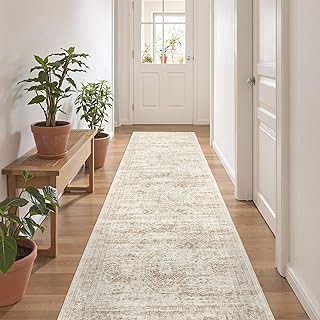
2×8 Beige Neutral Runner Rug
The 2-by-8-foot beige runner offers extra length for extended hallways, galley kitchens, and entryways where a shorter mat leaves too much exposed flooring. Its thin, soft profile is practical around doors and furniture, and the neutral coloring should blend easily with nursery, bedroom, and bathroom décor.
2×10 Heavy-Duty Beige Runner
For long corridors or an especially busy entry, this 2-by-10-foot model provides the broadest coverage in the group. The heavy-duty positioning, rubber backing, machine-washable design, and beige finish make it a sensible candidate for extended indoor traffic, although buyers should verify that their washer can accommodate its size.
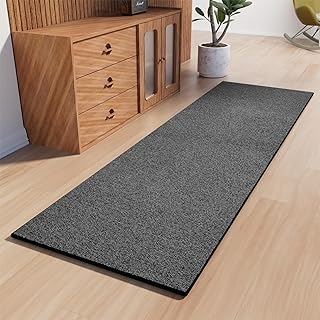
AREDO 2×6 Black Pointillism Runner
The AREDO runner combines a bold black pointillism-style surface with a low-pile format suited to kitchens, hallways, bedrooms, and laundry rooms. Its soft carpet construction is intended to add comfort underfoot, while the rubber backing prioritizes stability in narrow, frequently traveled areas.
Ompaa 2×6 Grey Abstract Runner
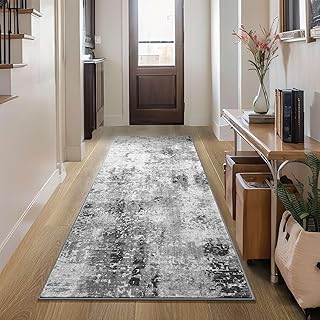
Ompaa’s 2-by-6-foot grey runner is a practical middle-ground option for shoppers who want a subdued pattern rather than a heavily distressed or completely plain design. The washable surface, rubber backing, soft feel, and abstract styling make it adaptable across hallways, kitchens, bathrooms, and entryways.
Frequently Asked Questions
What size runner rug is best for a hallway?
Choose a length that covers the main walking path without blocking doors or creating awkward edges at intersections. A 2-by-6-foot rug suits shorter hallways, while 2-by-8- and 2-by-10-foot options are better for longer corridors.
Are washable runner rugs suitable for kitchens?
Yes, provided the care instructions match your washing machine and the rug is dried thoroughly. Washability helps with food spills and tracked-in debris, but it does not eliminate the need for routine vacuuming or prompt stain treatment.
Do non-slip runner rugs need a rug pad?
Sometimes. A built-in backing may provide adequate grip on some floors, but a compatible rug pad can add cushioning and stability on smooth surfaces. Check the product instructions and test for movement before placing the rug in a busy walkway.
Which runner color hides dirt best?
Mid-tone grey, beige, and patterned designs usually conceal dust and small marks better than very light solid colors. Dark rugs can hide some debris but may make lint, pet hair, and pale dust more noticeable.
Final Thoughts
The 2×6 Hallway Washable Runner Rug is a flexible pick for compact spaces, while the 2×10 Heavy-Duty Beige Runner is the better coverage choice for long, busy corridors. For a more distinctive look, the AREDO 2×6 Black Pointillism Runner adds visual character without sacrificing the low-profile practicality expected from a daily-use runner.