Key takeaways
- Measure the assembled sauna, door swing, ceiling height, and route from delivery point to its final position.
- Use a timer and begin with shorter, lower-heat sessions until you understand how your body responds.
- Keep water, towels, and drinks away from electrical controls unless the unit is specifically designed for that environment.
- Ask the seller about assembly, returns, replacement heaters, warranty coverage, and spare control components before buying.
What's inside
Choosing an infrared sauna is less about finding the hottest cabin and more about finding a unit you can use comfortably, safely, and consistently. In our home-appliance testing approach, we look beyond marketing claims to the details that affect everyday ownership: heat-up time, usable interior space, controls, ventilation, electrical demands, cleaning, assembly, and how easily the sauna fits into a real room.
This guide explains how infrared saunas work, which specifications deserve attention, and how to match a cabin or portable tent to your space and routine. Our recommended picks include full-size wooden cabins for shared use and folding models for shoppers who need lower commitment or easier storage. Treat red-light features, low-EMF claims, and wellness language as specifications to investigate—not substitutes for sensible use or medical advice.
As an Amazon Associate we earn from qualifying purchases.




Start With the Sauna Type
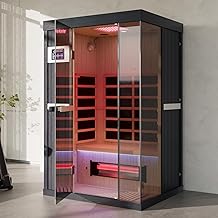
Infrared saunas generally use carbon, ceramic, or full-spectrum heating elements. Carbon panels tend to spread gentler, more even warmth across a broad surface. Ceramic emitters can feel more concentrated and may reach operating temperature quickly. Full-spectrum models combine different infrared bands, but the label alone does not tell you how evenly the cabin heats or how comfortable it is to sit inside.
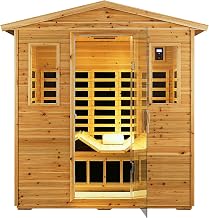
A wooden cabin is the most furniture-like option. It stays set up, looks finished, and usually provides a more stable seating position. The three-person 3 Person Infrared Sauna Ceramic Sauna with Red Light Therapy is the roomiest style among these recommendations, with far- and near-infrared features and a granite-look backdrop. It may suit households that want a substantial indoor unit, provided the available floor area and electrical circuit can support it.
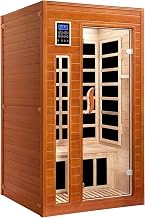
Compact cabins are easier to place in bedrooms, dressing areas, or home gyms. The 1-2 Person Infrared Sauna adds Bluetooth, radio, and multicolor lighting, while the OUTEXER Far Infrared Sauna uses Canadian hemlock, a tempered-glass door, and a relatively compact footprint. Check the listed dimensions carefully: exterior measurements do not include the clearance needed to open the door, connect the power cord, or access controls.
Check Heat, Controls, and Electrical Requirements
Published maximum temperatures are only one part of performance. In testing, a useful sauna should warm predictably, maintain a reasonably consistent temperature, and let you adjust the session without stepping outside. Look for a readable control panel, a timer that is simple to set, and heating controls that do not require repeated trial and error.
Confirm the rated voltage, wattage, and plug requirements before ordering. A 120V model may be convenient, but a higher-wattage cabin can still place a meaningful load on a household circuit. The 2-Person Full Spectrum Infrared Sauna, for example, is listed at 1,990W and includes large red-light panels and speakers. That specification makes circuit planning especially important. Do not use an extension cord unless the manufacturer expressly permits it and the cord is rated for the load.
“Low EMF” is best treated as a measurement claim, not a guarantee. If it matters to you, look for testing information that explains where measurements were taken, at what distance, and under what operating conditions. Also verify whether the claim applies to the heater, wiring, control panel, or the complete assembled unit.
Measure Comfort, Not Just Capacity
Person counts can be optimistic. Compare interior width, bench depth, ceiling height, and door opening with the body positions you expect to use. A nominal two-person sauna may be comfortable for one adult who wants to recline, but cramped for two people sitting upright. A shallow bench can also make a long session less relaxing, even when the cabin technically fits its advertised capacity.
Inspect the bench construction, floor surface, backrest, and interior lighting. Smooth, wipeable surfaces are preferable to textured areas that trap moisture and dust. Tempered glass can make a compact cabin feel more open, but it also adds weight and may increase heat loss during entry. Allow room behind or beside the unit if the instructions require ventilation or access for maintenance.
Decide Whether Portable Is the Better Buy
Sauna tents trade cabin comfort for flexibility. They fold away, often cost less to move, and can work for renters or occasional users. The trade-offs are a smaller seated area, less rigid support, more setup time, and a greater need to protect floors and nearby furnishings from moisture. Place a tent on a stable, level, water-resistant surface and follow the instructions for the steamer and fabric.
The Infrared Sauna Tent for Home with 3L Steamer includes nine heat levels, a 99-minute timer, remote control, insulated waterproof fabric, and a folding chair. The similarly portable Infrared Sauna Box adds a 1,200W steamer and advertised 660nm and 850nm red-light lamps. These features may be useful, but steam and infrared heating are not identical: confirm whether the unit is intended to operate wet, dry, or in separate modes, and never improvise with water near electrical components.
Evaluate Safety, Cleaning, and Ownership
Look for automatic shutoff, an accessible emergency control, stable construction, protected heating elements, and clear warnings about session duration. A sauna should sit on a solid surface with adequate clearance from walls, curtains, heaters, and other combustible materials. Keep the surrounding area dry, and do not leave an operating unit unattended unless the manufacturer specifically says it is designed for that use.
Cleaning is part of performance. Sweat-resistant, sealed wood and removable floor mats simplify ownership. Wipe the bench and interior after use with a manufacturer-approved cleaner, leave the door open to dry, and follow the manual for steam-generator descaling. Inspect cords, plugs, hinges, and seals periodically. If you notice scorching, unusual odors, flickering controls, or a damaged cable, stop using the sauna until it has been checked.
Tips
- Measure the assembled sauna, door swing, ceiling height, and route from delivery point to its final position.
- Use a timer and begin with shorter, lower-heat sessions until you understand how your body responds.
- Keep water, towels, and drinks away from electrical controls unless the unit is specifically designed for that environment.
- Ask the seller about assembly, returns, replacement heaters, warranty coverage, and spare control components before buying.
Frequently Asked Questions
Are infrared saunas the same as traditional saunas?
No. Traditional saunas heat the air, which then warms your body. Infrared models use radiant energy to warm surfaces and people more directly, typically at lower air temperatures. The experience, operating requirements, and humidity levels can differ substantially.
Is a larger sauna always better?
Not necessarily. A larger cabin offers more room and may be more comfortable for two or three users, but it needs more floor space, may take longer to heat, and can require greater electrical capacity. Buy for the number of people who will regularly use it, not an occasional maximum.
Can an infrared sauna be installed in a bedroom?
Often, yes, if the manufacturer permits indoor residential installation and the room has suitable clearance, ventilation, flooring, and electrical access. Avoid damp locations unless the unit is rated for them, and check local electrical and building requirements when in doubt.
Do red-light therapy features make a sauna better?
They can add a feature you value, but they should not outweigh basic factors such as even heating, comfortable seating, safe controls, construction quality, and service support. Review the wavelength, coverage, operating instructions, and any independent documentation rather than relying on a broad wellness claim.
Conclusion
The best infrared sauna for 2026 is the one that fits your room, circuit, body, and routine without creating unnecessary maintenance or safety compromises. Choose a well-built cabin for frequent, stationary use; consider a portable tent when storage and flexibility matter most; and compare real dimensions, controls, wattage, cleaning needs, and support before the feature list. A measured purchase is more likely to become a useful part of your home than an impressive appliance that sits unused.