
Key takeaways
- Insist on magnetic resistance. Eddy-current brakes never touch the flywheel, so there is nothing to rub, glaze, or squeal. Felt-pad friction bikes start whisper-quiet and get scratchier as the pad wears and hardens.
- Belt over chain, always. A toothed or poly-V belt hums. A chain clatters, needs lubricant, and produces exactly the metallic rhythm that carries through joists.
- Weigh the flywheel against your floor. A heavy 40 lb flywheel smooths the pedal stroke, but it also stores more energy to transmit downward. On an upper floor, a lighter, well-balanced flywheel plus a dense rubber mat beats brute mass.
- Hunt the hidden noisemakers. Powered incline motors, tablet-cooling fans, and cheap console speakers can each out-shout the drivetrain. If the bike has a motor, assume it will whine during every ramp change.
- Check for adjustable levelers and a rigid frame. Most “creaky bike” complaints are actually a frame rocking on one short foot. Four independently adjustable levelers and a stated 300 lb-plus weight capacity are a reasonable proxy for structural silence.
What's inside
The stationary bike problem in an apartment isn’t cardio — it’s acoustics. A flywheel spinning at 90 RPM turns your subfloor into a drum head, and the neighbor below hears the thump long before they hear the whir. I learned this the hard way with a chain-drive spin bike parked eight feet from a shared wall: the pedaling was fine, but the rhythmic knock traveled two floors down and earned me a note taped to my door. The fix wasn’t a quieter workout. It was a different machine.
So this ranking ignores the usual leaderboard logic. Instead of sorting by resistance levels or app subscriptions, I’ve ordered six popular home bikes from quietest to loudest, factoring in the three things that actually make noise: the resistance mechanism, the drive system, and the parts nobody mentions in the specs — cooling fans, incline motors, and console speakers. Approximate decibel ranges below are ballpark figures for a rider at a moderate pace, measured a few feet away, and they’ll shift with your floor, your cadence, and how level the frame sits.
As an Amazon Associate we earn from qualifying purchases at no extra cost to you. Product prices and availability are accurate as of the date shown and are subject to change.

#1 Pick

#2 Pick

#3 Pick

#4 Pick

#5 Pick

#6 Pick
#7 Pick

Quick Comparison
| Model | Resistance | Drive | Approx. Noise | Best For |
|---|---|---|---|---|
| Keiser M3i | Magnetic (eddy current) | Poly-V belt | ~40–48 dB | Shared walls, early mornings |
| Schwinn IC4 | Magnetic, 100-level knob | Belt | ~45–52 dB | Best all-round value |
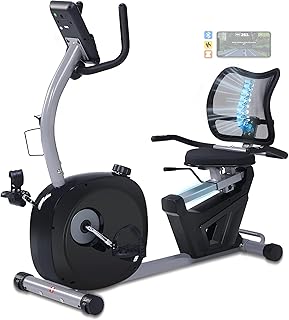
| Marcy ME-709 | Magnetic, 8 preset levels | Belt | ~45–53 dB | Low-impact recumbent riding |
| Echelon Connect EX-5 | Magnetic, 32 levels | Belt | ~48–56 dB | Live class junkies |
| YOSUDA Indoor Cycling Bike | Felt pad friction | Belt | ~52–60 dB | Tight budgets, houses not flats |
| NordicTrack Commercial S22i | Magnetic + powered incline | Belt | ~55–68 dB | Simulated hill training |
How to Choose
- Insist on magnetic resistance. Eddy-current brakes never touch the flywheel, so there is nothing to rub, glaze, or squeal. Felt-pad friction bikes start whisper-quiet and get scratchier as the pad wears and hardens.
- Belt over chain, always. A toothed or poly-V belt hums. A chain clatters, needs lubricant, and produces exactly the metallic rhythm that carries through joists.
- Weigh the flywheel against your floor. A heavy 40 lb flywheel smooths the pedal stroke, but it also stores more energy to transmit downward. On an upper floor, a lighter, well-balanced flywheel plus a dense rubber mat beats brute mass.
- Hunt the hidden noisemakers. Powered incline motors, tablet-cooling fans, and cheap console speakers can each out-shout the drivetrain. If the bike has a motor, assume it will whine during every ramp change.
- Check for adjustable levelers and a rigid frame. Most “creaky bike” complaints are actually a frame rocking on one short foot. Four independently adjustable levelers and a stated 300 lb-plus weight capacity are a reasonable proxy for structural silence.
Top Picks Reviewed
1. Keiser M3i — Quietest Overall
The M3i is the closest thing to a silent bike I’ve used. Its magnetic brake and V-belt produce a soft airflow sound rather than mechanical noise, and the rear-mounted flywheel keeps grit and sweat away from the moving parts. The unusual shape divides opinion, and the price sits in commercial-gym territory, but the payoff is real: you can ride it at 5:30 a.m. in a studio apartment without waking anyone. Build quality is the other argument — these things survive years of spin-class abuse, which makes the cost per ride surprisingly sane.
2. Schwinn IC4 — Best Value for Quiet
The IC4 pairs a 40 lb flywheel with a 100-position magnetic knob and Bluetooth broadcasting that works with Peloton, Zwift, and Kinomap. It’s a fraction louder than the Keiser mostly because that heavy flywheel puts more energy into the floor. Put it on a 6 mm mat and the difference all but vanishes. The bundled dumbbells are token, and the console is a basic LCD, but nothing here squeaks, and the resistance stays consistent through long intervals.
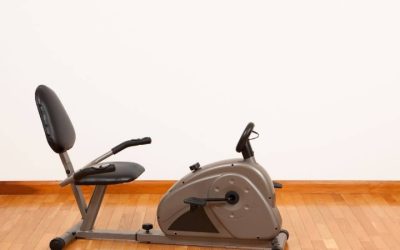
3. Marcy ME-709 — Quietest Recumbent
Recumbents get dismissed as low-effort furniture, which misses the point: if your knees or lower back veto an upright saddle, this is how you keep riding. The ME-709 uses magnetic resistance across eight preset levels and produces a low, even hum with no thump, since your weight stays seated rather than driving down through the pedals. It’s simple — step-through frame, foam-grip handles, no app connectivity — and the resistance ceiling will bore a strong cyclist within a month. For everyone else, it’s the most neighbor-friendly bike per dollar.
4. Echelon Connect EX-5 — Best for Class Followers
Echelon’s competitive-fitness formula lands well here: 32 magnetic levels, a belt drive, and a tablet holder instead of a built-in screen, which keeps both the price and the fan noise down. Mechanically it’s quiet. What raises its real-world volume is the content — instructors shouting through a tablet speaker, plus the standing-climb sections that have you rocking the frame. Tighten the levelers before your first ride. The subscription is effectively mandatory to justify the purchase, so factor that into the total.
5. YOSUDA Indoor Cycling Bike — Best Under Budget
For the price of a few months of gym membership, YOSUDA delivers a solid steel frame, a 35 lb flywheel, and a belt drive. The compromise is felt-pad friction resistance: fresh out of the box it’s acceptably quiet, but after a few hundred miles the pad compresses and you start hearing a dry shushing sound under load, plus occasional squeak when you crank the tension knob hard. Replacement pads are cheap. I’d put this in a garage, basement, or ground-floor room rather than above a sleeping child.
6. NordicTrack Commercial S22i — Loudest, and Worth It Anyway
This one earns last place honestly. The automatic incline and decline system that tilts the bike from -10% to 20% is driven by a motor, and that motor growls every time an instructor calls a hill. Add a 22-inch rotating screen with real speakers and a fan, and you have the noisiest machine in this group by a wide margin. It’s also the most engaging: iFIT’s terrain-matched rides genuinely change how a session feels, and resistance adjusts without you touching a knob. Choose it if you have a basement or a detached room, not a shared wall.
Frequently Asked Questions
How quiet is quiet enough for an apartment?
Roughly 50 dB is the practical threshold — comparable to a refrigerator or a quiet conversation. Below that, ambient noise in a typical building masks your ride. Bear in mind that airborne volume and structural vibration are separate problems; a bike can measure quietly and still transmit thump through a wood-frame floor.
Does a mat actually reduce noise?
Yes, and it’s the cheapest upgrade available. A dense rubber mat, ideally 6 mm or thicker, decouples the frame from the subfloor and kills most low-frequency transfer. Interlocking foam tiles help less because they compress and let the bike rock. Skip carpet-only setups, which absorb nothing structurally and hide unlevel feet.
Why did my quiet bike start clicking?
Nine times out of ten it’s the pedals or the crank arm, not the resistance system. Pedal threads loosen with use, so retorque them after the first two weeks and every few months after. If the click follows your pedal stroke rhythm exactly, that’s the culprit. A creak that appears only when you stand usually means loose seat post or handlebar clamps.
Is magnetic resistance worth the extra cost?
For anyone sharing walls, floors, or a household with light sleepers, yes without hesitation. Beyond the noise difference, magnetic systems require no pad replacements, deliver repeatable resistance numbers you can actually train against, and don’t fade mid-workout as friction components heat up.
Final Thoughts
If your bike sits above someone else’s ceiling, spend on the resistance mechanism before the screen. The Keiser M3i is the safest choice for genuine silence, and the Schwinn IC4 captures most of that quiet at roughly half the outlay, making it the pick I’d recommend to the majority of home riders. Choose the Marcy ME-709 if joints are the limiting factor, the Echelon EX-5 if class programming keeps you consistent, YOSUDA if the budget is firm and the room is forgiving, and the NordicTrack S22i only if nobody is close enough to complain. Then buy the mat, level the feet, and check your pedal bolts. That fifteen-minute setup does more for household peace than any spec sheet.


Write Your Review
No reviews yet. Be the first to share your experience!