Key takeaways
- Buy for your height, not your weight. A 5’2″ user and a 6’1″ user need different roller positions. Look for chairs with adjustable shoulder airbags or a manual roller-position override.
- Use the “try before you buy” trick: Visit a showroom, sit in each chair for 10 minutes, and run the same auto mode on each. Compare pressure, noise, and whether you feel the rollers hit your trigger points.
- Skip the “shiatsu” marketing unless it’s a true kneading motion. Many chairs just vibrate. Check for a demo video showing the rollers actually rotating and pressing, not just buzzing.
- Don’t pay extra for “app control” unless you’ll use it. Most people press two buttons: power and start. A good physical remote is worth more than a buggy app.
What's inside
If you’ve ever finished a long day feeling like your spine has been through a car wash, you already know why a massage chair earns its floor space. But the market has ballooned over the past two years, and the gap between a $400 “shaker” and a $4,000 therapeutic unit is wider than ever. This guide cuts through the marketing fluff to help you understand track types, airbag counts, and body-scan tech—so you can buy the right chair for your body, your budget, and your living room, not just the one with the flashiest demo mode.
We test home massage chairs the way you’d use them: daily 20-minute sessions over several weeks, measuring pressure distribution, noise levels, heat consistency, and whether the advertised features actually work on real human bodies of different heights and weights. Below, you’ll learn what actually matters, which specs are worth paying for, and how to spot a gimmick before it lands on your doorstep.
As an Amazon Associate we earn from qualifying purchases.


Understand the Track: S-Track vs. SL-Track vs. L-Track
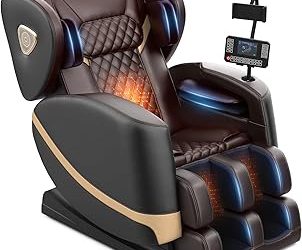
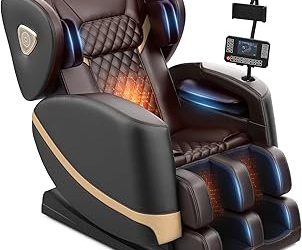
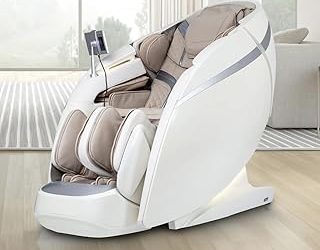
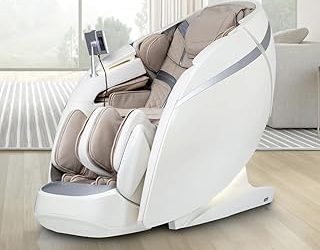
The track is the metal rail your rollers travel along—it’s the backbone of the entire massage. An S-Track follows your spine’s natural curve but stops at the lower back. An L-Track extends down into the glutes and hamstrings, which is great for sciatica relief but sometimes sacrifices neck coverage. The newer SL-Track (used by the FURNIMAT and the 4D SL-Track models) combines both: it curves with your spine and reaches the upper hamstrings. If you have lower-back tightness or sit for a living, an SL-Track is the minimum spec you should consider. Also check the track length—55 inches is the current sweet spot for taller users (up to 6’2″), while shorter tracks may leave your neck untouched.
Rollers and Airbags: More Isn’t Always Better
You’ll see “14 rollers” or “40 airbags” thrown around like horsepower. Here’s the reality: roller quality matters more than count. Look for 4D or 3D rollers that can protrude outward and vary speed, not just spin in circles. The Real Relax Favor-06 uses a 3D SL-track with a phone controller for fine-tuning pressure, which is genuinely useful for sensitive areas. Airbags are for compression—shoulders, hips, calves, arms. Ten to twenty well-placed airbags are plenty; forty is nice but only if they’re actually positioned on your body, not just listed on a spec sheet. The 4D 55″ SL-Track model’s 40 airbags are notably well-distributed, but for many users, the Real Relax 2026 SL-Track with 8 auto modes hits the value sweet spot.
Zero Gravity and Body Scanning: The Two Features That Matter
Zero gravity isn’t a buzzword—it’s a physiological position that tilts your knees above your heart, reducing spinal compression by up to 30%. Make sure the chair you buy actually reclines to a true zero-G angle (not just a slight tilt). Just as important is body scanning. Cheap chairs use a fixed roller path that misses your shoulders or digs into your neck. Good chairs—like the Real Relax Dual-core S-Track—use a quick scan to map your spine’s length and adjust roller travel accordingly. Test this in the store if you can: sit down, let it scan, and see if the rollers stop exactly at your shoulder blade and upper glute. If they overshoot, you’ll feel it in the first five minutes.
Heat, Extras, and Control: What’s Actually Useful
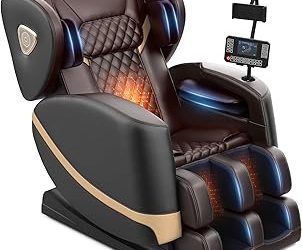
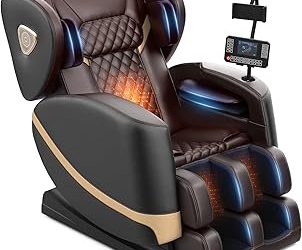
Waist and calf heating is worth paying for—it helps muscle recovery and makes the chair usable year-round. Bluetooth speakers are fine, but a good vibration-free speaker system is rare; most chairs sound tinny. Skip any model that forces you to use an app as the only controller—apps crash, and you want physical buttons. The Real Relax Favor-06 and the Real Relax 2026 both include a child lock and pause button, which sound minor until you realize how annoying it is to claw for a stop button mid-massage. The FURNIMAT’s touchscreen is responsive, but the phone controller on the Favor-06 is more intuitive for adjusting on the fly. Also: check the footprint. Most full-body chairs need 30+ inches of clearance behind them for recline, and they’re heavy (150+ lbs). Measure your doorways first.
Warranty, Assembly, and Return Policy
Massage chairs are mechanical, and things break. A one-year warranty on parts is the industry minimum—two years is better. Look for chairs that ship pre-assembled or with minimal setup (the Real Relax Brown pre-assembled model is a standout here—you’ll be sitting in it within 10 minutes of unboxing). Before buying, confirm the return policy covers “changed my mind” and not just defects. Shipping a 180-lb chair back costs $200+ if you’re wrong about it. Finally, always check the weight limit. Most chairs are rated to 270 lbs, but if you’re over that, the rollers will strain and the recline motor will whine. A few models, like the 4D 55″ SL-Track, handle up to 330 lbs—check the spec sheet before you commit.
Tips
- Buy for your height, not your weight. A 5’2″ user and a 6’1″ user need different roller positions. Look for chairs with adjustable shoulder airbags or a manual roller-position override.
- Use the “try before you buy” trick: Visit a showroom, sit in each chair for 10 minutes, and run the same auto mode on each. Compare pressure, noise, and whether you feel the rollers hit your trigger points.
- Skip the “shiatsu” marketing unless it’s a true kneading motion. Many chairs just vibrate. Check for a demo video showing the rollers actually rotating and pressing, not just buzzing.
- Don’t pay extra for “app control” unless you’ll use it. Most people press two buttons: power and start. A good physical remote is worth more than a buggy app.
Frequently Asked Questions
How much should I spend on a decent massage chair?
Real therapeutic value starts around $1,200–$1,500. Below that, you’re mostly getting vibration and heat. For a genuine SL-track with body scanning and zero gravity, expect to pay $1,800–$2,500. Above $3,500, you’re paying for brand name and slightly quieter motors, not dramatically better massage.
Are massage chairs safe for people with back problems?
Generally yes, but check with your doctor if you have osteoporosis, herniated discs, or recent surgery. Avoid deep tissue modes if you’re in acute pain. Start with the gentlest auto mode and increase pressure gradually over a few days.
How loud are these chairs during operation?
Most are 45–55 decibels—about the same as a quiet conversation or a refrigerator hum. The 4D models tend to be louder because of the extra roller motors. If you’ll use it while watching TV, look for models advertised as “quiet operation” and test in a showroom if possible.
Can two people with different heights share one chair?
Yes, if the chair has automatic body scanning and a manual roller-position override. Set it once per person, and save it as a custom program. Without body scanning, the chair will consistently miss one person’s neck or overreach the other’s lower back.
Conclusion
The best massage chair isn’t the most expensive one—it’s the one whose track length, roller type, and controls match your body and your daily pain points. Start with an SL-track, demand real zero gravity and body scanning, and never sacrifice a physical pause button for a shiny app. If you follow that checklist, you’ll find a chair that pays for itself in saved chiropractor visits within a year—and that’s a purchase we can stand behind.