Our Top Picks
 Igloo 5 Gallon Portable Sports Cooler Water Beverage5 Gallon14.5 x 13 x 19.5 inches2.7 PoundsCheck on Amazon
If you want to avoid lifting heavy bottles, a bottom-loading cooler from Avalon, Brio or Primo is the sensible pick; if you want the lowest outlay and don’t mind hoisting a full 5-gallon bottle, a top-loading model from Avalon, Brio or Primo does the job. Outlets such as Bob Vila repeatedly point to the Brio 500 Series self-cleaning bottom-loader, the Avalon A4 bottom-loader and the Primo Deluxe hot and cold bottom-loader for home use. This guide compares the main styles, explains what to look for, and gives a decision table.
At a Glance: Popular 5 Gallon Water Coolers
| Model or style | Loading | Best for | Features as reported | Limits |
|---|---|---|---|---|
| Avalon A4 bottom-loading | Bottom | Households that want hygiene features | Reviewers cite its BioGuard anti-microbial coating on the dispenser, per outlets that summarize the maker’s claim | Needs a clear spot with ventilation around the back |
| Avalon A6 touchless | Bottom | Offices and shared spaces | Listed as a touchless option in a roundup | Touchless sensor models need power for the sensor |
| Brio 500 Series (self-cleaning) and CLBL520SC | Bottom | Homes wanting self-cleaning cycles and hot, cold and room-temperature water | Named best overall by some roundups | Self-cleaning features vary by model; read the manual |
| Brio CLTL130 / 530 top-load | Top | Budget buyers | Listed as top-load options | You lift the bottle overhead |
| Primo Deluxe hot and cold bottom-loading (601088) | Bottom | Value and quiet operation, according to one roundup | Called best value by some outlets | Fewer extras |
| Primo Top Loading Pro 3 temp | Top | Budget three-temperature use | Listed as a top-load alternative | Lifting required |
| Frigidaire EFWC498 | Top | Basic hot and cold | Mentioned in a roundup, which also notes the drawbacks of top-loading designs | Lifting |
Many online roundups are affiliate-style and some score products on loose criteria. Treat them as a way to build a short list and read the maker’s manual for each model.
Igloo 5 Gallon Portable Sports Cooler Water Beverage Dispenser with Flat Seat Lid, Insulated Beverage Dispenser, Grey/Black
Chosen because it specifies Insulated Beverage Dispenser and Grey/Black.
View on Amazon
Igloo 5-Gallon Heavy-Duty Beverage Cooler, Orange - 4-Pack
Chosen because it specifies Orange and 4-Pack.
View on Amazon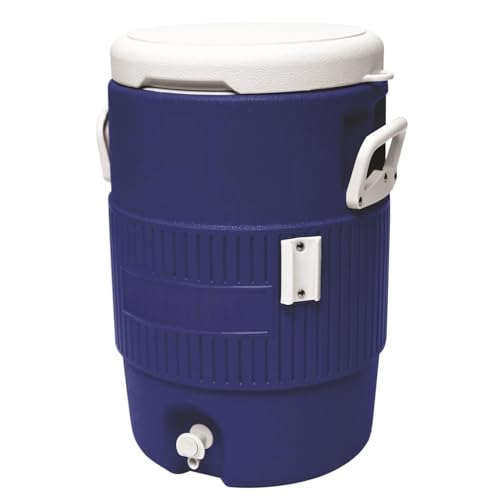
Heavy Duty Water Beverage Cooler Dispenser, Orange, Polyethylene, 5 Gallon, Insulated Container with Spigot, Side Handles (Blue)
Chosen because it specifies Orange and Polyethylene.
View on Amazon
Brio Bottom Loading Water Cooler Dispenser for 5 Gallon Bottles, Stainless Steel
Chosen because it specifies Stainless Steel.
View on AmazonBottom-Loading vs Top-Loading
Bottom-loading
The bottle sits in a cabinet below the spout. A 5-gallon bottle of water is heavy, so sliding it into a base rather than lifting it overhead is the main reason people choose this style. The trade-offs are a higher purchase tier and an internal pump that adds a little noise.
Top-loading
Gravity feeds water from an inverted bottle. These cost less and have fewer parts, but you must lift and flip the bottle, which is a safety consideration for anyone with back, shoulder or grip concerns.
Features to Compare
- Temperatures: Hot and cold is common; some models also give room-temperature water. Look for child-safety locks on the hot tap.
- Hygiene features: Brio highlights self-cleaning on some models and Avalon highlights BioGuard on others. These are maker claims. Regular cleaning following the manual is still needed.
- Bottle size: Most take 3- and 5-gallon bottles; read the maker’s stated range.
- Footprint: Measure height and depth. Allow clearance behind the unit for ventilation as stated in the manual.
- Noise: Compressor units hum when cooling. Thermoelectric units are generally quieter but cool less.
- Power: Hot tanks draw more power. Use a grounded outlet and avoid extension cords unless the manual allows it.
- Certifications: Look for listed safety marks from the maker and for NSF status for materials if stated.
Water Safety and Cleaning
Use bottled water from a reputable supplier and follow the supplier’s instructions. Clean the reservoir, spout and drip tray on the schedule the maker gives, usually every few months, using the products they allow. Do not use bleach or cleaners the manual doesn’t approve. Keep the hot tap locked if children are around. Unplug before cleaning and call a qualified technician for repairs. If the cooler is leaking, smells odd or trips breakers, stop using it and contact the maker.
Pick X If… Decision Table
| If you… | Pick | Why |
|---|---|---|
| Don’t want to lift bottles | Avalon A4, Brio 500 Series or Primo bottom-loader | Bottle slides into the base |
| Want built-in hygiene features | Avalon with BioGuard or Brio self-cleaning | Maker-stated sanitizing aids, with regular cleaning still needed |
| Want a quiet, value-minded hot and cold unit | Primo 601088 | Roundups call it good value |
| Want the lowest outlay | Top-loading Brio, Primo or Avalon | Fewer parts, lower tier |
| Need touch-free dispensing | Avalon A6 touchless | Fewer hand contacts |
| Have small kids at home | Any model with a hot-water child lock | Reduces risk of scalds |
Alternatives
- Bottleless (point-of-use) dispenser: Connects to your plumbing with a filter. No bottles to lift, but requires installation.
- Countertop dispenser: Smaller footprint for 3-gallon or smaller bottles.
- Filtered pitcher or fridge filter: A simpler option if you only need filtered water, not hot or cold on demand.
Setup and Placement Notes
- Location: Choose a hard, level floor away from direct sun and heat sources such as ovens or radiators. Keep it clear of walls by the distance stated in the manual so the cooling parts can breathe.
- Power: Plug the unit into a grounded outlet that is not shared with other high-draw appliances, and avoid extension cords unless the manual allows them.
- First use: Most makers advise rinsing or sanitizing the reservoir before first use and letting the unit sit upright for a period after moving so the refrigerant settles. Follow the manual’s instructions.
- Spill control: A drip tray collects splashes. Empty it regularly to prevent odor and mold.
- Bottle handling: Even with a bottom-loader, a 5-gallon bottle of water is heavy. Lift with your legs, ask for help if needed, and place it on the base before sliding it in.
Running Costs and Maintenance
A cooler with a compressor and hot tank runs through the day, so look for any energy-saving or vacation mode the maker offers. Some models let you switch off the hot tank when not needed. Replace any filters or caps the manual specifies. If the unit stops cooling, check the outlet, the temperature switch and ventilation before calling a technician.
Who Should Skip a Bottled Cooler
If you drink water mainly at the sink and do not need hot water on demand, a filtered pitcher or an under-sink filter is simpler. If you have trouble carrying heavy bottles at all, consider a bottleless point-of-use dispenser connected to your plumbing, which usually requires a qualified installer. Also consider storage: you need space to keep spare full bottles, and the delivery or refill routine must suit your household.
Bottle Supply Considerations
A bottled cooler depends on a steady supply of 5-gallon bottles, either from an exchange service or a refill station. Compare how often your household would empty a bottle. A single person may take weeks, which raises the question of stale water and of how often to sanitize the reservoir. A large family may go through a bottle in a few days, which makes bottom-loading and a quick swap more valuable. Keep spare bottles in a cool, dark place off the floor and away from chemicals, and follow the supplier’s stated shelf life.
Final Selection Tips
Start by deciding between bottom-loading and top-loading, since that choice drives the purchase tier and daily effort. Then compare the number of temperature settings, the child lock on the hot tap, and the cleaning approach the maker describes. Check the footprint against the spot where the cooler will stand, including the space to open the bottom door. Read the stated warranty term, and confirm that replacement parts such as spigots, drip trays and bottle probes are available from the maker. Models from Avalon, Brio and Primo are the ones most often named in current roundups, so finding parts and manuals for them is typically straightforward.
Noise and Comfort
Compressor-cooled units cycle on and off and can be audible in a quiet kitchen, while thermoelectric models are generally quieter but cool less aggressively in a warm room. If the cooler will sit near a bedroom or home office, look at reviewer comments on noise and consider a rubber mat under the feet to cut vibration. A small night light on some models also helps in dim rooms.
Frequently Asked Questions
Are bottom-loading water coolers worth it?
For most households, yes, because a full 5-gallon bottle is heavy and lifting it is the main drawback of top-loaders. The trade-off is a higher purchase tier and a pump that can add noise.
How often should I clean a water cooler?
Follow the manual, which usually calls for cleaning the reservoir and spout every few months and wiping the drip tray more often. Self-cleaning or anti-microbial features, where present, are described by makers as supplements, not replacements.
Do water coolers use a lot of electricity?
Models with a hot tank and compressor draw power continuously to hold temperature. Check the maker’s stated wattage and whether an energy-saving mode is offered.
Can I use a water cooler in a garage or office?
Yes, if the room stays within the temperature range the maker lists, the outlet is grounded, and there is clearance for airflow. Avoid freezing conditions and direct sun.
What size bottle fits a 5 gallon cooler?
Most take standard 5-gallon bottles, and many also take 3-gallon ones. Check the manual for the bottle neck type and height.
Is the hot water safe for kids?
Hot taps can scald. Choose a model with a child-safety lock, keep it engaged, and supervise children near the unit.