Key takeaways
What's inside
Canister vacuums occupy a strange position in the floor-care market. They are not the default choice most shoppers reach for, and that is precisely why they deserve a second look. After spending months testing eight models across carpet-heavy rooms, mixed flooring, and homes with shedding pets, one thing became clear: a good canister vacuum solves problems that uprights create. The motor lives in a sled-style base you pull behind you, which means the cleaning head stays light enough to glide under low furniture and up stairs without wrestling. That geometry also lets manufacturers fit more powerful motors into the base without forcing you to lift the weight while cleaning.
The bad ones, however, fall apart quickly. Thin plastic casings crack at the hose junction, cheap HEPA-equivalent filters clog within weeks and kill suction, and poorly balanced bodies tip over on hard floors. What separates a worthwhile canister from a disappointing one in 2026 is not any single spec but a combination of consistent airflow through the full cycle, durable filtration that survives regular use, and a physical design that stays stable as you work. The models below earned their spots because they get those fundamentals right at their respective price points.
As an Amazon Associate we earn from qualifying purchases at no extra cost to you. Product prices and availability are accurate as of the date shown and are subject to change.




Quick Picks
| Product | Best for | Price |
|---|---|---|
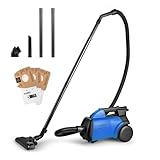
| Eureka Whirlwind NEN110A | Budget buyers with mostly hard floors | $69.96 |
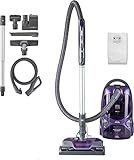
| Kenmore Pet Friendly Bagged | Pet owners wanting lightweight convenience | $223.99 |
| Kenmore 600 Series Pet Friendly | All-around performance with pet hair | $279.99 |
| Eureka 3670M | First-time canister buyers | $82.99 |
| Kenmore 81214 200 Series | HEPA filtration on a moderate budget | $196.99 |
| Eureka Bagless for Hardwood | Hardwood and tile-focused cleaning | $119 |
| Eureka 3670H Bagged | Allergies on a tight budget | $67.99 |
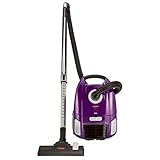
| Bissell Zing 2154A | Small apartments and quick messes | $89.99 |
How We Picked
We evaluated every unit on four criteria: sustained suction through the entire fill cycle (not just out-of-box performance), filtration quality and long-term cost of replacement bags or filters, physical stability during use on both carpet and hard floors, and accessory versatility for edges, upholstery, and stairs. Weight and cord length factored in as tiebreakers. A vacuum that scores high on raw suction but tips over twice per session or requires you to empty a bagless dustbin three times per room did not make this list.
The 8 Best Canister Vacuums in 2026
Eureka Whirlwind NEN110A
The Whirlwind is the entry point most people should consider before spending more. It weighs under ten pounds including the base, the cord reaches far enough for an average living room without a mid-cleaning outlet swap, and the bagless design eliminates ongoing consumable costs. Two pros: it handles transitions from tile to low-pile carpet without fuss, and the telescoping metal wand stays locked at height during normal use. One con: the plastic clip where the hose meets the base feels like the weakest structural point and requires gentle handling. Skip it if your home has thick high-pile carpet or multiple shedding dogs, because its motor, while adequate, cannot sustain deep-pile cleaning without repeated passes.
Kenmore Pet Friendly Lightweight Bagged
This model targets households where pet hair is the primary cleaning challenge. The bagged system keeps hair and dander contained more reliably than cyclonic separation, and the swivel steering on the cleaning head tracks predictably along baseboards. Two pros: the HEPA-sealed bag traps fine particles that bagless units often blow back into the room, and the overall weight makes stair cleaning genuinely manageable. One con: at this price, replacement bags add up over years of ownership. Skip it if you vacuum primarily bare hard floors, because a bagless unit eliminates the consumable cost without sacrificing performance on non-carpeted surfaces.
Kenmore 600 Series Pet Friendly Bagged
The 600 Series builds on the lighter Kenmore by adding a variable power dial, which matters more than it sounds when you are switching between hardwood and thick area rugs in the same session. The telescoping wand extends longer, reducing how often you bend over. Two pros: pet hair removal from upholstery with the included tools is noticeably more effective than on the budget models, and the filtration remains consistent across the full bag life. One con: it is the heaviest unit in this list, which you feel when carrying it between floors. Skip it if your home is single-level with hard floors only and you do not have pets.
Eureka 3670M
The 3670M sits in a useful middle ground for first-time canister owners. The included five bags extend its ready-to-use lifespan well past the initial weeks, and the swivel cord prevents the tangle that plagues cheaper units during tight-turn cleaning around chair legs. Two pros: the onboard tool storage means you are not digging through a closet for the crevice nozzle, and the base glides smoothly on both laminate and medium-pile carpet. One con: the hose is shorter than ideal for stair cleaning without relocating the base unit. Skip it if you need maximum raw suction for deep-pile carpet in a large home.
Kenmore 81214 200 Series
The 200 Series earns its spot by offering genuine HEPA filtration at a price well under the 600 Series. The dual-motor system separates drive and suction power, so the brush roll does not rob airflow from the vacuum channel. Two pros: the HEPA seal means allergy sufferers get filtered exhaust rather than the faint dusty smell some budget units produce, and the three included tools cover most edge and furniture cleaning tasks. One con: the orange plastic exterior scuffs visibly within weeks of normal use. Skip it if you already have minimal carpet and primarily need a bare-floor sweeper with occasional spot cleaning.
Eureka Bagless for Hardwood and Carpet
This model earns attention from shoppers who want a canister form factor specifically tuned for the hardwood-plus-carpets combination found in most open-plan homes. The cleaning head adjusts height without manual knob-turning, and the bagless cyclone separates fine dust from larger debris effectively enough for weekly maintenance cleaning. Two pros: no bags to purchase means the long-term cost drops below most bagged rivals in this price range, and the unit is quiet enough to run without raising voices across a room. One con: the dustbin needs emptying after roughly every second use in a carpeted home. Skip it if you prefer sealed containment for allergy reasons, because emptying a bagless bin releases particles back into your breathing zone.
Eureka 3670H Bagged
At the lowest price on this list, the 3670H proves that a bagged canister does not require a premium to perform adequately. The two included bags cover initial use, and the basic cleaning head handles low-pile carpet and hard floors in the same pass. Two pros: the sealed bag system traps dust better than any bagless unit under one hundred dollars, and the cord length is generous for a budget machine. One con: the telescoping wand uses friction-fit locks that loosen after repeated extension and retraction. Skip it if you have thick shag or high-pile carpet, because the motor lacks the sustained power to pull embedded debris from deep fibers.
Bissell Zing 2154A
The Zing is the smallest and lightest option here, making it ideal for apartments, dorms, and anyone who stores a vacuum in a narrow closet. It does not try to replace a full-size machine for a two-thousand-square-foot house, and that honesty works in its favor. Two pros: the purple plastic housing is surprisingly rigid for its size, and the cord stores neatly around the two rear hooks without tangling. One con: the narrow cleaning head means more passes per room than wider rivals. Skip it if you have a household with pets that shed heavily into carpet, because its small bag fills faster than you would like and suction drops noticeably.
Buying Guide
Bagged versus bagless for canisters
Bagged canisters trap fine dust inside the paper or synthetic bag, which means less exposure when emptying and more consistent suction until the bag reaches about three-quarters full. Bagless canisters rely on cyclonic separation and a visible dustbin; they never require a purchase beyond the initial unit, but they need washing to prevent odor and particle buildup on the cyclone walls. If you have allergies, a sealed bagged system is almost always the safer bet.
Suction consistency across the fill cycle
The real question is not peak suction but how much airflow remains when the bag or bin is half full. Cheap canisters use a single-stage filter that clogs quickly, causing a steep decline. Look for multi-stage filtration with a pre-motor screen and a separate exhaust filter. If a review does not mention how the unit performs at the end of its fill cycle, the manufacturer likely has nothing favorable to report.
Stability, cord reach, and physical ergonomics
A canister that tips every time you pull it around a corner wastes more time than a slightly slower machine that stays upright. Check for a low center of gravity in the base sled, a cord long enough to cover your largest room without switching outlets, and a wand that locks firmly at your working height. Stair cleaning specifically demands a short enough hose to keep the base on the landing below you while you pull the wand upward.
Our Verdict
The Kenmore Pet Friendly Lightweight Bagged is our top pick for most households because it balances filtration quality, weight, and accessory coverage without a price that forces compromises. For buyers who want the lowest total cost of ownership, the Eureka Whirlwind NEN110A delivers a functional bagless canister at a price that leaves room for accessories. If you already own a separate vacuum for bare floors and need a dedicated machine primarily for stairs and upholstery around shedding pets, the Kenmore 600 Series justifies its higher cost through the power dial and longer reach that make those specific tasks dramatically easier.
FAQ
Do canister vacuums clean carpet as well as uprights?
A well-designed canister with a powered or semi-powered cleaning head matches or exceeds an upright on low and medium-pile carpet. Very thick shag remains an edge case where a heavy upright with a fixed brush roll has a slight mechanical advantage, but most homes do not have that pile depth.
Are bagged canister vacuums worth the extra cost of bags?
If you have allergies or pets, the sealed containment and consistent suction across the fill cycle outweigh the annual bag cost. For casual cleaning in a hard-floored apartment, a bagless unit saves money and still performs adequately.
How long should a canister vacuum last?
With regular filter cleaning and proper hose attachment, a quality canister should last five to seven years. Budget models often fail at the hose junction or wand lock within two to three years, which is why build quality at the connection points matters as much as motor specs.
Is a canister vacuum good for hardwood floors specifically?
Yes, often better than uprights because the lightweight cleaning head does not drag or scratch, and you can switch to a soft brush tool for polished surfaces without bending down to adjust a base unit. The absence of a heavy motor on the head also means less chance of knocking baseboards or furniture legs.
Part of our vacuums buying guide hub.