Our Top Picks
 Utopia Kitchen Countertop Compost Bin 1.3 Gallon1.3 Gallon (Pack of 1)14 x 8 x 9 inches2 poundsCheck on Amazon
For most households the best kitchen compost bin is a lidded countertop pail with a charcoal filter, such as the OXO Good Grips Easy-Clean Compost Bin, while buyers who want less handling should look at an electric food recycler like the Vitamix FoodCycler, and apartment dwellers who cannot use a curbside program may prefer a bokashi bucket. The right choice depends on where your scraps end up: a municipal green bin, a backyard pile, a worm bin, or a machine that dries and grinds them. This guide compares the main styles, explains the specs makers publish, and lays out the trade-offs by budget tier.
At a Glance
| Type / Example | Best for | Stated features | Limits |
|---|---|---|---|
| Countertop pail: OXO Good Grips Easy-Clean Compost Bin | Daily scraps heading to curbside or backyard compost | The maker lists a small capacity of roughly three-quarters of a gallon, a lid with a replaceable filter, and a removable top for filling and cleaning | Fills quickly for larger households; filter needs replacing |
| Stainless steel pail: Epica or Utopia Kitchen style bins | Buyers who want a durable, stain-resistant bucket | Sellers commonly list capacities near 1.3 gallons, a stainless body, and a charcoal filter in the lid | Filters lose effect over time; fingerprints show on some finishes |
| Under-sink or cabinet-door bin | Keeping the counter clear | Typically a hanging or lift-out container with a handle | Out of sight means easier to forget; odor can build in warm kitchens |
| Electric food recycler: Vitamix FoodCycler, Lomi | Fast volume reduction, no outdoor access | Makers describe a heated, ground-down cycle that turns scraps into a dry, soil-like material | Needs power and counter space; output is generally described as a soil amendment, not finished compost |
| Bokashi bucket | Apartments, meat and dairy-inclusive scraps | Fermentation in an airtight bucket with a bran inoculant; many kits include a spigot for liquid | Still needs a burial or compost step afterward; ongoing bran purchase |
| Worm bin | People who enjoy a practical hobby | Stacked trays that let worms process vegetable scraps | Needs temperature management and care; not suited to every scrap type |
Start With Where the Scraps Go
Capacity and style matter less than the destination. If your city runs a food-scrap collection, a small sealed pail that you empty every two or three days is usually enough, and you can pair it with compostable liners the program accepts. Check the program’s rules, because some accept only certified compostable bags while others ask for paper or no liner at all. If you have a backyard pile or tumbler, a pail with a handle and a wide mouth makes the walk to the pile easier. If you have neither, an electric recycler or a bokashi system gives you a way to deal with scraps indoors.
Utopia Kitchen Countertop Compost Bin 1.3 Gallon, Stainless Steel, Silver | Odorless countertop compost bin with charcoal filter, ideal for food scraps and waste
Chosen because it specifies Stainless Steel and Silver.
View on Amazon
Epica Kitchen Compost Bin for Kitchen Countertops, 1.3 Galllon - Silver | Stainless Steel, Rust- Resistant, Airtight Leak-Resistant Lid, Replaceable Activated Charcoal Filter for Odorless Composting
Chosen because it specifies 1.3 Galllon and Silver.
View on Amazon
Perfnique 1.3 Gal Kitchen Compost Bin with Lid, Countertop Compost Caddy | Indoor compost bucket with inner bucket liner and carbon filter, compact food waste bin, farmhouse kitchen decor
Chosen because it specifies Countertop Compost Caddy and compact food waste bin.
View on Amazon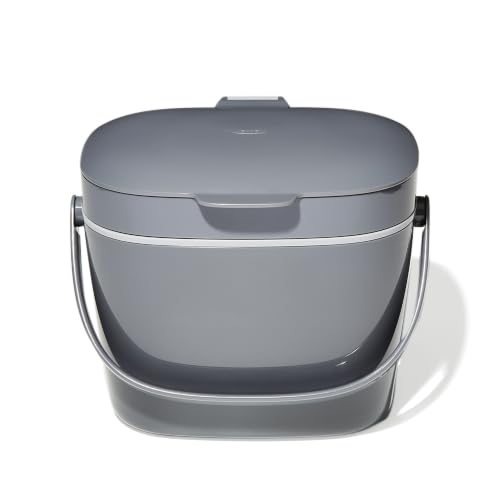
OXO Good Grips Easy-Clean Compost Bin, Charcoal , 1.75 Gal/6.62 L | Food Waste, Organic, Trash Disposal, Clean, Low-Effort, Conceals Bags, Locks in Odors, Smooth Interior, Kitchen Countertop
Chosen because it specifies Charcoal and 1.75 Gal/6.62 L.
View on AmazonCountertop Pails
OXO Good Grips Easy-Clean Compost Bin
This is the model most reviewers point to as the standard small countertop option. The maker describes a compact body, a lid that opens and closes without touching it with a dirty hand, and a design intended for easy rinsing. Reviewers at kitchen and home outlets generally note that its small size is both its strength, because it fits beside a prep area, and its weakness, because a family cooking from scratch will empty it often. It uses a replaceable filter in the lid, and the maker advises replacing it periodically.
Stainless Steel Pails
Several brands sell stainless steel pails in the 1 to 1.5 gallon range with a lid-mounted charcoal filter. They suit buyers who prefer a metal finish that matches other kitchen tools and will not hold stains like some plastics. Think about weight when full, how the lid seals, and whether the inner liner is removable. A removable inner bucket makes washing far easier, which matters because food residue is the main source of odor.
Ceramic and Bamboo Styles
Ceramic crocks look attractive on a counter and are easy to scrub, but they are heavy and can chip if dropped. Bamboo-fiber bins are lighter and often sold in decorative colors; reviewers note that they can absorb moisture and odor over time, so they suit light use better than heavy daily use.
Electric Food Recyclers
Machines such as the Vitamix FoodCycler and the Lomi appeal to people who want to avoid a smelly pail altogether. The makers describe a cycle in which scraps are heated or aerated and ground into a dry, reduced material. They point out that the output is intended to be mixed into soil or added to an existing compost pile rather than used as finished compost on its own. Independent reviewers commonly raise three issues: the cycle takes several hours, the unit makes noise while running, and the upfront cost sits in the premium tier. Some local compost programs do not accept the dried output, so ask before assuming it can go in the green bin. Follow the manual for what the machine can and cannot process; makers typically list items such as large bones, pits, or certain fibrous materials as unsuitable.
Bokashi Systems
Bokashi uses a bran treated with microbes and an airtight bucket to ferment scraps, including cooked food and small amounts of meat and dairy that traditional piles discourage. Makers of kits describe a routine of layering scraps with bran, pressing out air, and draining liquid from a spigot. The fermented material still needs to be buried in soil or added to a larger compost system afterward. That makes bokashi a good fit for people with a garden bed or a community drop-off, and a poor fit for anyone with no outdoor space and no pickup service.
Size, Fit, and Material Notes
- Capacity: A pail under one gallon suits one or two people who empty often. Households of four or more usually want 1.5 gallons or larger, or a second pail.
- Footprint: Measure the counter space and the clearance under cabinets before buying a tall pail with a flip lid.
- Filters: Charcoal filters reduce odor but are consumables; check how the maker sells replacements.
- Cleaning: Look for a removable inner bucket and a smooth interior. Some makers list parts as dishwasher-safe; follow the manual for the top rack or hand-wash guidance.
- Liners: Use only liners your collection program or compost setup accepts.
Care and Odor Control
Empty the pail before it is full, wash it with hot soapy water regularly, and let it dry fully. Layering dry material such as paper towel or shredded paper with wet scraps can reduce moisture. Storing a pail in the freezer is a trick some people use for meat or fish scraps if collection day is far off. Keep pails away from heat sources, and keep young children and pets from reaching scraps, since some foods, such as onions, chocolate, and grapes, can be harmful to animals.
Pick X If
| Pick this | If |
|---|---|
| OXO-style plastic pail | You have curbside pickup or a backyard pile and want a simple, easy-to-clean container |
| Stainless steel pail | You want a durable look and plan to use it daily for years |
| Larger 2 to 3 gallon bin | Your household cooks often and you want fewer trips to the pile |
| Electric recycler | You have no outdoor access, want to avoid odor, and can accept power use and a premium tier cost |
| Bokashi kit | You want to handle cooked food scraps and can bury or add the result to soil |
| Worm bin | You want a long-term project and have a spot with steady temperatures |
Budget Tiers
Budget: Basic plastic or stainless pails with a snap lid and filter cover most needs for people with a collection program. Mid-range: Branded pails with better lids, removable liners, and replaceable filters, plus bokashi starter kits. Premium: Electric recyclers and multi-tray worm systems, which cost more and need space and power or regular care.
Alternatives
- Reusable container in the freezer: A lidded tub works for people who only compost occasionally and want zero odor.
- Outdoor tumbler or bin: Brands like FCMP and Envirocycle make backyard composters that receive the scraps your kitchen pail collects.
- Community drop-off: Many cities and farmers markets accept scraps, which removes the need for any equipment beyond a pail.
Frequently Asked Questions
How big should a kitchen compost bin be?
For one or two people who empty every few days, a pail around one gallon is usually enough. Families that cook daily generally prefer 1.5 gallons or more. Choose a size you will actually empty before odor develops.
Do compost bins smell?
They can if scraps sit too long or the container is not washed. Emptying often, keeping the lid closed, and replacing the charcoal filter on the maker’s schedule help. A freezer container is another option for smelly scraps.
Are electric composters real composters?
Makers generally describe them as food recyclers that dry and grind scraps into a soil-like material. That output is typically meant to be mixed into soil or a compost pile, so read the manual and your local program’s rules before relying on it.
Can I put meat and dairy in a kitchen compost bin?
It depends on the destination. Many backyard piles discourage them, while some municipal programs and bokashi systems accept them. Check your program’s list or the system’s manual.
Are compostable bags necessary?
No, they are optional. A pail with a washable inner bucket works without liners, and some collection programs only accept specific certified liners, so confirm their rules first.
How often should I clean the pail?
Rinse it each time you empty it and wash it more thoroughly with hot soapy water every week or so. Let it dry before putting it back in use.