Key takeaways
- Stainless steel — durable, glides well, resists scratches from buttons and zippers. The best all-rounder.
- Ceramic-coated — slickest glide and even heat, but the coating can chip or wear if the iron is knocked or left face-down on a rough board.
- Nonstick / PTFE-coated — great on synthetics at low heat, but coatings degrade faster than bare metal.
- Anodized aluminum — lightweight and cheap, but scratches and can snag delicate fabrics once damaged.
The best steam irons balance four things: steam output measured in grams per minute, a smooth-gliding soleplate, a tank that lasts through a full load, and a weight light enough to use without wrist strain. For most households in 2026, that sweet spot is a mid-range iron ($50–$120) with 30–40 g/min continuous steam, a stainless steel or ceramic soleplate, and a 300 ml tank.
What Actually Matters When Comparing Steam Irons
Steam output
Steam is rated two ways: continuous output and the burst-of-steam button. Continuous output does the real work — anything under 25 g/min struggles on linen and cotton dress shirts. A burst rating of 150–200 g helps finish stubborn creases, but don’t let a big burst number distract from a weak continuous rate.

Rowenta Focus Excel Steam Iron for Clothes, Anti-Drip Protection, Iron Steamer for Clothes, 1725 Watts, DW5280, Grey
Included for 'Best Steam Irons for Crisp, Wrinkle-Free Clothes' because the listing specifies Anti-Drip Protection and Iron Steamer for Clothes, details this guide uses to compare options.
View on Amazon
Rowenta Iron, Focus Excellence Stainless Steel Soleplate Steam Iron for Clothes, Retractable Cord, 400+ Microsteam Holes, Powerful steam, LED Display, 1750 W Ironing Clothes, Cordreel, Red DW5433
Included for 'Best Steam Irons for Crisp, Wrinkle-Free Clothes' because the listing specifies Retractable Cord and 400+ Microsteam Holes, details this guide uses to compare options.
View on Amazon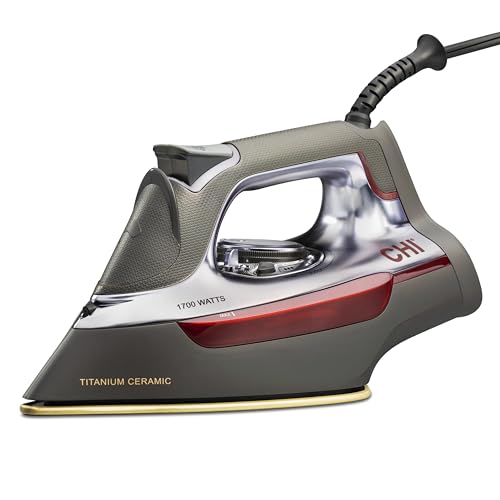
CHI Steam Professional Iron for Clothes with Vertical Steam Burst
Included for 'Best Steam Irons for Crisp, Wrinkle-Free Clothes' as a relevant option in this category; details come from the product listing.
View on Amazon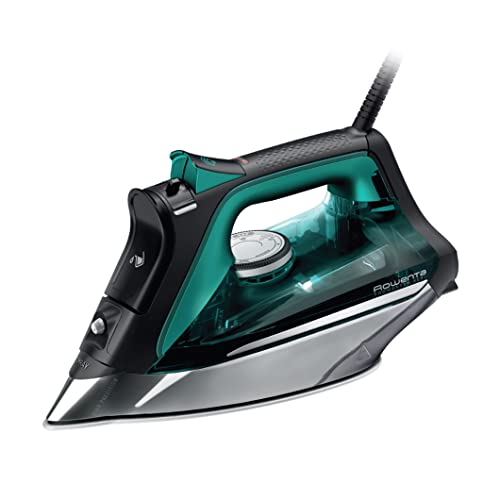
Rowenta Pro Master Stainless Steel Soleplate Steam Iron for Clothes, Anti-Drip Protection, 210 g/min, 400 Microsteam Holes, 1775 Watts Iron Steamer for Clothes, Powerful Steam DW8360
Included for 'Best Steam Irons for Crisp, Wrinkle-Free Clothes' because the listing specifies Anti-Drip Protection and 210 g/min, details this guide uses to compare options.
View on AmazonSoleplate material
The soleplate determines glide, scratch resistance, and how evenly heat spreads:
- Stainless steel — durable, glides well, resists scratches from buttons and zippers. The best all-rounder.
- Ceramic-coated — slickest glide and even heat, but the coating can chip or wear if the iron is knocked or left face-down on a rough board.
- Nonstick / PTFE-coated — great on synthetics at low heat, but coatings degrade faster than bare metal.
- Anodized aluminum — lightweight and cheap, but scratches and can snag delicate fabrics once damaged.
Also check the number of steam holes — more holes distributed to the tip means better coverage around collars and pleats, and a precision tip matters more than most people expect.
Water-tank capacity and weight
A 250–300 ml tank covers roughly 30–40 minutes of ironing at moderate steam — about one basket of laundry. Anything under 200 ml means refilling mid-load. Weight works against tank size: a filled iron typically runs 1.4–1.7 kg. If you have wrist issues or long ironing sessions, a lighter iron with more refills beats a heavy one, or consider a steam generator station (1,200+ ml tank on a separate base) which keeps the handpiece under 1 kg.
Spec Comparison: What the Tiers Look Like
| Spec | Budget iron ($25–$45) | Mid-range ($50–$120) | Premium / steam generator ($150–$350+) |
|---|---|---|---|
| Continuous steam | 15–25 g/min | 30–45 g/min | 40–65 g/min (generators: up to 120+) |
| Steam burst | 60–100 g | 150–200 g | 200–400 g |
| Typical soleplate | Nonstick or basic stainless | Stainless or ceramic | Ceramic or premium stainless |
| Tank capacity | 180–240 ml | 250–350 ml | Generator base: 1,200–1,800 ml |
| Weight (empty) | 1.1–1.3 kg | 1.3–1.6 kg | Iron ~1.6 kg; generator handpiece ~0.8–1.0 kg |
| Steam holes | ~15–30 | 40–50 | 50+ |
| Anti-calc system | Often absent | Standard | Standard, often self-cleaning |
Match the Iron to Your Situation
| Your situation | Best fit | Why |
|---|---|---|
| Weekly basket of cotton/linen shirts | Mid-range iron, 40+ g/min, 300 ml tank | Enough steam to flatten linen without a refill mid-session |
| Mostly synthetics and delicates | Ceramic soleplate with precise low-temp control | Best glide at low heat, less shine/scorching risk |
| Heavy loads, bedding, curtains | Steam generator station | Pressurized steam cuts ironing time roughly in half on thick fabric |
| Small apartment, limited storage | Compact iron (~1 kg) or a garment steamer instead | Steamers handle light wrinkles standing up — no ironing board needed |
| Quilters / sewers | Iron with strong burst steam and a pointed precision tip | Burst steam sets seams; the tip reaches seams and appliqué edges |
| Hard-water area | Model with anti-calc cartridge or self-clean function | Limescale is the #1 killer of steam irons; budget models clog fastest |
Models Worth Knowing in 2026
Rather than a single “best,” these brands consistently deliver on the specs above:
- Rowenta DW9280 / Focus line — stainless soleplate with ~400 steam holes, strong 35+ g/min continuous output, precision tip. A long-standing benchmark for garment ironing.
- Philips Azur / PerfectCare ranges — ceramic-gliding soleplates and OptimalTEMP tech that eliminates fabric-dial fiddling, useful if you mix delicates and denim.
- Braun TexStyle series — excellent glide and ergonomics, lighter than average for its output class.
- Philips PerfectCare steam generator stations — the practical pick for big loads; handpiece under 1 kg with a 1.5 L+ base tank.
- CHI / Black+Decker budget options — solid stainless plates at the $30–$45 tier, though anti-calc maintenance matters more here.
Practical Realities Listings Won’t Tell You
- Hard water shortens lifespan dramatically. In a hard-water region, a budget iron without anti-calc can lose steam output within 6–12 months. Use 50/50 distilled and tap water if the manual allows it.
- What wears first: ceramic coatings chip, anti-drip seals leak, and steam holes clog — usually in that order. A scratched soleplate snags silk permanently, so store the iron upright and never rest it on buttons.
- Weight vs. steam is a real trade-off. Heavy irons press better (the weight does some work), but fatigue your wrist; generators solve this by moving the tank off your hand.
- Auto-shutoff is non-negotiable. Most irons in 2026 include it, but verify — the cheaper the iron, the more likely it’s missing.
- Cord length varies from 2 to 3.5 m; measure the distance from your outlet to the far end of your ironing board.
FAQ
Is a steam iron or garment steamer better?
Different jobs. A steamer refreshes hanging clothes and handles wrinkles on the go but can’t press creases, collars, or pleats. If you iron dress shirts, an iron wins; if you only de-wrinkle knits and blouses, a steamer may be all you need.
How much steam do I really need?
25–30 g/min handles everyday cotton. Go 40+ g/min for linen, denim, and canvas. Below 20 g/min, you’re essentially dry-ironing.
Why does my iron spit brown water?
Limescale or mineral deposits releasing through the steam holes — a sign the iron needs descaling or that tap water is too hard for it. Run the self-clean function monthly.
Bottom line: prioritize continuous steam rate over burst numbers, choose a soleplate for your fabrics rather than brand appeal, and size the tank to your typical load. Get those three right and any reputable iron will serve you well for years.