Key takeaways
- Pro: Super-thin body easily clears low-hanging furniture.
- Pro: Operates with low noise for non-disruptive cleaning routines.
- Con: Lacks smart app mapping or systematic row-by-row navigation.
What's inside
Managing daily dust, pet hair, and surface debris without manually pushing an upright vacuum is the main reason homeowners invest in automated floor care. However, navigating the market requires looking past promotional claims to examine actual suction strength, navigation logic, and docking convenience. In this roundup of robotic vacuum cleaner reviews, we analyze how different feature combinations solve specific household problems, whether you need to pull dirt from thick carpets, mop hard floors, or fit under ultra-low furniture.
By systematically evaluating manufacturer specifications, current pricing, and verified owner feedback, we identified what separates high-performing models from disappointing machines. A reliable robot vacuum must balance suction power and smart pathfinding with minimal upkeep, ensuring it completes its cleaning cycles without constant manual intervention or frequent jam rescues.
As an Amazon Associate we earn from qualifying purchases at no extra cost to you. Product prices and availability are accurate as of the date shown and are subject to change.




Quick Picks
| Product | Best For | Price |
|---|---|---|
| eufy 11S MAX | Budget Ultra-Slim Cleaning | $139.99 |
| roborock Qrevo S Pro | Maximum Suction & High-End Mopping | $549.99 |
| ILIFE V5s Max | Entry-Level Hard Floor Sweeping | $89.99 |
| Tikom G8000 Max | Long-Runtime Vacuum & Mop Combo | $129.99 |
| iRobot Roomba 105 Vac with AutoEmpty Dock | Hands-Free Automated Dust Disposal | $249.99 |
| iRobot Roomba 105 Vac | Systematic Row Cleaning on a Budget | $159 |
| iRobot Roomba 105 Combo with AutoEmpty Dock | Self-Emptying Multi-Surface Vacuum & Mop | $269 |
| Lefant M210 | Compact Pet Hair & Hard Floor Care | $99.99 |
How We Picked
To select the top options for this guide, we evaluated four primary criteria across official spec sheets and owner reviews: suction capability across various floor types, navigation efficiency (comparing laser-based mapping against standard bounce patterns), maintenance convenience (such as self-emptying capacity), and overall performance relative to retail cost. By analyzing long-term user experiences, we prioritized models that consistently deliver thorough floor coverage with minimal physical intervention.
The 8 Best Robotic Vacuum Cleaner Reviews in 2026
eufy 11S MAX Robot Vacuum Cleaner
This model is built for homeowners who need a slim device capable of slipping under low-clearance couches, dressers, and bed frames. The eufy 11S MAX emphasizes quiet daily sweeping without intrusive motor noise. Published specs show a remarkably thin housing, and user feedback confirms its ability to reach dust pockets that taller, sensor-heavy units collide with. While it relies on basic bounce patterns rather than mapping tech, it remains a reliable choice for straightforward maintenance on hard floors and low rugs.
- Pro: Super-thin body easily clears low-hanging furniture.
- Pro: Operates with low noise for non-disruptive cleaning routines.
- Con: Lacks smart app mapping or systematic row-by-row navigation.
When to skip: Skip this model if you have a sprawling multi-room layout requiring targeted room selection or digital keep-out zones.
roborock Qrevo S Pro Robot Vacuum and Mop
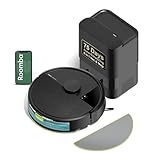
Designed for multi-surface homes requiring deep carpet extraction and hard-floor cleaning, the roborock Qrevo S Pro sits at the top end of automated performance. Featuring an extraordinary 18,500Pa suction capacity, it pulls heavy sand, pet hair, and embedded debris out of rug fibers while managing damp mopping tasks. Owner feedback highlights its multi-surface versatility and self-maintaining design, which significantly reduces the need for manual brush cleaning and frequent pad rinsing.
- Pro: Exceptional 18,500Pa suction power handles stubborn debris on carpet.
- Pro: Versatile dual-function system vacuums and mops in a single pass.
- Con: Higher upfront price compared to vacuum-only alternatives.
When to skip: Skip it if you live in a small, fully carpeted apartment where mopping capabilities and ultra-high suction are unnecessary.
ILIFE V5s Max Robot Vacuum
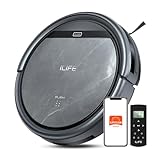
The ILIFE V5s Max targets budget-minded buyers who want dedicated hard-floor sweeping without complex app configurations. Delivering up to 4000Pa Max strong suction at an entry-level price point, it picks up pet dander, light litter, and surface crumbs efficiently. User reports praise its simple button operation and dependable battery performance on tile and hardwood, though its simplified drive system requires clear pathways to avoid getting stuck.
- Pro: Strong 4000Pa Max suction power for a budget category cleaner.
- Pro: Simple operation without requiring complex mobile app setup.
- Con: Uses random navigation that can miss spots in complex floor plans.
When to skip: Skip this unit if your home features thick, high-pile carpets that need a heavy motorized brush roll.
Tikom G8000 Max Robot Vacuum and Mop Combo
Targeted at medium to large households, the Tikom G8000 Max combines dual vacuuming and mopping functions with flexible control options. Powered by 5000Pa robotic vacuum cleaner suction and offering up to 150 Min max runtime, it covers broad floor areas on a single charge. Specification sheets and user feedback point to convenient operation via smartphone app or physical remote control, along with an auto-charge return feature when the battery runs low.
- Pro: Generous 150 Min max runtime covers extensive floor areas easily.
- Pro: Strong 5000Pa suction with choice of app or remote control.
- Con: Mopping attachment requires manual cleaning and refills after cycles.
When to skip: Skip this model if you want an automated dock that cleans mopping pads and empties the dustbin automatically.
iRobot Roomba 105 Vac Robot Vacuum with AutoEmpty Dock
This robot vacuum suits busy households seeking hands-off floor care with minimal dust handling. Equipped with intense power-lifting suction and LiDAR navigation, the Roomba 105 Vac maps floor plans accurately to clean in neat rows. The highlights from owner reviews focus heavily on the AutoEmpty dock, which self-empties for 75 days into sealed disposal bags, virtually removing daily maintenance responsibilities for over two months.
- Pro: AutoEmpty dock self-empties for 75 days for hands-free convenience.
- Pro: Smart LiDAR navigation cleans in precise, orderly rows.
- Con: Dock footprint requires a wider dedicated floor space against the wall.
When to skip: Skip it if you have tight space constraints around electrical outlets or prefer an integrated wet mopping module.
iRobot Roomba 105 Vac Robot Vacuum
Ideal for users who want systematic cleaning pathfinding without paying a premium for a large self-emptying base, this standalone Roomba 105 Vac offers high utility in a compact package. It leverages LiDAR navigation to clean in neat rows, paired with intense power-lifting suction for multi-surface cleaning. Specifications note its self-charging capability, and buyers praise its structured coverage patterns across mixed flooring types.
- Pro: Precise LiDAR mapping ensures methodical row-by-row cleaning paths.
- Pro: Compact self-charging dock fits neatly into tight room spaces.
- Con: Dustbin must be manually emptied every few cleaning runs.
When to skip: Skip this model if you dislike emptying onboard dustbins manually on a weekly basis.
iRobot Roomba 105 Combo Robot Vacuum & Mop with AutoEmpty Dock
Built for homes with a mix of hardwood, tile, and area rugs, the Roomba 105 Combo delivers full-floor maintenance. It features intense power-lifting suction, LiDAR navigation, and specialized logic that avoids mopping carpet automatically during wet cleaning routines. Owners highlight the convenience of the AutoEmpty dock that self-empties for 75 days, letting the vacuum handle dry debris storage while providing routine damp wiping on hard surfaces.
- Pro: Intelligently avoids mopping carpet while sweeping hard surfaces.
- Pro: AutoEmpty dock holds dry dust and debris for up to 75 days.
- Con: Higher retail price than vacuum-only Roomba 105 models.
When to skip: Skip this option if your living area contains only carpeted floors and no hard surfaces.
Lefant M210 Robot Vacuum Cleaner
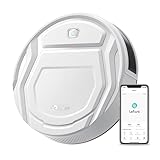
The Lefant M210 caters to pet owners and apartment owners needing a low-profile machine designed for hard surface maintenance. Utilizing a slim housing and low noise output, it provides up to 120 Mins runtime on a charge. Specs highlight a direct suction inlet rather than a rotating brush roller, which owner reviews confirm prevents pet hair tangles. It includes full smart connectivity via Wi-Fi, mobile app, and Alexa voice control.
- Pro: Direct suction design avoids hair tangles from shedding pets.
- Pro: Provides up to 120 Mins runtime with convenient app and voice commands.
- Con: Lacks a rotating brush bar needed to agitate embedded rug dirt.
When to skip: Skip it if your home features medium-to-deep pile carpets that need intense mechanical brush agitation.
Buying Guide
Navigation and Mapping Intelligence
Navigation technology dictates how efficiently a robot covers your home and whether it gets stuck on common obstacles. Basic models rely on reactive bounce navigation, changing direction only after physically bumping into walls or furniture. While effective for small, open rooms, bounce units take longer to finish and can miss spots. Higher-tier models utilize LiDAR navigation or visual mapping systems to create detailed floor plans, allowing them to clean in neat rows, remember room layouts, and enforce virtual keep-out zones via a mobile app.
Suction Power and Floor Adaptability
Suction strength, measured in Pascals (Pa), determines how effectively a robot lifts surface dirt and pulls embedded particles from carpet fibers. Lower suction ratings (around 1,000 to 2,000Pa) work sufficiently for surface sweeping on smooth hardwood or tile floors. However, homes with thick carpets, rugs, or shedding pets benefit from higher ratings—ranging from 4000Pa, 5000Pa, up to 18,500Pa—where extreme airflow and brush roller agitation pull stubborn debris out of deep carpet piles.
Docking Convenience and Maintenance Requirements
Dock capabilities dramatically impact how often you must physically interact with your vacuum. Standard charging bases require you to empty the tiny onboard dustbin after every few cleaning sessions. In contrast, self-emptying docks pull dust out of the robot automatically into sealed bags, with capacities designed to store debris for up to 75 days. Advanced hybrid docks go even further by replenishing water reservoirs and cleaning mop pads, shifting routine maintenance from a daily chore to a periodic task.
Our Verdict
For high-performance cleaning across diverse surface types, the roborock Qrevo S Pro stands out as our top overall pick due to its massive 18,500Pa suction and hybrid mopping system. Buyers seeking maximum value on a budget should consider the ILIFE V5s Max, which delivers strong 4000Pa Max suction power for under ninety dollars. If you have low-clearance furniture where standard LiDAR towers cannot fit, the ultra-thin eufy 11S MAX serves as the best solution for reaching hidden dust spots without wedging underneath couches.
FAQ
How often do self-emptying robot vacuums need to be cleared out?
Most self-emptying docks utilize sealed dust bags designed to hold debris for several weeks. Models rated for 75 days of hands-free operation typically only require a bag replacement every two to two-and-a-half months, depending on home size and pet shedding levels.
Can robot vacuums handle pet hair without clogging?
Yes, but success depends on brush design and suction intake. Models featuring high suction power or direct brush-free suction inlets, like the Lefant M210, excel at pulling pet hair directly into the bin without wrapping fur around roller bearings.
Is higher suction power (Pa) necessary for hard floors?
Hard floors like tile, laminate, and hardwood require modest suction power to pick up surface dust and crumbs. However, higher Pa ratings become essential when clearing deep tile grout lines or transitioning onto area rugs and carpeted spaces.
What is the difference between random navigation and LiDAR navigation?
Random navigation drives until the robot contacts an object, causing it to bounce off in a new direction. LiDAR navigation uses light pulses to map the room continuously, allowing the robot to clean systematically in efficient neat rows and navigate around obstacles precisely.