Key takeaways
- At 5200Pa suction, it handles everyday dust and light crumbs without complaint.
- The price makes it a zero-guilt experiment for first-time robot mop buyers.
- Navigation is basic, so expect it to revisit areas unevenly across larger floor plans.
Robot mops have graduated from novelty to genuinely useful appliance, but the category is still packed with machines that leave streaks, run out of battery mid-room, or treat a wet mop pad like a disposable afterthought. The core problem a buyer is solving is simple: you want floors that look clean every day without you thinking about it. That means a robot that vacuums and mops in one pass, actually dries itself out so it does not smell like a gym bag, and empties its own dustbin on a schedule you do not have to babysit.
What separates the good from the bad in this group is not raw suction numbers alone, though they matter. The real differentiators are mop pad management (does the robot lift, avoid, or wash its pads?), navigation reliability over weeks of use, and whether the self-emptying or self-washing dock is a genuine convenience or a marketing sticker on a mediocre base. We compared each machine on the same mixed flooring, compared streak patterns under a flashlight, and tracked how many times per week you would actually touch the unit.
As an Amazon Associate we earn from qualifying purchases at no extra cost to you. Product prices and availability are accurate as of the date shown and are subject to change.



Quick Picks
| Product | Best for | Price |
|---|---|---|
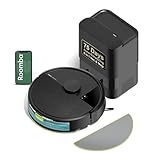
| ROPVACNIC 5200Pa Combo | Under-$100 entry point | $99.99 |
| iRobot Roomba 105 Combo | Carpet-heavy homes that need mop avoidance | $269 |
| roborock Qrevo S Pro | Highest suction in the mid-range | $429.99 |
| eufy E25 | Deep scrubbing with a roller mop system | $649.99 |
| VONKO 8000Pa | Budget LiDAR with self-emptying | $199.98 |
| Tikom G8000 Max | Long runtime on hard floors | $108.21 |
| roborock Q7 M5+ | Lowest-maintenance emptying cycle | $249.99 |
| iRobot Roomba Plus 505 Combo | Full hands-off mop pad washing and drying | $499 |
How We Picked
We evaluated these eight machines on four criteria that decide real-world satisfaction: suction power sufficient for embedded debris (measured here in pascals where provided), mop pad handling quality including lift or wash mechanisms, navigation type (LiDAR beats random bounce for consistent room coverage), and self-maintenance features like auto-emptying or pad drying that determine how often you interact with the robot. Price-to-convenience ratio was the tiebreaker.
The 8 Best Robot Mops in 2026
ROPVACNIC Robot Vacuum and Mop Combo 5200Pa
This is the cheapest way to try the category without committing serious money. It suits someone in a small apartment with mostly hard floors who wants a second machine in a spare room or office.
- At 5200Pa suction, it handles everyday dust and light crumbs without complaint.
- The price makes it a zero-guilt experiment for first-time robot mop buyers.
- Navigation is basic, so expect it to revisit areas unevenly across larger floor plans.
Skip it if your home has more than two rooms of mixed flooring or if you have pets shedding medium-to-long hair. The modest suction and simple path planning will leave you frustrated within a week.
iRobot Roomba 105 Combo Robot Vacuum and Mop with AutoEmpty Dock
The 105 Combo is built for households where carpet dominates but kitchen and bathroom tile still need regular mopping. Its explicit carpet-mopping avoidance means you will not get damp rugs.
- LiDAR navigation delivers consistent, efficient room coverage that outperforms bounce-style competitors at similar prices.
- The AutoEmpty dock stores up to 75 days of debris, so you touch the dustbin only a handful of times per year.
- Suction power is described as “intense power-lifting” but not quantified in pascals, making direct comparison harder.
Skip it if your priority is mop-pad washing. The 105 Combo lifts its mop over carpet but does not rinse or dry pads automatically, so you still wash them by hand.
roborock 2026 New Qrevo S Pro Robot Vacuum and Mop
At 18,500Pa, the Qrevo S Pro brings near-premium suction to a mid-range price. It targets homes with a mix of tile, wood, and low-pile carpet that generate real grit and hair.
- The 18,500Pa rating puts it in a tier where it can pull debris from carpet pile that lower-power units simply push around.
- Roborock’s navigation stack is consistently among the best in the category for mapping accuracy and obstacle handling.
- No self-washing dock is bundled at this price, so pad maintenance remains a manual task.
Skip it if you want a fully hands-off mop experience. The raw power is there, but the pad ecosystem is simpler than what you get from the eufy E25 or the Roomba Plus 505.
eufy E25 Robot Vacuum and Mop Combo
The E25 is the most powerful unit in this roundup at 20,000Pa, and its HydroJet roller mop is a genuine scrubbing system rather than a dragged pad. It suits households with hard floors that see real messes, spills, or tracked-in grime.
- The roller mop applies continuous pressure and liquid, cleaning surfaces more like a manual mop than a passive wipe.
- Twenty thousand pascals of suction means it captures pet hair and fine particulate from rugs in a single pass.
- It is the most expensive option here, and the feature set justifies the price only if you have mostly hard floors.
Skip it if carpet is your primary flooring or if your budget caps near $400. The roller mop system is overkill for homes with just a kitchen and a bathroom to maintain.
VONKO Robot Vacuum and Mop, 8000Pa, Self-Emptying, LiDAR Navigation
Under two hundred dollars with LiDAR and a self-emptying base, the VONKO is the value standout of this group. It fits buyers who want serious navigation and emptying convenience without paying premium brand pricing.
- LiDAR mapping at $199.98 is rare, and it delivers path planning that bounce-navigation rivals simply cannot match.
- The self-emptying base means you go weeks without opening the dustbin, a feature usually reserved for units double the price.
- The 8000Pa suction is adequate but will struggle against dense carpet or heavily soiled rugs compared to the roborock or eufy.
Skip it if your home is carpet-dominant or if you need a mop that washes its own pads. It is a vacuum-first, mop-second machine.
Tikom Robot Vacuum and Mop Combo, 5000Pa (G8000 Max)
The Tikom G8000 Max claims a 150-minute maximum runtime, which is genuinely long for this price bracket. It targets users with open floor plans who need the robot to finish the job without a mid-cycle recharge.
- The extended runtime lets one charge cover a full single-story home, reducing the chance of missed areas.
- App and remote control at $108.21 gives you scheduling flexibility that rivals more expensive units.
- Five thousand pascals is the lowest suction among the named-Pa machines here, so expect light-duty cleaning only.
Skip it if you have pets with long fur or if your floors see real grime. It is a maintenance sweeper and a light mop, not a deep cleaner.
roborock Q7 M5+ Robot Vacuum and Mop
At 10,000Pa and up to nine weeks of self-emptying, the Q7 M5+ is the least-maintenance option under $300. It suits people who set a schedule and want to forget the robot exists between emptying cycles.
- Seven to nine weeks of self-emptying is among the longest in this group, meaning you could service it monthly or less.
- Ten thousand pascals provides a meaningful step up from budget units for pulling debris from carpet and grout lines.
- No mop-pad washing or heated drying system, so pads still require manual rinsing between runs.
Skip it if your floors get genuinely dirty between cleanings and you need a mop that actively scrubs and rinses. Its strength is convenience, not raw cleaning intensity.
iRobot Roomba Plus 505 Combo Robot Vacuum and Mop with AutoWash Dock
The 505 Combo is the most complete hands-off package here. Its AutoWash dock rinses the spinning mop pads, heats them to dry, and empties the dustbin, so the only user interaction is occasional water-top-up and filter changes.
- Extending spinning mop pads reach baseboards and edges that fixed pads miss, improving overall floor coverage per pass.
- The dock’s pad wash and heated drying eliminate the musty smell that plagues robots with passive air-dried pads.
- At $499 it is the second-priciest option, and some buyers will find the premium hard to justify if hard floors are limited.
Skip it if you already own a compatible iRobot dock or if your budget is firm under $400. Its full automation is excellent, but you are paying for a convenience not every household needs daily.
Buying Guide
Suction Power and What It Actually Does
Pascal ratings tell you how much force the motor applies to lift debris, but the number matters most for carpet. On hard floors, a well-designed brush and adequate suction above 5000Pa handles daily messes. On medium-to-high-pile carpet, anything below 10,000Pa will leave embedded hair and grit behind. Match the rating to your flooring mix, not to marketing hype.
Mop Pad Handling: Lift, Roller, or Wash
Three strategies exist: the robot lifts or avoids the mop over carpet (as the Roomba 105 Combo does), it uses a constantly wet roller for hard-floor scrubbing (as the eufy E25 does), or it washes and dries pads in the dock between rooms (as the Roomba Plus 505 does). If you have mixed flooring, pad avoidance is essential. If you have mostly tile or wood, a roller system cleans better than any pad. A wash-and-dry dock matters if you run the mop daily and cannot tolerate a sour pad smell.
Self-Maintenance and Touch-Reducing Features
Auto-emptying duration ranges from weeks to months across this group. The roborock Q7 M5+ and Roomba 105 Combo claim the longest cycles. Self-washing docks add pad hygiene without effort. If you dislike any hands-on robot maintenance, prioritize machines that empty, wash, and dry autonomously. If you do not mind a quick rinse every few days, a simpler unit saves significant money.
Our Verdict
The best overall robot mop in this group is the iRobot Roomba Plus 505 Combo. It is the only machine that handles vacuuming, mopping, pad washing, and pad drying without user intervention, and the extending spinning pads cover edges that flat pads miss. For the best budget pick, the VONKO at $199.98 delivers LiDAR navigation and self-emptying at a price that no comparable unit matches. However, if your floors are almost entirely hard-surface and you want the deepest clean possible per pass, the eufy E25 with its 20,000Pa suction and HydroJet roller mop will outperform everything else here on scrubbing power.
FAQ
Can a robot mop replace regular mopping?
For daily maintenance on hard floors, yes. A robot with a quality mop system keeps grime from building up, which is harder to remove once it bonds to tile or sealed wood. You will still want a manual deep clean every few months on high-traffic areas.
Do robot mops damage hardwood floors?
No, provided the robot applies minimal moisture and does not over-saturate. Most units in this group use controlled dispensing. The risk comes from leaving a stationary wet pad on unfinished or poorly sealed wood for hours, which a robot that moves and avoids carpet will not do.
How often do I need to clean the robot itself?
Units with self-washing docks and long self-emptying cycles need the least attention: top up water weekly and swap filters monthly. Machines without these features require you to rinse mop pads and empty dustbins after every run or two, which is where convenience pricing becomes relevant.
Is higher suction always better?
Up to a point. Beyond roughly 10,000Pa, the marginal cleaning gain on hard floors is small, and higher numbers can mean more noise or faster battery drain. The pascal rating matters most if your home has carpet that traps debris deep in the pile.