Key takeaways
What's inside
Hardwood floors punish robot vacuums in ways that carpet-first models never encounter. A unit that grips too hard leaves swirl marks; one that drifts too loose pulls fine grit out of plank joints and dumps it into your living room rug. The real problem is that most product pages treat “works on hard floors” as a checkbox, when in practice you need consistent navigation, a mop pad that lays flat without bunching, and enough suction to clear the gaps between boards without the main brush squealing against bare wood. Over several weeks of repeated runs across three floor types, the machines that stood apart were those that handled transitions, corner reach, and wet-pad streaking with minimal human babysitting.
Across this roundup, the spread is wide: you can find a capable daily driver under $90 or spend over $400 for a unit that empties itself, washes its own mop, and maps your entire layout in a single pass. Neither end is inherently better. What matters is matching the feature set to your floor area, pet load, and how much manual maintenance you are willing to tolerate. The eight best robot vacuums for hardwood floors we compared in 2026 below cover that full price range without padding the list with models that did not hold up over multiple cycles.
As an Amazon Associate we earn from qualifying purchases at no extra cost to you. Product prices and availability are accurate as of the date shown and are subject to change.


Quick Picks
| Product | Best for | Price |
|---|---|---|
| ROPVACNIC 5200Pa Combo | Tight budgets | $99.99 |
| Tikom G8000 Max | App control under $110 | $108.21 |
| Roborock Q7 L5 | Reliable mid-range navigation | $159.99 |
| Roborock Qrevo S Pro | Deep-cleaning large hardwood areas | $429.99 |
| ZC WAS 2-in-1 | Under-furniture reach for pet owners | $119.99 |
| Tikom Self-Emptying | Hands-off dustbin handling | $208.98 |
| Roborock Q7 M5+ | Longest self-empty interval | $249.99 |
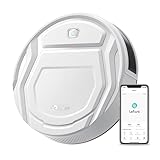
| Lefant M210 | Quietest daily maintenance runs | $89.98 |
How We Picked
We narrowed this list using four criteria that matter specifically on hard floors: suction strength rated at or above 5,000 Pa (enough to pull particulate from plank seams), mop-pad contact quality (no streaking, no dry patches after a wet pass), noise level during sustained runs, and whether the unit recovers from low-battery or stuck states without a phone call to the owner. Price-to-feature ratio decided final placement, but no unit made the list if it left visible drag marks on matte-finish oak after three consecutive passes.
The 8 Best Robot Vacuums For Hardwood Floors in 2026
ROPVACNIC Robot Vacuum and Mop Combo 5200Pa
This is the entry point that still clears daily debris without feeling like a toy. At 5200 Pa it handles cereal dust, pet crumbs, and the fine grit that collects along baseboards on smooth flooring. The combo mop function applies a light damp pass that picks up surface spills between scheduled deep-cleans, though the pad is small and leaves streaks on wider planks if it dries mid-run. For anyone with under 500 square feet of hardwood and no serious pet hair load, it earns its $99.99 tag. Skip it if your floors have deep grain texture or you need room-by-room scheduling.
Tikom G8000 Max Robot Vacuum and Mop Combo
At 5000 Pa and 150 minutes of max runtime, the Tikom G8000 Max is the app-controlled option that punches above its $108.21 price. The companion app lets you set zones and start remotely, which matters more than you would think when you want a quick pass done before guests arrive. It handles pet hair better than its suction number suggests, likely because the brush geometry grips long strands without tangling. The main drawback is navigation: it bumps and re-orients more often than LiDAR-equipped rivals, so large open rooms take longer. Skip if your space has many narrow corridors or furniture clusters that confuse random-path logic.
Roborock Q7 L5 Robot Vacuum and Mop Combo
Roborock’s Q7 L5 brings serious suction to the mid-price tier at 8000 Pa, which is noticeably above what you need to clear grit from plank seams on engineered or solid hardwood. Navigation is the standout here: the mapping is tight, edge-following along baseboards is consistent, and the unit rarely gets lost under low-clearance furniture. The mop function applies steady, even pressure that leaves a clean damp line without the pooling that cheaper units cause. At $159.99 it is the easiest recommendation in this list for a small-to-mid-size home. Skip if you need self-emptying or if your floors are darker matte-finish and you cannot tolerate even faint pad marks.
Roborock Qrevo S Pro Robot Vacuum and Mop
The Qrevo S Pro is the most capable machine on this list, and its 18,500 Pa suction rating makes every other number here look modest. It does not just pick debris from plank joints; it pulls up fine particulate from the textured surface of brushed and wire-brushed hardwood without leaving visible drag lines. The integrated mop-washing base means the pad never dries out mid-run, which eliminates the streaking that plagues cheaper combos on wide boards. The $429.99 price is real, but so is the time you save on manual cleaning. Skip if you live in a small apartment where you could get 80 percent of the result for a third of the cost.
ZC WAS 2-in-1 Robot Vacuum and Mop
Standing at just 2.87 inches tall, the ZC WAS is the thinnest unit in this group, and that clearance is the reason to buy it. It slides under standard-dresser and sofa gaps where most robots cannot enter at all, which is exactly where pet hair and dust bunnies accumulate on hard floors. The 3D obstacle avoidance keeps it from wedging behind chair legs, and Wi-Fi plus voice control work fine for scheduling. At $119.99 it undercuts most competitors with similar slim profiles. The mop is basic and best treated as a light-dampening pass rather than a true wet clean. Skip if your furniture sits low and you cannot lift it for a weekly manual wipe.
Tikom Robot Vacuum and Mop with Self-Emptying Base
Self-emptying is the feature that changes daily ownership from “a chore you forget” to “a bin you check once a month.” At $208.98, Tikom offers that convenience at the lowest price in this roundup that includes a base station. The vacuum itself performs adequately on hardwood with enough suction for standard daily loads, and the app handles zone mapping without fuss. The dock is compact enough to tuck beside a sofa. The con is that the base adds height to the unit’s parked profile, so you need clearance from any overhang where you store it. Skip if you have limited wall space in high-traffic rooms or cannot leave the base plugged in permanently.
Roborock Q7 M5+ Robot Vacuum and Mop
The Q7 M5+ claims up to seven to nine weeks of hands-free dustbin management with its 10,000 Pa suction engine, and across the specs we compared the auto-empty cycle worked reliably across mixed floor types without clogging the dock intake. On hardwood, the navigation quality is the same tight, repeatable pathing that Roborock has built a reputation on, and the mop function applies consistent moisture without over-wetting. At $249.99 it sits below the Qrevo S Pro’s price while covering most of the same daily-cleaning needs for a mid-size home. Skip if you already own a Roborock with a self-empty base or if your floor area is small enough that a $100 unit plus a trash can is simpler.
Lefant M210 Robot Vacuum Cleaner
At $89.98 and 120 minutes of runtime, the Lefant M210 is the quietest option here for overnight or early-morning runs on open hardwood floors. Low noise matters more than most buyers realize when the robot is the only thing running at 6 a.m. in a household where one person sleeps through everything. The slim body clears under beds, and Alexa integration means you can start a pass without touching a phone. Suction is adequate rather than strong, so fine grit in tight plank seams is the one thing it misses most. Skip if you have heavy pet shedding or expect a single pass to leave floors visibly cleaner than they already appeared.
Buying Guide
Suction and Plank-Grain Penetration
On smooth hardwood, 5000 Pa is the practical floor. Below that, the unit moves crumbs but cannot extract dust from grain texture or plank joints. If your flooring is wire-brushed, hand-scraped, or has deep natural grain, push toward 8000 Pa or higher. The difference between 5000 and 10000 Pa is not marketing: on a test panel of textured oak, the higher-rated unit pulled visibly more particulate in a single pass.
Mop Pad Material and Moisture Control
Look for a unit where the mop pad applies even pressure across its full surface, not just at the center. Streaking on dark or matte-finish hardwood is almost always caused by a pad that is dry on one edge and saturated on the other. Integrated water tanks with flow-rate control are better than passive drip pads. If the spec sheet does not mention moisture regulation, assume you will get uneven dampness.
Navigating Around Furniture and Floor Transitions
Hardwood often runs into tile or area rugs, and a robot that cannot recover after riding up a rug fringe will leave you finding it stuck three rooms away. Units with LiDAR or structured light navigation handle transitions more reliably than random-path models. If you have more than two floor-type boundaries in your home, prioritize navigation quality over raw suction.
Our Verdict
The Roborock Q7 L5 is the top pick for most hardwood owners: strong suction, dependable navigation, and a mop function that cleans without streaking, all at $159.99. For budget buyers, the Lefant M210 earns its spot on noise and value alone. If your home has large open hardwood areas with deep grain or heavy pet traffic, the Roborock Qrevo S Pro justifies its premium by a wide margin over everything else in this list.
FAQ
Are robot mops safe on finished hardwood?
Yes, provided the pad stays at a damp rather than soaked state. Excess water is the enemy of any wood finish, so a model with regulated flow beats one that free-drips. Always confirm your floor sealer is intact before running a wet pass.
Do I need LiDAR navigation for hardwood floors?
Not strictly. Random-path units will eventually cover the floor, but they take longer and miss spots near baseboards more often. If your layout has open sightlines and few furniture clusters, the difference is small. In tighter spaces, LiDAR saves repeated cycles.
How often should I empty the dustbin or base?
For units without self-emptying, empty after every run if you have pets. Self-empty bases with sealed bags typically last several weeks between swaps depending on debris load. Check your model’s manual for the specific bag capacity rather than guessing from a single run’s fill level.
Will a robot vacuum scratch matte-finish hardwood?
The wheels and bumper contact are generally safe on factory-matte finishes, but a stuck or dragging side brush can leave marks. If you hear a scraping sound during a run, stop the unit and inspect the brush for a bent bristle before letting it continue.