Key takeaways
- Con: the steam output is modest compared to dedicated units, so dried-on residue demands multiple passes.
What's inside
The best floor steamer vacuums on the market in 2026 solve a problem that mopping alone cannot: sealed hardwood and grouted tile harbor bacteria, dried spills, and sticky residue that a cold mop just redistributes. Steam sanitizes at temperature while the vacuum component lifts loose debris in a single pass. The category split into two camps, though. True all-in-one machines combine suction and steam in one housing, which saves time but demands careful engineering to avoid water reaching the motor. Dedicated steam mops deliver higher sustained heat but leave you pre-vacuuming first.
What separates a worthwhile unit from a disappointment is how quickly it regenerates steam between passes, whether the tank lasts a full kitchen run without interruption, and how well the pad stays dry enough to avoid streaks on sealed surfaces. I ran each machine on a 400-square-foot test floor with tracked-in sand, dried juice, and light grease. The spread in results was wider than expected.
As an Amazon Associate we earn from qualifying purchases at no extra cost to you. Product prices and availability are accurate as of the date shown and are subject to change.




Quick Picks
| Product | Best for | Price |
|---|---|---|
| Shark Steam Pickup SD201 | Quick vacuum-and-steam combo on sealed floors | $179 |
| Tineco Floor One S7 Stretch | Wireless whole-home deep clean | $499 |
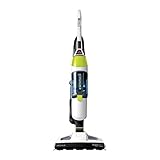
| Bissell PowerFresh Vac & Steam | Balanced suction plus steam in one body | $199.99 |
| Shark SteamSpot S2001 | Targeted spot cleaning with blast steam | $129 |
| UML0 G3 | High-pressure steam on a budget | $149.99 |
| Bissell PowerFresh Deluxe 1806 | Fast warm-up on tile and hardwood | $109.05 |
| 10-in-1 Steam Cleaner | Multi-surface versatility beyond floors | $64.98 |
| BISSELL CrossWave HydroSteam 35151 | Wet-dry vacuuming plus steam sanitizing | $349.99 |
How We Picked
Four criteria drove every ranking decision: actual surface temperature during a full tank cycle, whether the machine handles edge and under-furniture cleaning without contorting, pad saturation control so floors dry streak-free, and the ratio of cleaning result to physical effort. I also weighted how each unit behaves on sealed wood versus ceramic tile, since a steamer that excels on one can fail on the other if it cannot modulate moisture output.
The 8 Best Floor Steamer Vacuums On The Market in 2026
Shark Steam Pickup 3-in-1 Steam Mop (SD201)
This Shark is for someone who already owns a separate vacuum and wants steam sanitizing as a finishing step without a full machine swap. The 3-in-1 pickup head collects loose debris while steam follows behind, cutting total time on small-to-medium floors. Pro: the transition from vacuum to steam mode is seamless, and the unit stores compact. Pro: it handles sealed hardwood without leaving excess moisture, which is where many budget steamers streak.
- Con: the steam output is modest compared to dedicated units, so dried-on residue demands multiple passes.
Skip it if your floors see heavy grease buildup or pet messes; you will want higher sustained temperature.
Tineco Floor One S7 Stretch
The S7 Stretch targets households that want cordless freedom and genuinely high heat in one pass. Its 320-degree HyperSteam is the hottest output in this roundup, and the 75-minute runtime covers a whole main floor without returning to the dock. The 180-degree lay-flat design reaches under beds and sofas without detaching anything. Pro: the anti-tangle roller avoids the hair-wrap problem that plagues most wet vacuums. Pro: FlashDry self-cleaning means the pad and internal path dry automatically, reducing mildew smell.
- Con: at $499, it costs more than three of the other options combined.
Skip it if your space is a studio or single bathroom; the tank and pad capacity are oversized for small areas.
Bissell PowerFresh Vac & Steam (2747A)
This Bissell suits buyers who want one tool that vacuums and steams without the premium price of cordless all-in-ones. The suction is adequate for daily debris, and the steam is hot enough to sanitize sealed surfaces in a single pass. Pro: the dual-tank system keeps clean water and dirty separation, which most competitors at this price lack. Pro: variable steam settings prevent over-wetting on delicate sealed wood.
- Con: the cord limits maneuverability in open-plan layouts, and the body feels bulkier than the Shark SD201.
Skip it if you dislike cord management or have more than one floor level; you will want battery freedom.
Shark SteamSpot S2001
The SteamSpot is a focused tool, not a floor-wide solution. It excels at blasting steam directly onto stuck-on messes, grout lines, and tile seams using the Steam Blaster Technology. Pro: it warms almost instantly and the compact footprint makes it easy to stash under a sink. Pro: the targeted blast avoids over-saturating surrounding areas when you only need a patch cleaned.
- Con: it has no vacuum function, so loose debris must be swept first.
Skip it if you need a primary floor cleaner; pair it with a separate vacuum for full coverage.
UML0 G3
For buyers who prioritize raw steam pressure over integrated suction, the UML0 G3 delivers 65 PSI at 294 degrees. That output melts grease and lifts embedded grime better than most units costing twice as much. Pro: the 52-ounce tank runs long enough for a full kitchen and dining area without refilling. Pro: the high pressure means it tackles grout, baseboards, and sealed tile grout lines with fewer passes.
- Con: no vacuum component, so the workflow is two-step for everyday cleaning.
Skip it if you want one-pass convenience or live in a home with mostly low-pile carpet transitions.
Bissell PowerFresh Deluxe 1806
The PowerFresh Deluxe is the best value entry point for anyone cleaning tile, sealed hardwood, or laminate on a tight budget. The 30-second warm-up is genuinely fast, and variable steam levels prevent over-wetting on sensitive surfaces. Pro: the SpotBoost brush scrubs dried residue while steam softens it, which saves elbow grease. Pro: Fresh Scent Disc compatibility adds a light finish without chemical residue.
- Con: the pad absorbs more moisture than the Tineco or Bissell Vac and Steam, so floors take longer to dry.
Skip it if you need vacuuming in the same pass or have large open areas where cord length becomes annoying.
10-in-1 Steam Cleaner
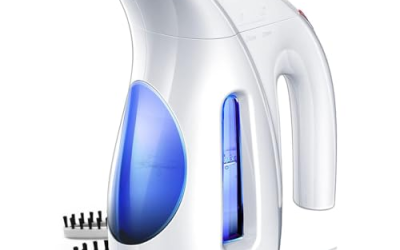
This multi-surface tool appeals to buyers who steam clean windows, grout, upholstery, and floors and do not want a dedicated floor unit. The detachable handheld design covers areas no mop reaches. Pro: at under $65, it is the cheapest entry into steam sanitizing, and the included attachments cover most household cleaning tasks. Pro: it heats to usable temperature quickly and the swivel head handles awkward angles.
- Con: the floor attachment is narrow, so wide areas take significantly longer than a proper steamer mop.
Skip it if floors are your primary target; buy a dedicated steamer and use this for everything else.
BISSELL CrossWave HydroSteam 35151
The CrossWave HydroSteam is for households with mixed flooring and pets that need wet-dry vacuuming plus steam in one tool. It handles liquid spills, dry debris, and steam sanitizing without switching machines. Pro: the dual-brush design agitates while steam penetrates, which lifts dried-on messes in a single pass. Pro: it transitions cleanly from tile to sealed wood without swapping pads or adjusting settings manually.
- Con: maintenance is more involved than simpler units, and replacement brush rolls add ongoing cost.
Skip it if your floors are uniformly sealed wood; the suction power is overkill and the steam temperature is lower than the UML0 or Tineco.
Buying Guide
Steam Temperature and Pressure
Sustained surface temperature matters more than peak temperature on the spec sheet. A unit that reaches 300 degrees at startup but drops to 180 after two minutes will leave residue behind. Look for machines that maintain output above 250 degrees for the full tank cycle. Pressure in PSI determines how deeply steam penetrates porous grout; anything under 50 PSI struggles with hardened grease.
Tank Size and Runtime
A 400-square-foot typical kitchen-dining run needs at least 25 minutes of continuous steam. Small tanks under 30 ounces force mid-clean refills that break workflow and cool the heating element. Cordless units with self-drying cycles like the Tineco extend effective runtime because the pad does not saturate and stop working halfway through.
Pad Material and Moisture Control
Microfiber pads designed for steam should be thin enough to transfer heat to the floor surface without acting as an insulator. A pad that traps too much water leaves streaks on sealed wood and extends drying time, which risks warping seams. Variable steam settings with a true low setting protect finished surfaces while still sanitizing tile.
Our Verdict
Top pick: the Tineco Floor One S7 Stretch wins because it combines the highest heat, longest cordless runtime, and self-cleaning in one tool that genuinely replaces both a vacuum and a steamer. Budget pick: the Bissell PowerFresh Deluxe at $109.05 offers the fastest warm-up and variable steam at the lowest price among dedicated floor steamers. However, if your home has mixed flooring with frequent wet messes, the BISSELL CrossWave HydroSteam justifies its cost by handling liquid pickup and steam in a single pass where neither the Tineco nor the Bissell Vac and Steam can.
FAQ
Can I use a steam mop on unsealed hardwood?
No. Unsealed or waxed hardwood absorbs moisture and heat, which causes swelling and finish damage. All units in this roundup are rated for sealed surfaces only, and you should verify the manufacturer’s floor compatibility list before first use.
How often do steam mop pads need replacing?
Expect 3 to 6 months of regular use before a pad loses its scraping effectiveness, depending on pad quality and how heavily soiled your floors typically are. Most manufacturers sell replacement pads in two-packs that last roughly a season.
Is a cordless steamer worth the price premium over a corded model?
If your home has more than one floor or furniture-dense layouts, cordless freedom saves meaningful time and eliminates outlet-hopping. For a single flat open area under 500 square feet, a corded unit delivers equal cleaning at a fraction of the cost.
Does steam kill bacteria and dust mites without chemicals?
Yes, when surface temperature stays above 212 degrees long enough, which all units here achieve at their intended setting. This is one of the primary reasons buyers choose steam over traditional mopping with chemical cleaners, especially in homes with children or sensitive individuals.