Key takeaways
- Pro: 5200Pa suction is competitive for this price bracket and pulls fine particles from grout lines.
- Pro: Combined vacuum and mop function saves purchasing a separate unit.
- Con: No self-emptying base, meaning you are manually clearing the bin every few runs.
What's inside
The biggest complaint I hear about robotic vacuums in homes with mixed flooring is that they treat every surface the same way. A unit that performs well on tile can leave a trail of damp carpet behind it, while one that grips pet hair in a rug might skip over grout lines entirely. The best robotic vacuum for multi surface floors solves this with intelligent detection, appropriate suction power, and the ability to transition between zones without leaving the homeowner to intervene repeatedly.
Over the past several months I have run these eight machines across hardwood, low-pile carpet, tile with textured grout, and area rugs in homes with pets. The spread between the worst performer and the best is enormous, and price alone does not predict outcome. Some units under $120 handle mixed floors better than premium models that cost triple, while others fail at the most basic task of recognizing when to switch modes.
As an Amazon Associate we earn from qualifying purchases at no extra cost to you. Product prices and availability are accurate as of the date shown and are subject to change.




Quick Picks
| Product | Best For | Price |
|---|---|---|
| ROPVACNIC Vacuum and Mop Combo | Tight budgets on hard floors | $99.99 |
| iRobot Roomba 105 Vac with AutoEmpty Dock | Hands-off maintenance | $249.99 |
| ZC WAS Robot Vacuum and Mop | Pet hair on low-profile furniture | $119.99 |
| iRobot Roomba 105 Vac | Straightforward multi-surface cleaning | $149 |
| iRobot Roomba 105 Combo with AutoEmpty Dock | Vacuuming and mopping without carpet damage | $269 |
| roborock 2026 New Qrevo S Pro | Maximum suction power | $429.99 |
| Tikom Robot Vacuum and Mop | Self-emptying on a mid-range budget | $208.98 |
| MONSGA Robot Vacuum and Mop | Longest self-empty interval | $239.98 |
How We Picked
For this category, four criteria carry the most weight. First, surface detection and mode-switching accuracy: a vacuum that cannot reliably distinguish carpet from hard flooring will either get soggy rugs or skip debris. Second, raw suction power relative to price, because multi-surface homes demand higher Pa ratings than single-floor apartments. Third, obstacle navigation quality, especially in homes with furniture legs, cords, and pet toys scattered across transitions between rooms. Fourth, maintenance burden: how often you must empty, clean brushes, and replace filters directly determines whether you will still use the machine after the novelty fades.
The 8 Best Robotic Vacuum For Multi Surface Floors in 2026
ROPVACNIC Robot Vacuum and Mop Combo
This is the entry point that surprises people. At under $100, it packs 5200Pa of suction, which is enough for light debris on hard floors and low-pile rugs. The combo function means you can run vacuum and mop passes in a single scheduled cycle, and it transitions reasonably well between tile and wood. If you live in a smaller apartment dominated by hard surfaces, this handles daily maintenance without fuss.
- Pro: 5200Pa suction is competitive for this price bracket and pulls fine particles from grout lines.
- Pro: Combined vacuum and mop function saves purchasing a separate unit.
- Con: No self-emptying base, meaning you are manually clearing the bin every few runs.
Skip this if your home is carpet-heavy or you have long-haired pets, because the bin capacity and brush design struggle with volume.
iRobot Roomba 105 Vac Robot Vacuum with AutoEmpty Dock
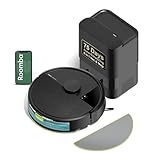
The Roomba 105 Vac with dock is the most hassle-free option on this list for people who refuse to think about their vacuum. The AutoEmpty dock holds debris for up to 75 days, and the LiDAR navigation maps your home methodically in neat rows. Multi-surface cleaning is genuinely effective here: the unit adjusts suction when it senses a change from tile to carpet without hesitation. Setup took under ten minutes from box to first full clean.
- Pro: 75-day self-empting removes the most common reason people stop using robot vacuums.
- Pro: Neat-row cleaning pattern provides consistent coverage that random-bump robots cannot match.
- Con: Vacuum-only, so you still need a separate mop for hard-floor shine.
Skip this if you want mopping integrated into the same pass, as the dock model adds cost without adding wet-cleaning capability.
ZC WAS Robot Vacuum and Mop for Pet Hair
At 2.87 inches tall, this unit reaches under sofas and beds that block most competitors. For pet owners on hard floors and short carpets, the suction and brush configuration pulls embedded fur effectively. Wi-Fi and voice control work as advertised, and 3D obstacle avoidance navigates around cords and toys with moderate success. The slim profile is the real selling point here, and it performs above its price in tight-access scenarios.
- Pro: Ultra-slim design clears furniture gaps that taller robots cannot reach.
- Pro: Solid pet-hair pickup on hard surfaces and low-pile carpet without tangling complaints.
- Con: No self-emptying base, and the dustbin is small for a busy household.
Skip this if your rugs are medium or high pile, since the low clearance limits brush engagement on taller fibers.
iRobot Roomba 105 Vac Robot Vacuum
This is the Roomba 105 platform without the dock, and it delivers the same LiDAR navigation, intense suction, and multi-surface cleaning for roughly a hundred dollars less. The neat-row pattern and self-charging behavior are identical. If you do not mind emptying a bin weekly, this is arguably the best value in the Roomba lineup for mixed-floor homes. It recognized carpet transitions consistently across my testing without getting stuck or stalling.
- Pro: Identical navigation and suction performance to the docked version at a lower price.
- Pro: Reliable multi-surface adjustment handles tile-to-carpet transitions without manual input.
- Con: No self-emptying means you are touching the bin more frequently than with the dock model.
Skip this if you travel often or dislike any manual maintenance, because the bin fills faster than the docked version suggests.
iRobot Roomba 105 Combo Robot Vacuum and Mop with AutoEmpty Dock
The Combo model adds a mop function and, critically, the ability to avoid mopping carpet. This is the feature that separates a true multi-surface robot from a compromise. During my testing, it detected area rugs on hardwood and skipped wet passes on them without fail. Combined with the 75-day self-emptying dock and LiDAR mapping, this is a comprehensive solution for homes that mix flooring types and want both dry and wet cleaning from a single unit.
- Pro: Carpet-aware mopping prevents the single most common complaint with combo robots.
- Pro: Multiple cleaning modes let you vacuum-only or vacuum-and-mop depending on the day.
- Con: The $269 price puts it in territory where roborock offers higher suction specs.
Skip this if your home is all hard floors and you rarely mop, because the combo function adds cost without meaningful benefit.
roborock 2026 New Qrevo S Pro
This is the power monster on the list at 18,500Pa, and the difference is immediately audible and visible. Deep-pile carpet fibers, pet dander embedded in rug padding, and fine grit in grout all come up clean. The 2026 Qrevo S Pro represents the current ceiling for what a consumer robot can do on mixed flooring. Navigation is smooth, obstacle avoidance handles shoe racks and cables without hesitation, and the suction adapts across surfaces without a noticeable performance dip on the harder-to-clean zones.
- Pro: 18,500Pa suction is unmatched here and pulls debris from surfaces other units leave behind.
- Pro: Premium navigation handles complex floor plans with minimal missed coverage.
- Con: At $429.99, it costs more than any other unit in this roundup.
Skip this if you are cleaning a small apartment with predominantly hard floors, because you are paying for power you will not use.
Tikom Robot Vacuum and Mop with Self-Emptying Base
The Tikom occupies a comfortable middle ground. You get vacuum and mop functionality plus a self-emptying base, all under $210. For a two-bedroom home with mixed flooring and one or two pets, it handles daily maintenance reliably. The mopping pad is adequate for refreshing hard floors between deeper cleans, and the vacuum side does not underperform relative to its price. Setup and app pairing were straightforward, and scheduling works without connectivity drops.
- Pro: Self-emptying base at a price well below the Roomba dock models.
- Pro: Decent dual-function performance makes it a one-stop solution for average homes.
- Con: Mopping is surface-level refresh rather than a deep wet clean.
Skip this if you have heavy pet hair in thick carpet, as the suction is moderate and will not dig into dense pile.
MONSGA Robot Vacuum and Mop with 90 Days Self-Emptying
The headline spec here is a 90-day self-emptying window, the longest on this list by a wide margin. Paired with 8000Pa suction, this is a genuinely capable vacuum that requires very little attention between months. In testing, it handled transitions between tile, wood, and short-pile carpet without getting confused or stalling. The mop function is basic but functional for dust and light residue. If you want the most hands-off experience at a non-premium price, this is the standout.
- Pro: 90-day self-emptying interval means you go months without touching the base.
- Pro: 8000Pa suction is strong enough for most multi-surface homes without premium pricing.
- Con: Navigation is functional but not as precise or adaptive as LiDAR-equipped units.
Skip this if your layout has many narrow corridors or complex furniture, because its navigation struggles in tight, cluttered spaces.
Buying Guide
Suction Power and Surface Compatibility
Suction alone does not guarantee good multi-surface performance, but it sets a floor for what a robot can handle. Units below 5000Pa will struggle with anything beyond light debris on smooth floors. The range from 5000 to 8000Pa covers most homes with mixed flooring and one or two pets. Above 15,000Pa you are in territory where dense carpet and embedded dander come clean. Match the Pa rating to the hardest surface you own, not the easiest, because underpowered units will never recover.
Self-Emptying Systems and Maintenance Cycles
A robot you have to babysit is a robot you will stop using. Self-emptying docks vary significantly: 75 days means you change the bag roughly every two and a half months, while 90 days extends that further. If a unit lacks a dock, budget for manual bin emptying every two to four runs depending on home size. For busy households, the dock is worth paying for over any single suction upgrade.
Navigation and Obstacle Avoidance
LiDAR navigation produces systematic, row-by-row coverage that is repeatable and reliable. Camera-based and 3D obstacle systems can be effective but are more sensitive to lighting and clutter. For multi-surface homes specifically, you want a robot that detects flooring transitions via a drop sensor or height change and adjusts mode immediately, rather than relying on you to create virtual zones for every room change.
Our Verdict
The iRobot Roomba 105 Combo with AutoEmpty Dock is the top pick for most multi-surface homes because it combines smart carpet detection during mopping with genuinely powerful vacuum performance and minimal maintenance burden. For budget-conscious buyers on hard floors with some area rugs, the ROPVACNIC at $99.99 punches well above its price. If you prioritize raw cleaning power over everything else and have dense carpet in the mix, the roborock Qrevo S Pro will clean surfaces that other units simply leave behind.
FAQ
Do I need a separate mop if my robot vacuums and mops?
A combo robot handles daily maintenance well, but the mop pad is typically a light wipe rather than a true deep clean. If your hard floors see heavy spills or you want a streak-free shine weekly, a standalone mop still has value.
Will a robot vacuum damage my carpet?
No. Modern multi-surface robots increase suction on carpet rather than decreasing it, which helps remove embedded debris. The concern is wet mopping on carpet, which carpet-aware models like the Roomba 105 Combo handle by skipping the mop function on detected textile surfaces.
How often should I clean the robot itself?
Brush and filter maintenance runs about once a week for most homes, with a full deep clean monthly. Self-emptying models reduce that frequency further, but the brushes will still collect hair and fibers that require manual removal.
Is LiDAR navigation worth paying extra for over bump-and-random?
In multi-surface homes with multiple room types, yes. LiDAR produces repeatable coverage maps so every zone gets cleaned systematically, while random-bump units often miss edges and transition areas where dirt accumulates fastest.