Key takeaways
- Initial Purchase Price: $1,100 (for a mid-to-high-end front-load steam model).
- Water Usage: 15 gallons per load. Over 5 years (1,500 loads), this equals 22,500 gallons. At an average utility rate of $0.01 per gallon (including sewer fees), water costs will total approximately $225.
- Energy Usage: Approximately 120 kWh per year (excluding the steam heater use, which adds slightly more). Over 5 years, this totals 600 kWh. At $0.16 per kWh, energy costs will run around $96.
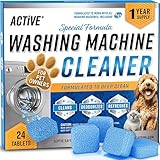
- Maintenance & Cleaners: Front-load steam washers are prone to musty odors due to water pooling in the rubber door gasket. To maintain performance, you will need to run regular self-clean cycles. A 12-month supply of a high-quality descaler, such as the Washing Machine Cleaner Descaler 24 Pack, costs $22.95. Over five years, this maintenance routine will cost roughly $57.
- Estimated Repairs: Due to complex control boards and steam valves, a mid-life repair averages $150.
- Total 5-Year Cost: $1,628
What's inside
When you stand in the appliance aisle, the choice between a steam washer and a traditional agitator washing machine is more than just a matter of budget—it is a fundamental choice about how you care for your textiles. On one side, you have the modern steam-enabled washing machine, which promises to sanitize, de-wrinkle, and lift microscopic allergens using high-temperature thermal penetration. On the other side, you have the reliable, heavy-duty traditional top-loader with a central agitator, a machine that relies on mechanical friction, rapid water turnover, and physical scrubbing to force dirt out of heavy fabrics.
For decades, the traditional agitator was the undisputed king of the American laundry room. However, as fabric technology evolves and energy costs rise, the debate over steam washer vs traditional agitator washing machine deep cleaning has taken center stage. Buyers are forced to weigh the gentle, stain-dissolving properties of pressurized steam against the raw, mud-busting mechanical power of a physical spindle. To make matters more complicated, maintaining these machines requires different approaches—ranging from using specialized descaling tablets like the Washing Machine Cleaner Descaler 24 Pack ($22.95) to combatting heavy pet dander with the ACTIVE Washing Machine Cleaner for Pet Owners Enzymatic Deep Clean ($25.95). In this comprehensive guide, we will break down the mechanics, costs, and real-world performance of both systems to help you decide which machine deserves a permanent spot in your home.
As an Amazon Associate we earn from qualifying purchases at no extra cost to you. Product prices and availability are accurate as of the date shown and are subject to change.


Quick Verdict
If your household deals with delicate fabrics, severe allergies, stubborn organic stains (like blood, wine, or grass), and high utility bills, the steam washer is the superior choice. It uses thermal energy to open fabric fibers, allowing detergent to work more efficiently without causing premature wear and tear.
However, if your laundry baskets are consistently filled with heavy work uniforms, mud-caked sports gear, thick denim, and bulky rugs, the traditional agitator washing machine remains the champion of raw mechanical cleaning. It flushes away heavy, loose sediment far more effectively than low-water steam models, albeit at the cost of higher water consumption and increased fabric wear.
Side by Side
To understand how these two laundry powerhouses compare across key ownership metrics, review the detailed breakdown below:
| Feature/Metric | Steam Washer (HE Front/Top Load) | Traditional Agitator Washing Machine |
|---|---|---|
| Deep Cleaning Method | High-temperature steam penetration (140°F–150°F) paired with gentle drum rotation. | Mechanical friction, water submersion, and physical scrubbing against a central spindle. |
| Fabric Wear & Comfort | Extremely gentle; preserves fiber softness and prevents stretching or fraying. | High friction; can cause pilling, stretching, and premature wear on delicate garments. |
| Durability & Lifespan | 10 to 13 years (more complex electronics, sensors, and heating elements). | 12 to 15 years (simpler mechanical transmissions, belts, and fewer computerized parts). |
| Price Range | $800 to $1,800 | $500 to $900 |
| Maintenance Needed | High; requires regular door seal wiping and monthly descaling to prevent mold and scale build-up. | Low to Moderate; requires occasional descaling and debris removal from the tub base. |
| Space Needed (Dimensions) | Typically 27″ W x 32″-34″ D x 39″ H (highly stackable for tight spaces). | Typically 27″ W x 27″-29″ D x 43″-45″ H (requires top clearance; cannot be stacked). |
| Aesthetic & Look | Sleek, modern, often featuring glass doors, chrome trim, and digital touchscreens. | Utilitarian, classic, often featuring manual dials and solid metal lids. |
| Resale Value | High; highly sought after by modern homebuyers and young families. | Moderate; valued for reliability but perceived as dated technology. |
| Best For | Allergens, infant wear, business casual, activewear, and delicate fabrics. | Heavy mud, clay, grease, thick workwear, and fast cycle times. |
Where Steam Washer Wins
The magic of a steam washer lies in basic thermodynamics. Because steam molecules are smaller and more active than liquid water droplets, they can penetrate the tightly woven fibers of your clothing much more deeply. When a steam cycle begins, the machine uses an internal heater (typically rated between 1,000 and 1,500 watts) to raise the water temperature to a point where it creates a hot mist. This mist enters the drum, relaxing the fabric fibers and causing them to expand.
This expansion is crucial for deep cleaning. It allows the laundry detergent to penetrate deep into the core of the yarns, lifting stubborn organic proteins, oils, and grease without requiring aggressive physical scrubbing. If you have ever struggled with set-in grass stains, red wine, or baby formula, the thermal action of steam breaks these bonds far more effectively than cold or warm water alone.
Furthermore, steam washers are the gold standard for sanitation and allergen control. By raising internal temperatures to between 140°F and 150°F, steam cycles eliminate up to 99.9% of common household allergens, dust mites, and bacteria. This makes them invaluable for households with asthmatics, newborns, or individuals with sensitive skin. Because there is no central agitator post twisting and pulling at your garments, your clothes suffer virtually no mechanical wear, extending the lifespan of delicate items like wool sweaters, silk blouses, and high-performance athletic wear.
Where Traditional Agitator Washing Machine Deep Cleaning Wins
While steam excels at molecular-level stain removal and sanitizing, it cannot match the raw, physical displacement power of a traditional agitator. In a traditional top-load machine, the wash basket fills completely with water, submerging your laundry. The central agitator—a finned plastic or metal post—then twists back and forth, creating a powerful vortex. This action forces the garments to rub against the agitator and each other.
This high-friction environment is exactly what is needed to tackle heavy, solid particulates. If you work in construction, landscaping, or agriculture, your clothes are likely covered in physical barriers like dried mud, clay, sawdust, and heavy grease. Steam cannot “melt” clay or sweep away heavy sand; these particles must be physically beaten and flushed out of the fabric weave. The sheer volume of water used by an agitator machine (often between 35 and 45 gallons per load, compared to just 13 to 15 gallons in a high-efficiency steam washer) acts as a massive transport system to wash these heavy solids down the drain.
Additionally, traditional agitator machines are exceptionally fast. A standard heavy-duty cycle on an agitator model can be completed in 35 to 45 minutes. A steam cycle, because it requires time to heat the water to a boiling point and slowly inject the vapor, can easily run for 75 to 90 minutes. For busy households that need to turn over multiple loads of heavily soiled utility wear or sports uniforms in a single afternoon, the speed and physical clearing power of the traditional agitator remain unmatched.
Cost Over 5 Years
When calculating the true cost of ownership, you must look beyond the initial price tag on the showroom floor. While a traditional agitator washer is cheaper to buy upfront, its operating costs are significantly higher due to water and energy consumption.
Let us look at a realistic financial projection over five years, assuming an average of 300 loads of laundry per year:
The Steam Washer Option
- Initial Purchase Price: $1,100 (for a mid-to-high-end front-load steam model).
- Water Usage: 15 gallons per load. Over 5 years (1,500 loads), this equals 22,500 gallons. At an average utility rate of $0.01 per gallon (including sewer fees), water costs will total approximately $225.
- Energy Usage: Approximately 120 kWh per year (excluding the steam heater use, which adds slightly more). Over 5 years, this totals 600 kWh. At $0.16 per kWh, energy costs will run around $96.
- Maintenance & Cleaners: Front-load steam washers are prone to musty odors due to water pooling in the rubber door gasket. To maintain performance, you will need to run regular self-clean cycles. A 12-month supply of a high-quality descaler, such as the Washing Machine Cleaner Descaler 24 Pack, costs $22.95. Over five years, this maintenance routine will cost roughly $57.
- Estimated Repairs: Due to complex control boards and steam valves, a mid-life repair averages $150.
- Total 5-Year Cost: $1,628
The Traditional Agitator Option
- Initial Purchase Price: $650 (for a reliable, mid-range top-loader).
- Water Usage: 40 gallons per load. Over 5 years (1,500 loads), this equals 60,000 gallons. At $0.01 per gallon, your water cost will be $600.
- Energy Usage: Approximately 350 kWh per year (since it must heat much larger volumes of water for warm/hot cycles). Over 5 years, this totals 1,750 kWh. At $0.16 per kWh, energy costs will run around $280.
- Maintenance & Cleaners: While agitator models drain more completely, they still accumulate fabric softener residue and pet hair beneath the agitator base. Using an enzymatic treatment like the ACTIVE Washing Machine Cleaner for Pet Owners Enzymatic Deep Clean ($25.95) once a month to dissolve hair and organic buildup will cost about $65 over five years.
- Estimated Repairs: Simple mechanical designs mean repairs are rare and cheaper, averaging $80 over five years.
- Total 5-Year Cost: $1,675
As these numbers demonstrate, the traditional agitator’s lower upfront price is entirely wiped out by its high water and energy consumption over five years of regular use. In fact, in regions with high water rates, the steam washer becomes the more economical choice much sooner.
Which One for Your Home
Small Apartment
In a small apartment or condominium, square footage is at a premium. Here, the steam washer is the undisputed winner. Most steam washers are front-loading machines, meaning they can be stacked vertically with a matching dryer, occupying a footprint of only about 27 inches wide by 33 inches deep. Traditional top-loading agitator machines cannot be stacked and require significant vertical clearance to open the lid, making them impractical for tight closets or under-counter installations.
Family with Kids and Pets
For active families with children and pets, the choice is a delicate balance, but the steam washer ultimately edges out the competition. Children are prone to organic stains (mud, grass, food, spit-up) and have sensitive skin that benefits from the sanitizing power of steam.
However, pets present a unique challenge: pet hair. Traditional agitator machines flush pet hair down the drain using sheer water volume, whereas front-load steam washers can trap hair in the rubber door gasket. To mitigate this, pet-owning families should utilize the ACTIVE Washing Machine Cleaner for Pet Owners Enzymatic Deep Clean ($25.95) to dissolve trapped pet oils and dander inside the drum. Additionally, keeping a separate handheld tool, like the Portable Steam Cleaner with 16pcs Accessories ($49.99), is incredibly useful for spot-treating pet beds, upholstery, and area rugs that cannot fit into the washing machine.
Rental Property
If you are furnishing a rental property, the traditional agitator washing machine is almost always the better investment. Tenants can be notoriously hard on appliances, often overloading drums or neglecting basic maintenance. Front-load steam washers require users to wipe down the rubber gasket and leave the door open to prevent mold—steps that tenants frequently skip. A traditional top-loader is mechanically robust, intuitive to operate, and far less likely to suffer from costly computerized control board failures.
Long-Term Home
For a long-term home where you plan to live for a decade or more, invest in a high-quality steam washer. The modern aesthetic, quiet operation (thanks to direct-drive motors), and superior fabric preservation make it a joy to use. Over time, the gentle cleaning action will save you thousands of dollars in replacement clothing costs, and the energy savings will continue to pay dividends on your monthly utility bills well into 2026 and beyond.
FAQ
Does steam actually clean better than a traditional agitator?
They clean differently. Steam excels at chemical and thermal cleaning—breaking down organic stains, dissolving oils, and killing bacteria at a molecular level without damaging fibers. A traditional agitator excels at physical, mechanical cleaning—rubbing and flushing away heavy, solid particulates like dried mud, sand, and clay. For everyday stains and delicate fabrics, steam is superior; for heavy construction or farm clothes, the agitator is more effective.
Do steam washers require special plumbing or water connections?
No. Steam washers connect to the exact same standard hot and cold water valves as a traditional washing machine. The steam is generated internally. The machine pulls a small amount of cold water into an internal heater, boils it to create steam, and then injects it into the drum. You only need a standard 120-volt electrical outlet to power the internal heater.
How often do I need to deep clean a steam washer versus an agitator washer?
Steam washers, especially front-loading models, should be cleaned once a month. Because they use less water, fabric softener and detergent residue can build up in the drum and rubber door seal, leading to mold and musty odors. Using a dedicated tablet like the Washing Machine Cleaner Descaler 24 Pack ($22.95) keeps the internal sensors and drum clean. Traditional agitators can go slightly longer—about every six to eight weeks—but still require descaling to prevent mineral buildup around the spindle.
Can steam damage delicate fabrics like silk or wool?
When used on the correct setting, no. Most modern steam washers feature specialized “Delicate Steam” or “Active Wear” cycles. These cycles carefully regulate the amount of steam and temperature to ensure fibers are relaxed and sanitized without reaching temperatures high enough to shrink wool or damage silk. In contrast, the physical twisting of a traditional agitator is highly likely to stretch, rip, or pill these delicate materials.