Our Top Picks
 INSINKERATOR BADGER 1 Garbage Disposal with Cord1/3 HP6.31 x 6.31 x 11.38 inches5 poundsCheck on Amazon
For most homes, a mid-range continuous feed disposal with a three-quarter horsepower motor, such as the InSinkErator Evolution or Badger lines or a Waste King Legend model, handles daily scraps without overbuying, while households that cook heavily or want quieter operation should step up to a one horsepower unit with extra sound insulation. Continuous feed means you switch it on, run water and feed scraps in a steady stream, as opposed to batch feed models that run only when a stopper lid is locked in place. That makes continuous feed the more convenient design and the more common one in North American kitchens.
Continuous feed versus batch feed
A continuous feed disposal runs from a wall switch or an air switch and accepts scraps while it is on. A batch feed unit only runs when the lid is placed into the drain opening, so nothing can fall in while it is running. Makers sell batch feed models for households that want that added barrier. Neither design makes it safe to reach into the disposal. Always turn it off and unplug it or switch the breaker off before attempting any work in the chamber, and never use hands to clear a jam.

INSINKERATOR BADGER 5 Garbage Disposal, 1/2 HP Continuous Feed, BGR 5 | BADGER Series, LIFT AND LATCH Technology, Septic Safe, Compact Food Waste Disposer
Chosen because it specifies 1/2 HP Continuous Feed and BGR 5.
View on Amazon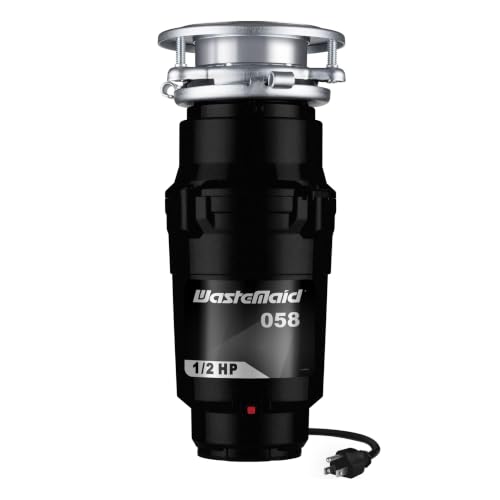
Waste Maid Garbage Disposal, Anti-Jam, Continuous Feed, 1/2 HP Economy | Quiet Stainless Steel Food Waste Grinding System with Power Cord, Fast Swap 3-Bolt Mount, 8-Yr Warranty 10-US-WM-058-3B
Chosen because it specifies Anti-Jam and Continuous Feed.
View on AmazonINSINKERATOR BADGER 1 Garbage Disposal with Cord, 1/3 HP Continuous Feed | BADGER Series, LIFT AND LATCH Technology, Power Cord Included, Septic Safe, Compact Disposer
Chosen because it specifies 1/3 HP Continuous Feed and BADGER Series.
View on AmazonAt a glance
| Tier | Examples of lines | Typical stated motor | Best for | Limits |
|---|---|---|---|---|
| Budget | InSinkErator Badger series, Waste King entry models | About one-third to one-half horsepower | Singles, couples, light cooking | Slower on fibrous scraps; basic sound insulation |
| Mid-range | InSinkErator Evolution Compact or Essential, Waste King Legend series | About three-quarter horsepower | Most families | Mid-level noise reduction |
| Premium | InSinkErator Evolution Excel or Platinum, Moen GX series | About one horsepower or more | Heavy cooks, large households | Larger and heavier; needs room under the sink |
| Compact | Evolution Compact and similar | Varies | Tight sink cabinets | Smaller grind chamber |
Horsepower and series names are taken from what the makers state on their product pages and may change by model year, so confirm the exact figures on the current spec sheet before you buy.
What to compare
Motor power
Makers describe higher horsepower as faster grinding and fewer jams. A one-third horsepower model can cope with soft scraps, but a three-quarter or one horsepower unit gives more headroom for the occasional fibrous vegetable or small bone-like scrap, if the maker allows those.
Grind technology and chamber
Many makers use galvanized or stainless steel grind components, and some advertise multi-stage grinding or anti-jam features. Stainless steel is typically described as more corrosion resistant. Premium lines are often built with a larger chamber to process more at once.
Noise insulation
Reviewers commonly note that insulated models are noticeably quieter, especially premium lines with extra sound dampening. If the kitchen is open to a living area, this feature may matter more than horsepower.
Mounting system and fit
Most makers use a quick-lock or similar mount that fits a standard three-bolt sink flange. Many disposals fit a standard 3.5-inch sink opening, but you should measure your sink and check the maker’s clearance requirements. Compact models help where the dishwasher drain or pipes crowd the cabinet.
Power and wiring
Most disposals plug in or hard-wire to a switched outlet under the sink. Electrical work should be done by a licensed electrician if you are not experienced, and local code applies. Use a GFCI-protected circuit if your code requires it near water.
Warranty
Makers list warranty periods that vary by line, and premium models generally carry longer terms. Read exactly what is covered and whether in-home service is included.
Septic and plumbing notes
If your home uses a septic system, some makers sell models with an added bio-charge or similar cartridge system, and you should confirm with the maker and your septic provider before installing any disposal. Also confirm that your drain line is in good condition, because older pipes may clog more easily with ground waste.
Care and what not to grind
- Run cold water before, during and for a short time after grinding so waste flushes through.
- Avoid large amounts of grease, oil, coffee grounds in bulk, eggshells in bulk, pasta, rice and fibrous items like corn husks and celery if the manual warns against them.
- Never put non-food items, bones beyond what the maker allows, or glass or metal into the disposal.
- Do not use chemical drain cleaners in a disposal unless the manual says it is safe.
- If the unit hums but does not spin, turn it off, disconnect power and use the maker’s wrench slot or reset button as the manual describes.
- Freshen with citrus peels or ice only if your manual recommends it.
Budget tiers
Budget
Fine for small households that cook simply. Expect louder operation and lower grinding headroom.
Mid-range
The most commonly recommended band for families, balancing motor power, insulation and warranty.
Premium
Choose this if you cook often, host guests, or want the quietest operation. Check that your cabinet can handle a larger body.
Pick X if…
| If you… | Pick |
|---|---|
| Live alone and cook lightly | Budget continuous feed unit |
| Feed a family | Mid-range three-quarter horsepower unit |
| Cook a lot or entertain | Premium one horsepower unit with sound insulation |
| Have a cramped cabinet | Compact model, checking the maker’s dimensions |
| Have a septic system | A model the maker states as septic-compatible, after consulting your provider |
| Want a lid that locks out the opening | Batch feed instead of continuous feed |
Alternatives
- Batch feed disposal: adds a lid barrier, at the cost of convenience.
- Countertop compost bin: keeps scraps out of the drain entirely and suits septic homes.
- Electric food recycler appliances: dry and grind scraps for the bin or garden, though they take counter space and have their own cycle times.
Installation checklist
- Check the sink flange and mounting type.
- Measure the space below the sink.
- Confirm the discharge pipe height and dishwasher connection.
- Switch off power at the breaker before any wiring.
- Run water and test for leaks after installation.
How to read disposal specifications
Makers publish a small set of numbers that help you compare units. Horsepower describes motor strength, and revolutions per minute describes how fast the grind plate turns. Chamber capacity states how much waste the unit can hold at once, and the number of grind stages indicates how many times the waste is processed before it leaves. Weight and height tell you whether the unit fits under your sink with the dishwasher and trap in place. Warranty length and type, such as in-home service or parts only, tell you what support to expect.
Installing a replacement
If you are replacing an existing unit, the mounting assembly often allows a swap without changing the sink flange, especially when you stay within the same maker’s system. Disconnect power at the breaker before starting, take photos of the wiring and drain connections, and have a bucket ready for residual water. Seat the new unit, tighten the mount, reconnect the dishwasher knockout if you use one, and test with water running. If anything about the wiring or drain looks unfamiliar, stop and call a licensed professional rather than improvising.
Maintenance routine
- Flush with cold water after each use for about half a minute.
- Grind a handful of ice now and then only if your manual says it is fine.
- Clean the rubber splash guard with a brush and mild dish soap.
- Keep the drain line clear and avoid stringy or starchy scraps in large amounts.
- Listen for new noises, which can signal a foreign object or loose mounting.
Signs it is time to replace the unit
Frequent jams, persistent leaks from the housing, rust-coloured water from the unit, a motor that hums without turning even after a reset, and slow drainage that returns after clearing are common reasons to consider a new disposal. A leak at the mounting flange can sometimes be fixed by retightening or replacing the gasket, while a leak from the body usually means replacement. If you are unsure about the cause, a plumber can diagnose it quickly.
Frequently Asked Questions
Is a continuous feed disposal better than a batch feed one?
It is more convenient because you can add scraps while running. Batch feed is considered safer by some households because it will not run without the lid. Choose based on your priorities and household.
How much horsepower do I need?
Three-quarter horsepower covers most family needs, while heavy cooks may prefer one horsepower. Light users can manage with a smaller motor.
Can I install a disposal myself?
Many makers provide instructions for DIY installation, but hardwiring and plumbing connections may require a licensed professional depending on local code. If you are unsure, hire one.
Why does my disposal hum but not grind?
This is usually a jam. Turn off and disconnect power, then follow the maker’s manual to rotate the shaft with the supplied wrench and press the reset button. Never put your hand inside.
Can I use a disposal with a septic tank?
Some makers offer septic-oriented models, but you should confirm with the maker and your septic service before using one. A tank can fill faster with extra solids.
How long does a disposal last?
Lifespan varies by model, use and care. Premium models with stainless components are often said to last longer, and warranty terms offer a rough guide.