Our Top Picks
For women dealing with plantar fasciitis, the best slippers are those with a supportive, contoured footbed, a cushioned but not mushy midsole, a firm heel cup and a sole that stays on indoors; recovery-style slides suit buyers who want soft cushioning, orthotic-friendly slippers suit those who want arch structure, and closed-back styles suit anyone who feels unstable in open slides. No slipper treats the condition, so see a podiatrist or doctor if heel pain persists.
This guide explains what makers say about arch support, cushioning and fit, how to match a style to your routine, and the trade-offs by budget tier. Details reflect general maker descriptions; read the manufacturer’s size and fit guidance on the specific model, and follow your clinician’s advice about footwear at home.

ERGOfoot Orthopedic Slippers with Arch Support, Slip-On Knit Soft Sherpa Lining House Slipper, Plantar Fasciitis Relief, Orthotic House Shoes with Indoor Outdoor Anti-Skid Rubber Sole/Black
Chosen because it specifies Slip-On Knit Soft Sherpa Lining House Slipper and Plantar Fasciitis Relief.
View on Amazon
ERGOfoot Orthopedic Arch Support Slippers Women Men, W9/W8 | Orthotic House Shoes for Plantar Fasciitis Relief, Breathable, Closed Toe, Slip On, Non Slip, Indoor Outdoor Wear
Chosen because it specifies W9/W8 and Orthotic House Shoes for Plantar Fasciitis Relief.
View on Amazon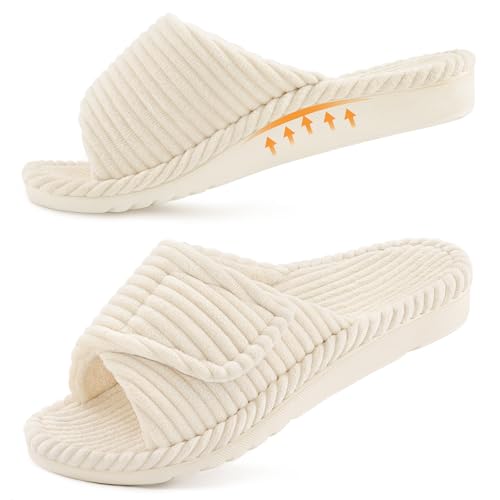
Litfun Orthopedic Slippers for Women Arch Support House Shoes | Adjustable Memory Foam Slippers for Plantar Fasciitis, Open Toe Corduroy Bedroom Indoor Shoes, Beige 39
Chosen because it specifies Adjustable Memory Foam Slippers for Plantar Fasciitis and Open Toe Corduroy Bedroom Indoor Shoes.
View on Amazon
jiajiale Womens Memory Foam Slippers Fuzzy Outdoor House Shoes Brown 8 | Women's Arch Support Orthotic Plantar Fasciitis Slip On Suede Ladies Scuff Slipper Cozy Shearling Winter Indoor Size
Picked as a relevant option in this category.
View on AmazonAt a Glance: Slipper Types for Foot Support
| Type | Best for | Typical stated features | Limits |
|---|---|---|---|
| Recovery slide (OOFOS OOahh, HOKA Ora Recovery Slide) | Soft cushioning after long days, quick on-and-off | Foam midsoles; makers describe cushioning and a contoured footbed | Open back and toe; less secure on stairs; limited warmth |
| Clog-style recovery shoe (OOFOS OOcloog) | Walking around the house, errands | Closed toe, foam sole, heel strap on some models | Runs warmer; fit varies by foot width |
| Orthotic-style slipper (Vionic and similar) | Buyers who want arch structure | Makers describe contoured footbeds and built-in support | Firmer feel; fewer fluffy styles |
| Cushioned house shoe with firm sole (Dearfoams, Acorn and similar) | Warmth plus some structure | Memory-foam insoles, indoor-outdoor soles on some models | Support level varies a lot; often softer than clinician-recommended footwear |
| Wearing your own supportive shoes or inserts indoors | Anyone told to avoid bare feet or flat slippers | Uses the shoe or insert you already trust | Less cozy; not a slipper |
What Plantar Fasciitis Footwear Usually Has in Common
Plantar fasciitis is irritation of the band of tissue along the sole of the foot, and many people feel it as heel pain, especially with the first steps in the morning. Podiatry organizations and health sources commonly discuss supportive footwear with a cushioned heel, a stable arch area and some stiffness through the midfoot as part of managing it, and they generally caution against going barefoot or wearing flat, unsupportive slippers on hard floors. They also stress that footwear is one piece of care. Pain that lasts more than a short time, worsens, or comes with swelling, numbness or an injury should be assessed by a doctor or podiatrist.
Arch Support
Look for slippers the maker describes as having a contoured footbed or built-in arch support, and compare it to the shape of your own arch. Higher arches and flatter feet need different amounts of contour, and a support that feels wrong can add discomfort.
Cushioning and Heel Design
Soft heel cushioning can feel good on hard floors, but a very soft foam with no structure can leave the foot unsupported. A heel cup that cradles the heel and a sole that resists excessive twisting are common talking points among makers and reviewers.
Fit and Closure
Open slides are easy to put on, but toes may grip to keep them on. Closed-back or strapped styles feel more stable, especially on stairs. Check each maker’s size chart, since some brands advise sizing up or down, and note that men’s and women’s sizing conversions differ.
Outsole and Safety
A grippy outsole reduces slipping on tile and wood. If you will step outside to collect the post, look for models the maker lists as suitable for indoor and outdoor use. A worn-out sole should be replaced.
Brands Commonly Discussed
OOFOS, with models such as the OOahh slide and OOcloog, is widely mentioned by reviewers for its foam recovery footwear; the maker describes a footbed designed to absorb impact. HOKA’s Ora Recovery Slide is another recovery slide described by the maker as a cushioned, contoured option. Vionic sells slippers and sandals built around contoured footbeds and is often cited by reviewers looking at arch support. Dearfoams and Acorn make traditional house slippers, some with memory foam insoles, for buyers who want warmth first. Because lineups change by season, confirm on the maker’s page that a specific model is still current before buying.
Budget, Mid-Range and Premium Tiers
| Tier | What to expect | Trade-offs |
|---|---|---|
| Budget | Memory-foam house shoes, simple slides | Support and durability vary; may flatten quickly |
| Mid-range | Contoured-footbed slippers, foam slides, better outsoles | More structure than budget, but may feel firm |
| Premium | Recovery-focused footwear from performance brands, higher-grade materials | Costs more; fit can be narrower or looser by model |
Pick X If… Decision Table
| If you… | Choose |
|---|---|
| Want soft landing on hard floors after work | Recovery slide or clog-style foam shoe |
| Want arch structure at home | Orthotic-style slipper with contoured footbed |
| Walk on stairs or tile often | Closed-back or strapped style with a grippy sole |
| Need warmth for cold floors | Cushioned house shoe with a firm sole |
| Use custom orthotics | Ask your podiatrist; a removable insole model may allow them |
| Walk outside briefly | Indoor-outdoor sole listed by the maker |
Fit and Safety Notes
- If you wear prescribed orthotics, ask your podiatrist whether a slipper can accommodate them and whether the insole is removable.
- Avoid slippers that bend sharply in the middle if your clinician has advised firmer support.
- Replace slippers when the cushioning flattens or the sole wears smooth.
- Do not rely on slippers alone to manage ongoing pain; stretching and activity changes are matters for your clinician.
- Diabetic or neuropathic feet need special care; ask a doctor before choosing home footwear.
Alternatives
- Supportive sandals or sneakers worn indoors: some clinicians advise this for the first steps of the day.
- Cushioned insoles in a basic slipper: if a slipper has a removable insole, a supportive insert may be possible, subject to your clinician’s advice.
- Heated or warm slippers: comfort-focused, but follow the maker’s safety guidance and do not use heated products if you have reduced foot sensation.
Matching a Slipper to Your Daily Routine
First Steps in the Morning
Many people with heel pain report that the first steps after waking are the hardest. Keeping a supportive pair of slippers or shoes by the bed, rather than walking barefoot across a hard floor, is a common suggestion in foot-health guidance. Your clinician may also suggest gentle stretches; follow their advice rather than general tips.
Long Days in the Kitchen
For cooking and cleaning, a closed, cushioned style with a grippy outsole tends to feel steadier than an open scuff. A cushioned mat at the sink is a useful addition.
Working From Home
If you stand at a desk part of the day, a supportive slipper or house shoe with a cushioned heel helps reduce the contrast between shoes and bare floors. Alternate between sitting and standing.
Cold Floors and Winter
Warm linings are comfortable, but make sure the footbed still has structure. A plush lining with no support under it may feel good briefly but may not suit sore heels.
Shopping Checklist
- Footbed: contoured or flat, and whether the insole is removable.
- Heel: a closed or strapped back for stability.
- Midsole: cushioned but not so soft that it collapses.
- Outsole: tread and grip for your floors.
- Fit: toe room, width options and the maker’s size chart.
- Return policy: useful, since foot comfort is personal and a model that works for one buyer may not for another.
Reviewers also note that very high-profile cushioned styles can feel unstable for some people, and that a slipper that feels fine for an hour may feel different after a full day. Introduce a new pair gradually and stop wearing it if it increases pain.
Frequently Asked Questions
Do slippers help plantar fasciitis?
Supportive footwear is commonly discussed as part of managing foot discomfort, but slippers are not a treatment. If heel pain continues, see a podiatrist or doctor for assessment and a plan that suits you.
Is it better to go barefoot or wear slippers at home?
Many clinicians advise against walking barefoot on hard floors if you have heel pain, because it removes cushioning and support. Ask your clinician what is right for your situation.
Are recovery slides good for all-day wear?
They are designed for comfort and are popular for home use, but their open design is less stable on stairs and for long walks. Many people use them around the house and choose closed-back shoes for activity.
Can I wear orthotics in my slippers?
Only if the slipper has a removable insole and enough depth. Ask your podiatrist, who can say whether a given slipper can accommodate your orthotics.
How do I know if a slipper has enough arch support?
Compare the maker’s description of the footbed contour with how the slipper feels under your arch, and read reviews from people with a similar foot shape. If it feels too high, too flat or causes new pain, stop wearing it.
How often should I replace slippers for foot support?
Replace them when the foam looks compressed, the sole is worn smooth, or they no longer feel supportive. Heavily used slippers often wear out within a year, though it depends on the materials and how often you wear them.