Our Top Picks
The best women’s slippers depend on how you wear them: a shearling-style or fleece moccasin for cold floors and cozy evenings, a memory-foam scuff for quick on-and-off, a closed-back house shoe with a rubber sole for errands and stairs, and a washable knit slipper for people who want something easy to keep clean. Start with the sole and the lining, because those two choices decide most of the comfort and durability.
This guide compares the main slipper types, what makers say about materials and fit, care tips, and trade-offs by budget tier. Details reflect general maker descriptions; read each maker’s size chart and care instructions for the specific model, since both vary.

EverFoams Women's Fuzzy Slippers Cozy House Shoes Cream White, 9-10 US | Comfy, Soft, Lightweight, Breathable, Cloud, Non-slip, Machine-washable, Anti-slip Sole, Gift, Home
Chosen because it specifies 9-10 US and Comfy.
View on Amazon
EverFoams Women’s Soft Curly Memory Foam Slippers Grey,7-8 US | Gift-ready, Wool-like, Warm Polar Fleece Lining, Non-Slip, Indoor Cozy Loafer, Fall Winter Slippers, Machine Washable
Chosen because it specifies 7-8 US and Gift-ready.
View on Amazon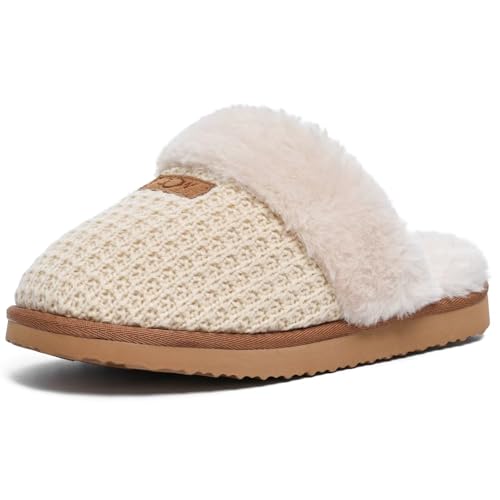
OOW Cozy House Slippers for Women with Memory Foam Fuzzy Shoes for Indoor
Picked as a relevant option in this category.
View on Amazon
EverFoams Women’s Soft Curly Memory Foam Slippers Khaki,9-10 US | Gift-ready, Wool-like, Warm Polar Fleece Lining, Non-Slip, Indoor Cozy Loafer, Fall Winter Slippers, Machine Washable
Chosen because it specifies 9-10 US and Gift-ready.
View on AmazonAt a Glance: Women’s Slipper Types
| Type | Best for | Typical stated features | Limits |
|---|---|---|---|
| Shearling or sheepskin-style scuff or moccasin (UGG and similar) | Cold floors, cozy evenings | Wool or wool-blend lining; many have indoor-outdoor soles | Warm; spot-clean only on many styles; can shed or wear at the heel |
| Memory-foam scuff (Dearfoams and similar) | Easy on-and-off, budget friendly | Foam insole, soft textile upper | Foam can flatten; thin soles on cheaper pairs |
| Closed-back house shoe (Acorn, Bearpaw and similar) | Stairs, quick errands, stable fit | Rubber or EVA outsole, moccasin or clog shape | Takes longer to put on; may run warm |
| Washable knit or cotton slipper | Warm climates, easy care | Fabric upper, machine-washable on some models | Less insulation; thinner soles |
| Arch-support slipper (Vionic and similar) | Buyers who want a contoured footbed | Makers describe supportive footbeds | Firmer feel; fewer plush looks |
What to Look For
Lining and Warmth
Wool and wool-blend linings are commonly described by makers as insulating and breathable, while synthetic fleece is lighter and often easier to wash. If your feet get hot, avoid very thick linings or choose open-back styles.
Sole
A thin fabric sole is fine on carpet but slick on tile. A rubber or EVA outsole adds grip and durability, and many shoppers choose an indoor-outdoor sole for taking out the trash. A very hard sole can feel less cozy, so match it to your floors.
Fit
Makers differ: some advise sizing up for wool-lined styles that compress, others advise your usual size. If you are between sizes or have a wide foot, read the maker’s size chart and, where offered, wide options. A slipper that is too loose can cause tripping.
Back and Closure
Open-back scuffs are easy but less secure on stairs. A closed back or an adjustable strap holds the foot better. People with balance concerns may prefer a closed back with a non-slip sole.
Materials and Care
Suede and sheepskin often need spot-cleaning and a brush, and many makers advise against soaking. Textile slippers may be machine-washable on a gentle cycle in a mesh bag. Always follow the care label; air-dry rather than machine-drying unless the maker says otherwise.
Brands Commonly Discussed
UGG is widely known for sheepskin scuffs and moccasins such as the Tasman and Scuff lines. Dearfoams focuses on memory-foam and cushioned house slippers across a range of styles. Acorn and Bearpaw offer moccasin and clog-style house shoes, and Vionic sells slippers built on contoured footbeds. L.L.Bean’s moccasins are another long-standing choice for cold climates. Lineups change often, so confirm on the maker’s page that a given model is current before buying.
Budget, Mid-Range and Premium Tiers
| Tier | What to expect | Trade-offs |
|---|---|---|
| Budget | Memory-foam scuffs, fleece slippers, simple textiles | Soles and cushioning wear faster; thin outsoles |
| Mid-range | Better outsoles, moccasin construction, more sizing options | Still varies by brand; linings can be synthetic |
| Premium | Sheepskin or wool linings, durable soles, designer lines | Costs more; care can be fussier |
Fit and Safety Notes
- Choose a non-slip outsole if your floors are tile, hardwood or laminate.
- Keep laces, straps and loose trims short to avoid trips.
- Replace slippers when the heel is worn down or the insole has collapsed.
- If you have diabetes, reduced foot feeling or ongoing foot pain, ask a doctor or podiatrist about home footwear.
- Heated slippers should be used strictly according to the maker’s manual; do not use them if the instructions advise against it for your situation.
Pick X If… Decision Table
| If you… | Choose |
|---|---|
| Have cold floors and want warmth | Wool or shearling-lined moccasin or scuff |
| Want easy on-and-off and lower cost | Memory-foam scuff |
| Go up and down stairs or run errands | Closed-back house shoe with a rubber sole |
| Live in a warm climate or want easy care | Washable knit or cotton slipper |
| Want arch structure | Contoured-footbed slipper |
| Want a gift | Neutral-color moccasin in a recipient-friendly size, with a gift receipt |
Alternatives
- Slipper socks with grippers: light and washable, good for warm rooms.
- Clog-style foam shoes: a cushioned option that works inside and outside.
- Indoor-only sneakers or house shoes: for people who want more support.
Matching a Slipper to Your Home
Hard Floors: Tile, Wood, Laminate
Cold, hard floors reward a lined slipper with a rubber or EVA outsole. Look for visible tread, since smooth soles can slide on polished surfaces.
Carpeted Homes
Carpet is forgiving, so a lighter knit or fleece slipper with a thin sole works well. Warm lining is a matter of taste.
Homes With Stairs
Closed-back or strapped slippers with a firm heel are generally steadier. Avoid loose scuffs if you carry laundry or children on the stairs.
Hot Climates
Choose breathable fabrics such as cotton or light knits, or an open-toe style. Heavy sheepskin may be uncomfortably warm.
Gifting and Sizing Tips
Slippers are a frequent gift, and sizing is the most common trouble. If you do not know the recipient’s size, choose a style the maker lists with stretchy fits or one-size-ranges, and keep the gift receipt. Neutral colors such as gray, tan and black suit most tastes and hide dirt. Some brands sell half sizes only in certain styles, so read the size chart on the listing. For people with wider feet, look for styles with adjustable straps or stretch uppers.
Finally, consider how long you want the slippers to last. Natural linings and sturdy outsoles generally cost more but can outlast several budget pairs, while inexpensive foam slippers can be a sensible choice if you prefer to replace them regularly. Either way, read the maker’s care instructions so the slippers keep their shape.
Materials at a Glance
| Material | What makers say | Trade-off |
|---|---|---|
| Sheepskin or shearling | Insulating and breathable lining | Spot-clean care; wears at the heel with daily use |
| Wool felt | Natural warmth, structured shape | Can pill; limited water resistance |
| Fleece or plush synthetic | Soft, lightweight, often washable | Can feel hot and hold odors |
| Memory foam insole | Contours to the foot | May compress over time |
| EVA or rubber outsole | Grip and durability | Firmer underfoot than fabric soles |
Many shoppers also ask about odor. Slippers worn without socks collect moisture, so airing them out between wears and following the care label’s washing advice helps. Rotating two pairs gives each pair time to dry and tends to extend their life. If your feet sweat a lot, choose breathable linings such as cotton or wool rather than fully synthetic ones.
It also helps to think about how often the slippers will leave the house. A pair worn only on carpet can be thin and light, while a pair worn on tile and out to the mailbox should have a real outsole. Matching these needs before you buy prevents most disappointments and is usually more useful than chasing a particular brand name.
Frequently Asked Questions
What are the most comfortable women’s slippers?
Comfort depends on foot shape and preference. Many people like a cushioned footbed with a soft lining and a secure heel. Compare maker descriptions and size guidance rather than relying on one brand.
Should I size up in wool-lined slippers?
Some makers advise sizing up or down, depending on the lining and style. Read the maker’s size chart and fit notes; if you are between sizes, ask the maker’s customer service which way to go.
Can I wear slippers outside?
Only if the maker lists the sole as suitable for outdoor use. Indoor-only slippers have thin soles that can wear quickly or become wet and slippery outdoors.
How do I clean slippers?
Follow the care label. Many suede and sheepskin slippers are spot-cleaned and air-dried, while textile slippers may be machine-washable on a gentle cycle. Avoid high heat unless the maker allows it.
How often should I replace slippers?
Replace them when the cushioning flattens, the sole wears smooth, or the lining falls apart. Daily-wear slippers often last roughly one to two seasons, depending on materials and use.
Are slippers better than bare feet or socks at home?
Slippers add warmth, cushioning and sometimes grip, especially on cold or hard floors. If you have foot pain or a medical condition, ask a doctor or podiatrist what is right for you.