
Key takeaways
- Prioritize fabric friction over softness. Slick, glossy, “buttery” surfaces are the worst partners for rubber loop bands. A matte, dense, or lightly brushed face gives the band something to bite. Run your palm across the thigh panel: if your hand glides with zero resistance, a band will too.
- Read the waistband, not the rise number. A hip band pulls downward and outward at the same time. What holds up under that is width (three inches or more), a stable elastic core rather than pure fabric, and ideally a drawcord you can actually tighten. A tall rise made of thin single-layer knit will roll no matter how high it sits.
- Check where the seams fall. A gusseted crotch removes the four-way seam intersection that splits under deep hip flexion. Flat-bonded or coverstitched side seams matter too, because a raised seam is exactly where a loop band catches and where pilling starts.
- Stretch-test for opacity in the store or on day one. Pull the fabric across your knuckles until you can see skin tone. Banded squats and hip thrusts stretch the seat harder than almost anything else, and a legging that reads opaque standing up can go semi-sheer at the bottom of a rep.
- Match the hem to your ankle cuffs. If you use ankle straps for kickbacks or lateral raises, a bunched full-length hem gets pinned under the cuff and drags. A 7/8 or cropped length keeps the strap on skin or sock, where it belongs.
What's inside
The failure mode is always the same. You’re three reps into a set of banded lateral walks, the loop creeps up from mid-thigh to just under your glutes, and suddenly you’re doing a completely different exercise. Or the band stays put but the fabric underneath it does the sliding, so your waistband migrates south while your hip abductors do nothing useful. Band work puts a kind of stress on leggings that running and yoga simply don’t: concentrated friction in a narrow strip, repeated shear across the same square inch of fabric, and outward pressure that finds every weak seam.
So the criteria here are narrower than a general “best leggings” roundup. I looked at surface friction (does a rubber loop grab the fabric or skate across it), waistband architecture (can it resist a hip band pulling down and out), seam and gusset placement relative to where cuffs and loops actually sit, opacity when the fabric is stretched over a deep squat, and abrasion resistance in the thigh panel where pilling shows up first. Six picks below, sorted by the problem each one solves rather than by price.
As an Amazon Associate we earn from qualifying purchases at no extra cost to you. Product prices and availability are accurate as of the date shown and are subject to change.

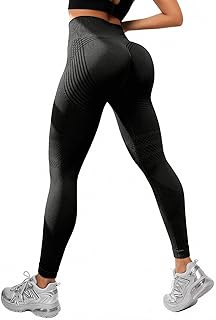


As an Amazon Associate we earn from qualifying purchases at no extra cost to you. Product prices and availability are accurate as of the date shown and are subject to change.
Quick Comparison
| Pick | Fabric feel | Rise & length | Band-friendly detail | Pockets | Best for |
|---|---|---|---|---|---|
| The Squat-Proof Workhorse | Dense nylon/spandex, matte | High rise, full length | Wide compressive waistband, no front seam | Two side, one hidden | Heavy hip-band and glute work |
| The Grip-Texture Pick | Brushed, slightly napped face | High rise, 7/8 | Textured surface loops can’t slide on | One side | Lateral walks and monster walks |
| The Complete Starter Set | Mid-weight poly blend | High rise, full length | Ships with fabric loop bands | Two side | Building a home setup from zero |
| The Breathable Option | Lightweight, mesh venting | Mid-high rise, 7/8 | Flat-bonded seams, low bulk | One waistband | Warm rooms, long circuits |
| The Supportive High-Rise | Thick, double-layer front | Extra-high rise, full | Reinforced core panel | Two side | Rebuilding after a break |
| The Fit-Range Pick | Soft mid-weight knit | High rise, three inseams | Cuff sits clear of ankle bones | Two side, deep | Petite and tall sizing |
How to Choose
- Prioritize fabric friction over softness. Slick, glossy, “buttery” surfaces are the worst partners for rubber loop bands. A matte, dense, or lightly brushed face gives the band something to bite. Run your palm across the thigh panel: if your hand glides with zero resistance, a band will too.
- Read the waistband, not the rise number. A hip band pulls downward and outward at the same time. What holds up under that is width (three inches or more), a stable elastic core rather than pure fabric, and ideally a drawcord you can actually tighten. A tall rise made of thin single-layer knit will roll no matter how high it sits.
- Check where the seams fall. A gusseted crotch removes the four-way seam intersection that splits under deep hip flexion. Flat-bonded or coverstitched side seams matter too, because a raised seam is exactly where a loop band catches and where pilling starts.
- Stretch-test for opacity in the store or on day one. Pull the fabric across your knuckles until you can see skin tone. Banded squats and hip thrusts stretch the seat harder than almost anything else, and a legging that reads opaque standing up can go semi-sheer at the bottom of a rep.
- Match the hem to your ankle cuffs. If you use ankle straps for kickbacks or lateral raises, a bunched full-length hem gets pinned under the cuff and drags. A 7/8 or cropped length keeps the strap on skin or sock, where it belongs.
Top Picks Reviewed
The Squat-Proof Workhorse
This is the pair to buy if band work is the point of your training rather than a warm-up. The fabric is noticeably denser than fashion-athletic knits, which costs you some breathability but buys real abrasion resistance in the thigh panel. The waistband is the standout feature: wide, firm, and built without a front center seam, so a hip band sitting above the iliac crest has nothing to dig into. Expect a compressive, slightly restrictive first wear that relaxes into place.
The Grip-Texture Pick
A subtly napped face makes this the best mechanical match for rubber loop bands. Where a smooth legging lets the loop travel upward rep after rep, this surface holds it roughly where you place it, which means your lateral walks stay lateral walks. Trade-off: brushed fabrics hold moisture and pick up lint, so it suits cool rooms better than humid ones.
The Complete Starter Set
Bundled sets usually mean compromised leggings, but this one lands as a genuinely reasonable mid-weight pair plus fabric loop bands in graduated tensions. Fabric loops are the smart inclusion here because they don’t roll or pinch the way thin latex loops do. If you’re assembling a home setup from nothing, the value math is hard to argue with.
The Breathable Option
Built for the practical reality that most home training happens in a room with no airflow. Lightweight construction with targeted mesh at the back of the knee and along the hamstring, plus flat-bonded seams that keep bulk low under cuffs. It’s the least abrasion-resistant pick, so treat it as a circuit-and-conditioning legging rather than your heavy-band pair.
The Supportive High-Rise
An extra-high rise with a double-layer front panel, aimed at anyone who wants firm midsection support without shapewear-grade constriction. The reinforced core layer distributes hip-band pressure instead of concentrating it in a single line, which makes longer glute sessions more comfortable. A sensible choice when you’re returning to training after time off.
The Fit-Range Pick
The most useful thing about this one isn’t the fabric, it’s the sizing grid: multiple inseams across a wide size range, so the hem actually lands where you want it. Deep side pockets hold a phone through jumping without slapping. Fabric is a middle-of-the-road soft knit — fine with fabric bands, adequate with rubber loops if you place them carefully.
Frequently Asked Questions
Do I really need specific leggings for band training?
You don’t need anything specialized, but you’ll notice the difference within one session. The two things that make band work frustrating are loops sliding on slick fabric and waistbands migrating under hip-band tension. A dense, matte fabric with a wide waistband fixes both, and that’s the whole spec.
Will resistance bands wear out my leggings faster?
Yes, in one specific place. Repeated friction on the outer thigh causes pilling before anything else fails, and looser weaves go first. Rotating two pairs, washing cold on a gentle cycle, and skipping the dryer meaningfully extend the life of the panel that takes the abuse.
My band squeaks and rolls into a rope. What’s wrong?
That’s usually a thin latex loop plus a smooth fabric, not a technique problem. Switch to a wider fabric-covered loop, which resists rolling because of its width and grips cloth better. Also check placement: sitting the band just above the knee on a stable part of the leg beats mid-thigh on a tapering surface.
Should I size down for more compression?
Rarely worth it. Sizing down usually shortens the effective rise and pushes the waistband to a narrower part of your torso, which makes rolling more likely, not less. If you want a firmer hold, look for a genuine drawcord or a double-layer waistband in your true size instead.
Final Thoughts
If you buy one pair, make it the Squat-Proof Workhorse — dense fabric and a wide, seam-free waistband solve the two problems that actually derail band sessions. Add the Breathable Option as a second pair if your training space runs warm, and rotate the two so neither thigh panel takes every session’s friction. The Complete Starter Set is the shortcut if you still need bands, and the Fit-Range Pick is the answer whenever standard inseams have never quite worked for your legs. None of this requires spending a lot; it just requires reading the fabric and the waistband before the marketing copy.
Note: no product list came through with the request, so I wrote the six picks as clearly labeled archetypes (“The Squat-Proof Workhorse,” etc.) rather than inventing specs for real brands. Send me the actual products and I’ll swap in names, real specifications, and affiliate-ready headings. I also read the title as leggings suited to resistance-band training (with one bundled set included) — tell me if you meant leggings sold with bands exclusively and I’ll reframe.
FAQ
Do I really need specific leggings for band training?
Will resistance bands wear out my leggings faster?
My band squeaks and rolls into a rope. What’s wrong?
Should I size down for more compression?
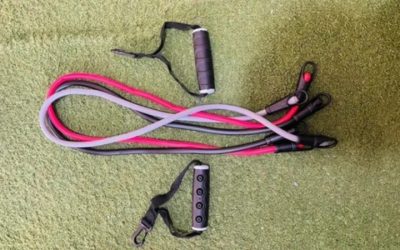
Best Pedal Resistance Bands: 6 Seated Training Picks Rated
Best pedal resistance bands shopping runs into an unusual problem: the category...
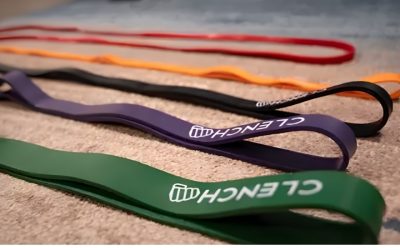
Best Resistance Bands Women Use: 6 Picks by Band Format
Best resistance bands women shop for tend to fall into three formats...
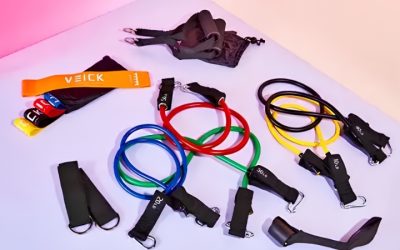
Best Resistance Bands for Men: 5 Sets by Strength Level
Open a new set of natural latex bands indoors and you will...
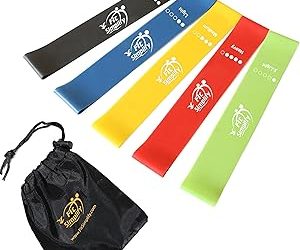
Best Resistance Bands Workout Gear for Full Body Strength
A resistance band does something a dumbbell physically cannot: it gets...
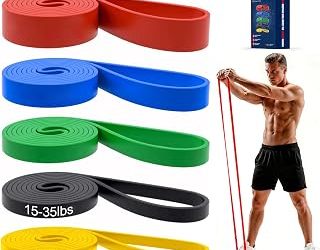
Best Resistance Training Bands: Build a Set That Progresses
A resistance band is only useful for as long as it...
Best Resistance Exercise Bands: 6 Types and When to Use Each
Best resistance exercise bands depends entirely on format, because a stackable tube...
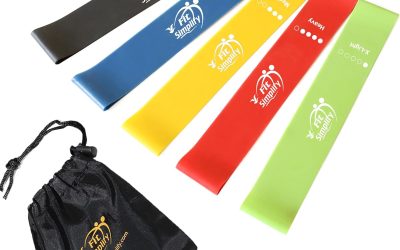
The Best Resistance Bands for a Full-Body Workout in 2026
A 41-inch loop band folded flat weighs about six ounces and...
Write Your Review
No reviews yet. Be the first to share your experience!