
Key takeaways
- Match the format to the exercise, not the price. Handled tubes win for rows, presses, curls and triceps work. Continuous loops win for anything anchored overhead or looped under your feet for squats and deadlifts. Fabric minis win for lateral hip work. Most people eventually own two of the three.
- Look for layered latex, not molded rubber. Quality bands are built from thin sheets or dipped layers of natural latex. If one layer nicks, the rest hold. Cheap single-piece rubber tears along a single propagating line — that’s the band that snaps mid-rep.
- Inspect the hardware, not the handles. On clip sets, the failure point is almost always a carabiner or the metal collar crimped onto the tube. Steel clips with a spring gate and a molded sleeve over the tube junction are the difference between a five-year set and a warranty claim.
- Buy overlapping tension, not maximum tension. A 150 lb band you can’t control is useless. Two mid-range bands used together give you a usable third weight and a spare if one fails. Stackable systems make this explicit; loop sets let you double up manually.
- Plan your anchor before you buy. Door anchors need a door that closes away from you. Rack-mounted loops need a pull-up bar rated for dynamic load. If you have neither, choose a system that works from a standing or seated body position instead.
What's inside
A resistance band does something a dumbbell physically cannot: it gets harder as you approach the end of the movement. Elastic tension climbs with stretch, which means the top of a press or the lockout of a squat — usually the easiest part of a free-weight rep — becomes the hardest. That single property is why bands survive in commercial gym chalk buckets and hotel suitcases alike, and why powerlifters loop them over barbells while physical therapists hand them to patients recovering from rotator cuff surgery.
The catch is that “resistance bands” describes at least four unrelated pieces of equipment. Latex tubes with clips and handles behave like a cable stack. Flat continuous loops behave like a variable-load barbell accessory. Fabric mini bands are a hip and glute tool that no rubber loop will replicate without rolling up your thigh. Buying the wrong category is the most common way people conclude bands “don’t work.” The picks below are separated by what they actually do, with notes on the layered latex construction and anchor hardware that determine whether a set lasts two months or five years.
As an Amazon Associate we earn from qualifying purchases at no extra cost to you. Product prices and availability are accurate as of the date shown and are subject to change.

#1 Pick

#2 Pick

#3 Pick

#4 Pick

#5 Pick

#6 Pick

#7 Pick

Quick Comparison
| Pick | Type | Resistance Range | Anchoring | Best For |
|---|---|---|---|---|
| Bodylastics Stackable Tube Set | Clip tubes with handles | Approx. 5–142 lb stacked | Door anchor + ankle straps | Replacing a cable machine |
| Serious Steel Assisted Pull-Up Bands | Flat continuous loop | Approx. 5–200 lb by band | Bar, rack, or foot | Pull-up progression, band-resisted lifts |
| Fit Simplify Loop Bands | Latex mini loops | Light to extra heavy (5 levels) | None needed | Warm-ups, rehab, travel |
| Te-Rich Fabric Booty Bands | Fabric mini loops | 3 fixed tensions | None needed | Hip abduction, squat and bridge work |
| TheraBand CLX | Flat band with sewn loops | Color-coded, 8 levels | Grip any loop | Shoulder rehab, precise progression |
| Undersun 5-Band Loop Set | Short flat loops | Approx. 5–80 lb | Body position only | Full-body circuits without hardware |
How to Choose
- Match the format to the exercise, not the price. Handled tubes win for rows, presses, curls and triceps work. Continuous loops win for anything anchored overhead or looped under your feet for squats and deadlifts. Fabric minis win for lateral hip work. Most people eventually own two of the three.
- Look for layered latex, not molded rubber. Quality bands are built from thin sheets or dipped layers of natural latex. If one layer nicks, the rest hold. Cheap single-piece rubber tears along a single propagating line — that’s the band that snaps mid-rep.
- Inspect the hardware, not the handles. On clip sets, the failure point is almost always a carabiner or the metal collar crimped onto the tube. Steel clips with a spring gate and a molded sleeve over the tube junction are the difference between a five-year set and a warranty claim.
- Buy overlapping tension, not maximum tension. A 150 lb band you can’t control is useless. Two mid-range bands used together give you a usable third weight and a spare if one fails. Stackable systems make this explicit; loop sets let you double up manually.
- Plan your anchor before you buy. Door anchors need a door that closes away from you. Rack-mounted loops need a pull-up bar rated for dynamic load. If you have neither, choose a system that works from a standing or seated body position instead.
Top Picks Reviewed
Bodylastics Stackable Tube Set
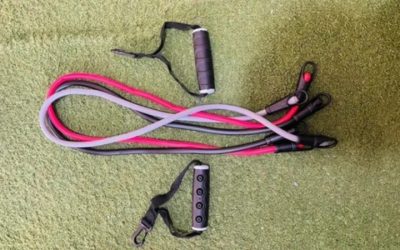
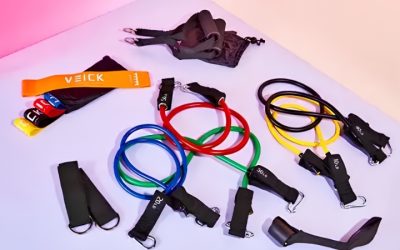
The closest thing to a home cable stack. Five color-coded tubes clip onto two handles in any combination, so you dial resistance the way you’d move a pin. The detail that matters is the internal Kevlar-style cord running through each tube — if the latex fails, the cord keeps the handle from becoming a projectile. Includes a door anchor, ankle straps and a fabric-covered handle grip that survives sweat better than bare rubber.
Serious Steel Assisted Pull-Up Bands
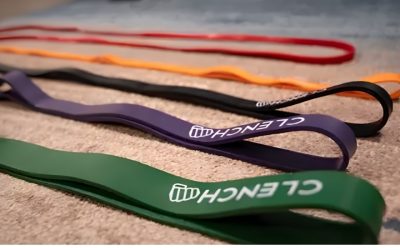
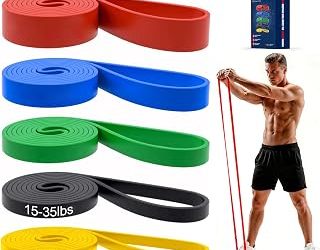
Sold individually rather than as a set, which is the right call. These are wide flat loops used for assisted pull-ups, band-resisted bench and squats, and mobility work. Layered latex construction, no seams, and generous width so they distribute pressure across your foot or hip instead of biting. Start with the 1⅛-inch band if you’re using it for pull-up assistance around bodyweight.
Fit Simplify Loop Bands
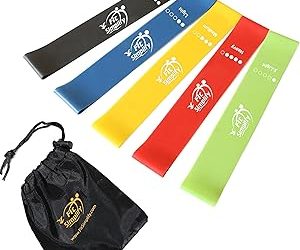
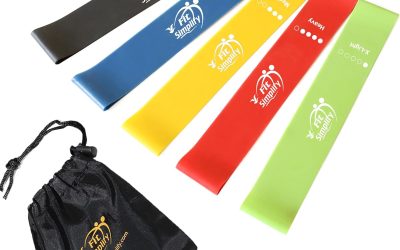
The five-band latex set that lives in a gym bag. They’re thin, they’re cheap, and they excel at things heavy equipment does badly: banded external rotations, monster walks, ankle dorsiflexion, glute bridges. The tradeoff is roll-up on larger thighs during standing work — fine for warm-ups, frustrating for heavy hip abduction sets.
Te-Rich Fabric Booty Bands
Woven fabric with an internal elastic core and a silicone grip strip on the inside. They do not roll, which makes them the correct tool for banded squats, lateral walks and kickbacks where a latex loop would migrate. Three tensions, non-adjustable, sized by circumference — measure your mid-thigh before choosing.
TheraBand CLX
A flat band with eleven sewn loops running its length, so you slip hands or feet into fixed positions rather than wrapping and hoping. The color-coded tension scale is the clinical standard, which means a therapist’s prescription translates directly. Best-in-class for shoulder and elbow rehab and for anyone who needs small, measurable jumps in load.
Undersun 5-Band Loop Set
Short heavy-gauge loops built for bodyweight-plus training with zero hardware. You stand on them, kneel on them, or wrap them across your back for push-ups. The extra-light band is genuinely light enough for shoulder work and the extra-heavy is stiff enough for banded squats, giving one bag a full-body range.
Frequently Asked Questions
Can bands actually build muscle, or only maintain it?
They build it. Hypertrophy responds to mechanical tension and proximity to failure, not to the source of the load. The practical limit is the top end: once your heaviest available tension no longer takes you near failure in a reasonable rep range, you need more bands or a different tool. Slower eccentrics and pauses extend that ceiling considerably.
How do I know when a band needs replacing?
Stretch it fully in good light and look for surface cracking, a milky white haze, sticky residue, or a thin spot near a clip or knot. Any nick along an edge is a retirement signal — tears propagate from edges under tension. Store bands away from sunlight and heat, both of which degrade latex faster than use does.
Latex or fabric for lower body work?
Fabric for standing hip and glute exercises where a band sits on bare or clothed skin and would otherwise roll. Latex for anything anchored, for upper body, and for warm-ups where you want light, adjustable tension. They solve different problems.
Do I need a door anchor?
Only if you want horizontal pulling and pressing at chest height — rows, chest flyes, face pulls, woodchoppers. Without an anchor you can still train legs, shoulders, chest and arms, but rowing patterns get awkward. A rack, a sturdy post or a heavy piece of furniture works as a substitute.
Final Thoughts
The gear that gets used is the gear that fits the training. If you want a genuine full-body strength setup with the least compromise, pair a stackable clip system for pushing and pulling with two heavy continuous loops for squats, deadlifts and pull-up assistance — that combination covers nearly every pattern a barbell does. Add a fabric mini for hip work and a light TheraBand for shoulder health, and you have a complete gym that weighs less than a single kettlebell and fits in a drawer.
Write Your Review
No reviews yet. Be the first to share your experience!