Our Top Picks
 Vivilumens Sunrise Alarm Clock with Sound Machine for8.9 inches in diameter1.35 poundsCheck on Amazon
For most bedrooms, a dedicated sunrise-simulating alarm clock from Philips or Lumie suits shoppers who want a gradual light wake-up with simple controls, while app-driven clocks such as Hatch Restore or Loftie suit people who also want sound machines, routines and a wind-down feature. A daylight alarm clock brightens slowly before your alarm time, so the room is already lit when the sound starts. This guide explains how the main designs differ, what to compare, and how to match a clock to your bedroom and budget tier.
At a Glance: Daylight Alarm Clock Options
| Option | Best for | Key stated features | Limits |
|---|---|---|---|
| Philips SmartSleep Wake-Up Light range | Shoppers who want a traditional, button-driven sunrise clock | The maker lists sunrise simulation, a choice of wake-up sounds, a bedside lamp function and a sunset-style dimming option on its sleep-focused models | Model lineup varies by region; simpler models have fewer sounds |
| Lumie Bodyclock range | People who like a long, gentle light ramp-up and a clinical-style design | The maker offers several models with sunrise alarms, sunset dimming and optional sounds; higher-tier models add more light and sound options | Plain styling; some models are bulky on a small nightstand |
| Hatch Restore series | Households that want a nightlight, sound machine, reading light and alarm in one | The maker describes app-controlled routines, adjustable color light, sound library and a sunrise alarm | Relies on a phone app for full setup; some features sit behind a subscription tier |
| Loftie Clock | Screen-free bedrooms where the phone should stay out of reach | The maker describes a two-stage alarm, a wind-down routine, sleep sounds and a warm-toned light | Setup still uses a phone; light output is aimed at gentle waking rather than bright therapy use |
| Budget sunrise lamps (various brands) | Shoppers testing whether gradual light helps them wake | Typically a simple color-changing sunrise mode, FM radio or a few tones, and a snooze button | Build quality, brightness and display dimming vary widely |
How a Daylight Alarm Clock Works
A daylight or sunrise alarm clock raises the light level over a set period, commonly twenty to forty minutes, ending at your chosen wake time. Many models then add a sound such as birdsong, a chime or radio. Makers position these clocks as a gentler alternative to a sudden buzzer. They are not medical devices unless the maker states so, and they should not be treated as a treatment for any sleep or mood condition. If you struggle with persistent sleep problems or low mood in winter, speak to a doctor.
Vivilumens Sunrise Alarm Clock with Sound Machine for Heavy Sleepers Adults | Gentle Wake-up Light, Dual Alarms Clock, Sleep Sound Machine with 20 Sounds, 30/60/90 Timer, Touch Night Lamp, 10 Min Snooze
Chosen because it specifies Gentle Wake-up Light and Dual Alarms Clock.
View on Amazon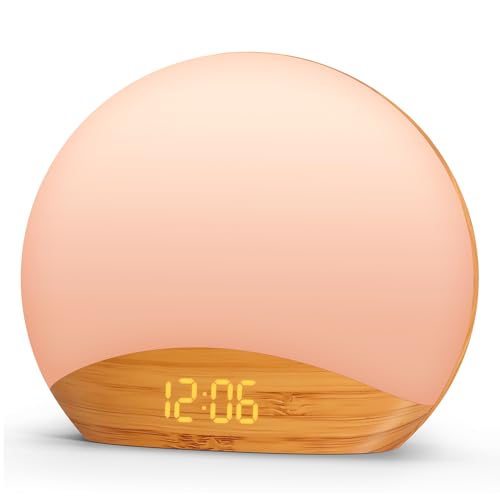
REACHER Wood Grain Sunrise Alarm Clock and Sound Machine Nightlight | Digital Dimmable Clock for Bedroom, 26 Sleep Sounds, White Noise Machine for Baby, Adults, Wake Up Light Alarm Clock for Kids
Chosen because it specifies Digital Dimmable Clock for Bedroom and 26 Sleep Sounds.
View on Amazon
JALL Sunrise Alarm Clock White Noise Machine with 25 Nature Sleep Sounds, Fully Dimmable Clock for Bedrooms, Heavy Sleepers, 17 Light Modes, Bluetooth Speaker
Chosen because it specifies Fully Dimmable Clock for Bedrooms and Heavy Sleepers.
View on AmazonWhat to Compare Before You Buy
Light brightness and ramp length
Makers rarely publish identical measurements, so compare the ramp-up time you can set and how the maker describes the maximum light output. A longer adjustable ramp is useful if you are a heavy sleeper or wake in a dark room. Look at where the lamp sits: a larger lit surface looks softer than a small bright point.
Sounds and volume
Check whether the clock offers nature sounds, tones or radio, and whether volume is adjustable in small steps. Light-only mode is helpful if you share a room with a partner who wakes later. Some app-driven clocks let you create separate weekday and weekend alarms.
Display and bedroom light
A bright clock face can be a nuisance at night. Look for a dimmable or fully off display, and for a warm-toned nightlight rather than a harsh blue one. Reviewers frequently point out that screen glare is the first thing that makes a clock end up in a drawer.
Wind-down features
Sunset-style dimming, guided breathing sounds and sleep sound libraries appear on Philips sleep models, Lumie units, Hatch and Loftie. These are comfort features. Treat them as helpful routines, not as a cure for insomnia.
Power, backup and electrical safety
Most clocks plug into a wall outlet through a supplied adapter. Use only the adapter the maker supplies, keep cables away from the bed, and follow the manual on ventilation and placement. If an adapter runs hot, buzzes, or the housing looks damaged, stop using it. Questions about household wiring belong with a qualified electrician. Some clocks offer battery backup for the time and alarm; confirm in the manual whether a backup keeps the light function working or only the time.
Sizing and Placement
Most daylight clocks are bedside-lamp sized, so a nightstand with a flat top about the size of a dinner plate is enough. Larger bowl-style lamps, such as some Philips and Lumie designs, need more room and a stable surface. Keep the lit face pointing roughly toward your pillow at a comfortable distance, not directly in your eyes. If the nightstand is crowded with books, a phone charger and a water glass, a compact cylinder-style clock such as Hatch Restore or Loftie takes less space.
Budget Tiers
Budget tier
Entry-level sunrise lamps cover the basics: a gradual light ramp, a few tones and a snooze button. Expect plainer design, fewer light levels and less consistent build quality. They are a sensible way to see whether gradual light works for your routine before moving up.
Mid-range tier
Philips and Lumie entry and middle models usually sit here. They tend to offer longer ramp options, more sounds, a dimmable display and a recognizable brand’s support. This tier suits most households.
Premium tier
App-connected clocks such as Hatch Restore, Loftie and higher-end Philips and Lumie models add routines, sound libraries and refined design. The trade-off is more setup, and some features may depend on an app or a subscription.
Pick X If You Want…
| If you want… | Pick | Why |
|---|---|---|
| A simple buttons-only wake-up light | Philips SmartSleep or Lumie Bodyclock | Established sunrise designs with straightforward bedside controls |
| One device for nightlight, white noise and alarm | Hatch Restore | The maker describes color light, sound library and routines in one unit |
| A phone-free, calm bedroom | Loftie Clock | Wind-down and two-stage wake-up are built into the clock |
| The cheapest trial of sunrise waking | A budget sunrise lamp | Low commitment while you see how you respond |
| A shared bedroom where a partner sleeps later | Any model with light-only mode and adjustable sound | Lets you wake with light while keeping noise low |
Care and Daily Use Notes
Dust the lamp surface with a dry, soft cloth with the clock unplugged, and avoid spraying liquids on the unit. Keep it away from sinks, humidifier mist and bath areas. Replace or reseat the plug if it feels loose. Set a backup phone alarm for the first week, because every sunrise clock needs correct time, alarm and volume settings, and a missed setting can mean a missed morning. Reviewers also advise a brief trial period: it can take several mornings to judge whether the ramp length suits you.
Alternatives to Consider
- Smart bulb with a schedule: A color-adjustable smart bulb in a bedside lamp can ramp up on a routine. It lacks a built-in alarm sound and relies on your phone or hub.
- Standard alarm clock with a gentle tone: If light is not important to you, a basic clock with a rising-volume alarm costs less and is simpler.
- Blackout curtains plus a timer lamp: This pairs a dark sleeping room with a lamp on a plug-in timer for a basic sunrise effect. Use a timer rated for the lamp’s load per the maker’s instructions.
Who Should Be Cautious
If you have an eye condition, take medication that affects light sensitivity, or live with a seizure disorder, ask your doctor before using any bright light device. Daylight clocks are comfort products, not therapy lamps, and the makers’ own manuals take precedence over anything written here.
Frequently Asked Questions
Does a daylight alarm clock really help you wake up?
Makers describe the gradual light as a gentler way to wake than a loud buzzer, and many users report preferring it. Results differ between people, and these clocks are not a medical treatment. If you have persistent sleep problems, talk to a doctor.
How long should the sunrise ramp be?
Many clocks let you set a ramp between roughly fifteen and forty-five minutes. Start near thirty minutes and adjust. A longer ramp suits heavy sleepers, while a shorter one may be enough if your room already gets some light.
Can I use a daylight alarm clock for seasonal low mood?
A sunrise clock is built for waking, not for treating a condition. Light therapy lamps are a separate product category with their own guidance. See a doctor if you suspect seasonal depression.
Do I need an app for these clocks?
Philips and Lumie models generally work from buttons on the unit. Hatch Restore and Loftie describe app-based setup, so you need a compatible phone at least for the initial configuration. Confirm what works without a phone in the maker’s manual before buying.
Is it safe to leave one plugged in overnight?
They are designed for bedside use, but you should use the supplied adapter, keep the cable clear of bedding and follow the manual on placement. Stop using any unit that overheats or shows damage, and contact the maker. Have any wiring concerns assessed by an electrician.
Will it work for a deep sleeper or a night-shift schedule?
Deep sleepers often pair the light with a louder sound alarm. For night-shift schedules, blackout curtains help the room stay dark during daytime sleep, and the clock can be set to your actual wake time. Always keep a backup alarm until you trust the routine.