
Key takeaways
- Identify your subfloor before you shop. Concrete tolerates weight and impact almost indefinitely, so thickness is about protecting bars and joints. Wood joists flex, and flex means noise and long-term fatigue — there you’re buying decoupling, not just cushion.
- Separate airborne noise from structure-borne noise. Clanging plates and music are airborne; a dropped trap bar is structure-borne and travels through framing to rooms nowhere near you. Thin rubber handles the first and barely touches the second. Only mass plus a soft, resilient layer handles the second.
- Match thickness to your heaviest drop, not your average one. Loaded barbell drops from hip height want 3/4 inch minimum over concrete and a dedicated drop pad anywhere else. Dumbbells and kettlebells are more forgiving. Treadmills need stability, not squish — going too thick makes the deck feel unstable.
- Weigh the smell and the weight honestly. Recycled rubber outgasses for weeks in a closed room; ventilation and a few days of airing out solve most of it, but not all noses agree. And 4 × 6 ft mats run near 100 pounds each, which is a two-person job up any staircase.
- Plan the seams and the edges. Interlocking tiles creep apart under lateral load unless you use border pieces or perimeter trim. Full mats butted tight and weighted down by a rack stay put. Rolls are seamless but need adhesive or double-sided tape on anything but a dead-flat slab.
What's inside
The floor is the only piece of gym equipment that touches everything else. It decides whether a 315-pound deadlift sounds like a thud or a gunshot two rooms away, whether your barbell rolls into a wall on its own, and whether the joists under a second-story bedroom start telegraphing every rep to the people downstairs. Most buying regret in home gyms traces back to one mistake: picking flooring for the exercise instead of for the structure underneath it. A 3/4-inch stall mat on a garage slab is close to perfect. That same mat over 16-inch-on-center wood joists still transmits low-frequency impact straight into the framing, because rubber that thin does almost nothing for structure-borne sound.
So this guide is organized the way the problem actually presents itself: by what you’re standing on and how much noise you can afford to make. Concrete slab in a garage or basement gets one set of answers. Suspended wood floors in a spare bedroom, a townhouse, or anything above a finished ceiling gets a different set — usually a layered build with a decoupling layer, not a single mat. Below you’ll find the categories worth your money, what each one actually solves, and where each one quietly fails.
As an Amazon Associate we earn from qualifying purchases at no extra cost to you. Product prices and availability are accurate as of the date shown and are subject to change.

#1 Pick

#2 Pick

#3 Pick

#4 Pick

#5 Pick

#6 Pick

#7 Pick

As an Amazon Associate we earn from qualifying purchases at no extra cost to you. Product prices and availability are accurate as of the date shown and are subject to change.
#1 Pick
Quick Comparison
| Flooring Type | Typical Thickness | Best Subfloor | Noise Control | Best For |
|---|---|---|---|---|
| Rubber stall mats (4 × 6 ft) | 3/4 in | Concrete slab | Good for airborne, poor for structural | Garage barbell gyms on a budget |
| Interlocking rubber tiles | 8 mm–1 in | Concrete or plywood | Good, better with underlay | Odd-shaped rooms, DIY installs |
| Rolled rubber flooring | 1/4–3/8 in | Flat concrete | Modest | Cardio and machine zones |
| EVA foam tiles | 1/2–3/4 in | Any, including finished wood | Low; softens light impact only | Bodyweight, yoga, kids’ spaces |
| Drop pads / lifting platform pads | 2–3 in | Any, placed on top | Excellent at the point of impact | Deadlifts and Olympic lifts upstairs |
| Cork or cork-rubber underlayment | 6–12 mm | Plywood over joists | Excellent for structure-borne | Apartments and second-floor rooms |
How to Choose
- Identify your subfloor before you shop. Concrete tolerates weight and impact almost indefinitely, so thickness is about protecting bars and joints. Wood joists flex, and flex means noise and long-term fatigue — there you’re buying decoupling, not just cushion.
- Separate airborne noise from structure-borne noise. Clanging plates and music are airborne; a dropped trap bar is structure-borne and travels through framing to rooms nowhere near you. Thin rubber handles the first and barely touches the second. Only mass plus a soft, resilient layer handles the second.
- Match thickness to your heaviest drop, not your average one. Loaded barbell drops from hip height want 3/4 inch minimum over concrete and a dedicated drop pad anywhere else. Dumbbells and kettlebells are more forgiving. Treadmills need stability, not squish — going too thick makes the deck feel unstable.
- Weigh the smell and the weight honestly. Recycled rubber outgasses for weeks in a closed room; ventilation and a few days of airing out solve most of it, but not all noses agree. And 4 × 6 ft mats run near 100 pounds each, which is a two-person job up any staircase.
- Plan the seams and the edges. Interlocking tiles creep apart under lateral load unless you use border pieces or perimeter trim. Full mats butted tight and weighted down by a rack stay put. Rolls are seamless but need adhesive or double-sided tape on anything but a dead-flat slab.
Top Picks Reviewed
3/4-Inch Rubber Stall Mats — Best Value on a Slab
Nothing beats the cost per square foot. These are dense, vulcanized recycled rubber originally made for horse stalls, which means they shrug off dropped iron and rack feet without denting. On a garage or basement slab, two or three of these under a rack is the standard build for good reason. The trade-offs are real: they’re heavy, the pebbled texture collects chalk dust, and the smell is strongest in the first month. They do not solve upstairs noise complaints.
8 mm Interlocking Rubber Tiles — Best for Awkward Rooms
Puzzle-edge rubber tiles let you fit around a furnace, a support column, or a doorway without cutting a 100-pound mat. Density is comparable to stall mats, and a tight interlock feels close to a monolithic surface underfoot. Buy border and corner pieces if the floor won’t be pinned down by heavy equipment on all sides, and accept that the seams are visible.
3-Inch High-Density Drop Pads — Best Noise Fix for Upper Floors
If you deadlift above someone’s ceiling, this is the single highest-impact purchase on the list. A pair of thick, high-density foam or crumb-rubber pads placed under the plates absorbs the energy at the source instead of letting it enter the framing. Bar height comes up a few inches, which changes your pull, so a matched pair and a stable center strip matter. Used with rubber tiles underneath, it’s the closest thing to silence you’ll get in an apartment.
Cork-Rubber Underlayment — Best Layer Nobody Buys First
This goes under your finish flooring, not on top. Cork’s resilience breaks the mechanical path between mat and subfloor, which is exactly what reduces low-frequency transmission through joists. A 12 mm layer under 3/4-inch rubber is the build I’d recommend for any second-floor room. It also adds a little insulation over a cold slab.
1/4-Inch Rolled Rubber — Best for Cardio and Machines
Rolls give you a seamless, sweepable surface that treadmills, bikes, and selectorized machines love because there’s no seam for a wheel or foot to catch. Firm enough that machines don’t rock, thin enough that it’s a poor choice under a barbell. Order in one length per run and let it relax flat for a day before trimming.
3/4-Inch EVA Foam Tiles — Best for Low-Impact and Shared Spaces
Light, cheap, easy to pull up when the room needs to become a guest room again. Foam is fine for planks, mobility work, kettlebell flows, and protecting a finished hardwood floor from a bench. It is not fine under a power rack — rack feet punch through and the tiles compress permanently. Treat it as a comfort layer, not a lifting surface.
Frequently Asked Questions
Will rubber flooring protect my concrete from dropped weights?
Mostly, at 3/4 inch and above. Slabs crack from repeated point impact, and dense rubber spreads the load enough to prevent that in normal training. Bumper plates plus 3/4-inch rubber is the reliable combination; iron plates dropped from overhead will eventually mark anything.
Do I need to glue mats down?
Rarely. Weight and friction hold full mats in place, especially once a rack is loaded. Glue or double-sided tape is worth it for thin rolls, for tiles in high-traffic doorways, and anywhere lateral pushing — sled work, jumps, plyometrics — would slide the floor.
What actually stops my downstairs neighbor from hearing deadlifts?
Layers with different stiffness. A resilient underlayment, dense rubber above it, and drop pads at the point of impact. Also change the technique: controlled lowering onto pads, one plate touching first, and no free-fall drops. No mat alone will fix a barbell hitting a wood floor.
How thick is too thick?
Past about an inch, you lose stability for standing lifts and machines start to rock. Squats and presses feel worse on a spongy floor because your feet can’t set. Go thick locally with pads where you drop, and keep the general training surface firm.
Final Thoughts
Buy for the structure first, the sport second. On a slab, 3/4-inch rubber mats or dense interlocking tiles are the honest answer, and spending more mostly buys you nicer aesthetics and fewer seams. On wood framing, stop thinking about mats and start thinking about assemblies: a resilient underlayment, a dense top layer, and dedicated drop pads where the load actually lands. That layered approach costs more per square foot but solves the problem people actually complain about, which is never the floor’s feel — it’s the noise. Measure your room, count your heaviest drop, and buy once.
FAQ
Will rubber flooring protect my concrete from dropped weights?
Do I need to glue mats down?
What actually stops my downstairs neighbor from hearing deadlifts?
How thick is too thick?
Best Robot Vacuum with Self Emptying Station for Pet Hair in 2026: Tested and Ranked
Living with furry companions brings immense joy, but dealing with relentless shedding...
Best Gym Mat for Home: Rubber vs Foam Picks for Any Floor
Best gym mat for home choices come down to material density and...
Best Rowers for Home Gym: Air, Magnetic and Water Compared
Best rowers for home gym shortlists usually collapse once someone measures the...
Best Weight Home Gym: 6 All-in-One Machines for Small Rooms
Best weight home gym decisions come down to two numbers before brand...
Best Home Gym Equipment for Beginners: The Starter Setup
Best home gym equipment for beginners is not a machine – it...

Best Treadmills for Home Gym: 5 Picks by Deck and Motor
Best treadmills for home gym decisions come down to two specifications and...
Best Home Gym Compact Setups: 6 Space-Saving Picks Ranked
Best home gym compact claims usually quote a stored footprint and stay...
Best Adjustable Bench for Home Gym: 5 Picks Ranked by Use
Best adjustable bench for home gym decisions turn on three numbers most...
Best Cable Machine for Home Gym: 5 Picks and Pulley Ratios
Best cable machine for home gym shortlists collapse quickly once you convert...
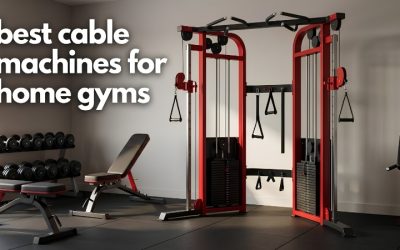
Best Cable Machines for Home Gym: 5 Types and Their Limits
Best cable machines for home gym use are not one product category...
Write Your Review
No reviews yet. Be the first to share your experience!