
Key takeaways
- Diagnose your slide first: Note whether your hands move in the first five minutes or only after twenty. Early sliding is texture; late sliding is moisture, and the fixes are different materials.
- Match the top layer to the answer: Closed-cell PVC and NBR shed sweat and stay easy to wipe, while polyurethane and open-cell surfaces drink moisture and grip harder as you get damp.
- Treat thickness as a trade: Anything from 6mm up protects knees but lets your hand rock slightly under load, which reads as slipping even when the surface is fine. Around 4mm to 5mm holds a firmer platform.
- Measure your reach, not your height: In a lunge with the back foot on the mat and fingers spread forward, most people need more than the standard 68 inches. Long and wide options exist for a reason.
- Plan the drying, not just the buying: Grip dies from trapped sweat and oily residue faster than from wear, so buy the mat you will actually unroll and air out after class.
What's inside
Grip is not one problem. It is two, and most mats only solve one of them. A dry-hand slide happens because your palm skates across a smooth polymer skin with nothing to bite into, which is a texture issue. A wet-hand slide happens because a film of sweat sits between skin and surface and turns the top layer into a lubricant, which is an absorption issue. A mat with an aggressive raised pattern can feel bulletproof in a cool room at 7 a.m. and turn into a slip hazard forty minutes into a heated flow, because the texture is still there but the sweat has filled in every valley.
That split matters when you are spending real money. If your hands slide during Downward Dog before you have broken a sweat, you need surface texture and a tacky polymer. If your hands only slide once your forearms are damp, you need a top layer that either absorbs moisture or gets grippier when wet. Buying the wrong fix is how people end up with three mats in a closet. The list below covers both failure modes, with notes on which mats handle one, which handle both, and where each one gives something up to get there.
As an Amazon Associate we earn from qualifying purchases at no extra cost to you. Product prices and availability are accurate as of the date shown and are subject to change.




Quick Comparison
| Product | Best For | Standout Feature | Watch Out For |
|---|---|---|---|
| Gaiam Thick NBR Mat | Dry-hand slide on a cushioned surface | NBR foam with joint-friendly loft and a cinch strap | Foam soaks sweat and gets slick when wet |
| LVME Foldable Mat | Storing a grippy mat flat | 8mm SGS-certified POE that folds instead of rolling | Fold creases sit under your hands for the first weeks |
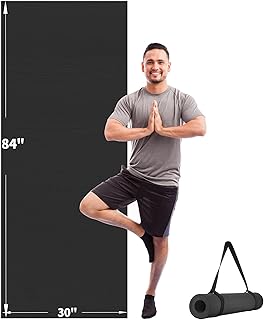
| CAMBIVO Extra Long Wide Mat | Taller and broader bodies | Extra length and width in cushioned PVC | Heavy roll, awkward to carry any distance |
| Premium PU Sweat-Activated Mat | Hands that only slip once damp | Polyurethane top that grips harder as sweat arrives | Feels merely average until you actually sweat |
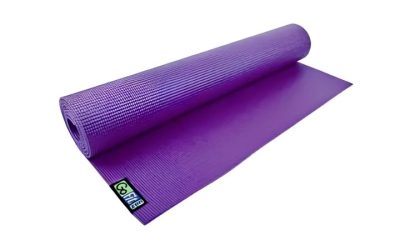
| Gruper Eco Mat | All-round dry grip on a budget | Textured double-sided surface with carry strap | Thinner cushioning under kneecaps |
| Gaiam Dry-Grip Mat | Hot rooms and long sweaty flows | Sweat-resistant surface that stays tacky when wet | Needs proper drying or the finish dulls |
How to Choose
- Diagnose your slide first: Note whether your hands move in the first five minutes or only after twenty. Early sliding is texture; late sliding is moisture, and the fixes are different materials.
- Match the top layer to the answer: Closed-cell PVC and NBR shed sweat and stay easy to wipe, while polyurethane and open-cell surfaces drink moisture and grip harder as you get damp.
- Treat thickness as a trade: Anything from 6mm up protects knees but lets your hand rock slightly under load, which reads as slipping even when the surface is fine. Around 4mm to 5mm holds a firmer platform.
- Measure your reach, not your height: In a lunge with the back foot on the mat and fingers spread forward, most people need more than the standard 68 inches. Long and wide options exist for a reason.
- Plan the drying, not just the buying: Grip dies from trapped sweat and oily residue faster than from wear, so buy the mat you will actually unroll and air out after class.
Top Picks Reviewed
Cushioned Dry-Grip Pick: Gaiam Thick NBR Mat
NBR foam is soft, thick, and forgiving, which is why this one wins for people whose complaint is knees rather than palms. The surface has enough tooth that dry hands stay put through a long standing sequence, and the easy-cinch strap means it actually gets carried rather than dragged.
The honest limitation is moisture. NBR is a sponge-like foam, so once sweat lands it stays on the surface and the mat gets noticeably slick. This is a cool-room, low-sweat mat, and it needs a towel if your practice runs hot.
Flat-Storage Pick: LVME Foldable Mat
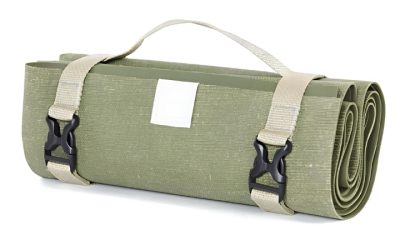
At 71 by 24 inches and 8mm thick, this folds into a rectangle rather than rolling into a log, which is why it slides under a bed or into a suitcase where a rolled mat will not go. The POE material carries SGS certification and has a dense, quiet feel underfoot.
Folded mats come with fold lines. For the first few weeks the creases sit proud of the surface, and if one lands under your palm in plank it is distracting. Leaving it unrolled under something flat for a week largely solves it.
Long-Body Pick: CAMBIVO Extra Long Wide Mat
Running out of mat is its own grip problem, because a hand or foot half on the floor is a hand or foot that skids. The extra length and width here give taller and plus-size practitioners room to move laterally without checking their edges.
The cost is bulk. Cushioned PVC at this size is a heavy roll that fills a car footwell, so this is a mat that lives in one room rather than one that commutes.
Sweat-Activated Pick: Premium PU Mat
The polyurethane top over a natural rubber base is the specialist answer to late-session sliding. Dry, it feels smooth and unremarkable. Damp, it gets noticeably tackier, which is exactly backwards from how foam behaves and exactly what a sweaty practice needs.
It rewards a specific user. If you rarely sweat, you are paying for a rubber base and a top layer whose main trick never activates, and the surface needs wiping down rather than machine washing.
Everyday Value Pick: Gruper Eco Mat
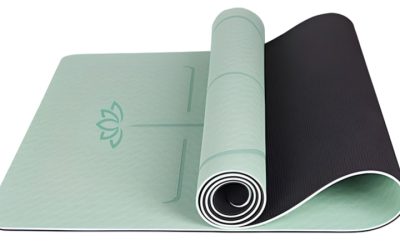
Textured on both faces with a carrying strap included, this is the sensible default for someone who slides on a cheap studio loaner and wants that fixed without overthinking materials. Grip is consistent across dry sessions and the mat lies flat quickly out of the box.
Cushioning is the compromise. On a hard floor, kneeling work gets uncomfortable faster than on a thicker foam mat, so a folded blanket under the knees becomes part of the routine.
Hot-Room Pick: Gaiam Dry-Grip Mat
Built specifically for heated rooms, the dry-grip surface holds its bite when your forearms are dripping, which removes the towel-over-mat shuffle that ruins alignment. It is the pick if your sliding problem starts and ends with heat.
It does need care. Left rolled while damp, the surface finish dulls and the grip advantage fades, so plan on hanging it after every hot session.
Frequently Asked Questions
Why does my mat grip at first and slip later?
Because texture handles dry friction and material handles wet friction. As sweat fills the surface pattern, the pattern stops doing anything, and only an absorbent or sweat-activated top layer keeps working past that point.
Does a towel fix a slippery mat?
A dedicated grip towel helps, but it adds a layer that can bunch in standing poses and shifts alignment feedback. It is a workaround for a mat that fights you, not a substitute for the right surface.
How thick should the mat be for sore knees?
Around 6mm to 8mm covers most knee complaints without turning balance poses into a wobble. Beyond that you gain padding but lose the firm platform that standing sequences rely on.
What actually ruins grip over time?
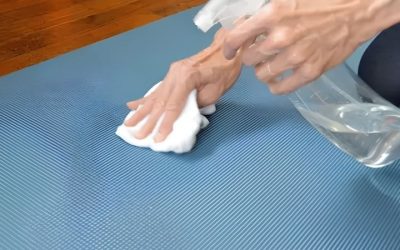
Body oils, lotion, and harsh cleaners. Oils build an invisible film that no texture can cut through, so a plain water and mild soap wipe-down, dried fully, preserves grip far longer than any spray marketed for it.
Final Thoughts
Pick based on when you slide, not on how a mat is described. Early sliding calls for a textured, tacky surface like the Gruper or the cushioned Gaiam NBR, late sliding calls for the sweat-activated PU top or the Gaiam Dry-Grip, and running off the edges calls for the CAMBIVO regardless of material. Get the diagnosis right and the mat lasts years; get it wrong and you buy a second one within a season.
Write Your Review
No reviews yet. Be the first to share your experience!