Key takeaways
- Pro: Among the thinnest designs in this group, fitting under sofas and dressers that block bulkier competitors.
- Pro: Noticeably quieter than most units at this price tier, based on owner-reported feedback.
- Con: No LiDAR or mapping, so coverage is uneven in rooms over roughly 200 square feet.
What's inside
A robot vacuum that never empties its own bin, never mops your grout, and never needs a subscription is not a compromise—it is a category of its own. The best rated robot vacuum only options serve a specific buyer: someone who wants reliable daily floor care without paying for features they will never use, without the maintenance burden of mop pads and water tanks, and without the recurring cost of disposable bags or proprietary filters.
What separates the strong performers in this niche from the forgettable ones comes down to three things. First, navigation intelligence determines whether the robot actually covers your floor or just bumps around a single room. Second, suction power in real-world conditions matters more than the peak number on the spec sheet—lift, seal quality, and brush design do the heavy work. Third, dustbin capacity and self-empty frequency set the rhythm of how often you think about the machine at all. This roundup compares published specifications, listed prices, and owner-reported feedback across eight vacuum-only models available in 2026 to help you find the right fit without overpaying for extras you do not need.
As an Amazon Associate we earn from qualifying purchases at no extra cost to you. Product prices and availability are accurate as of the date shown and are subject to change.




Quick Picks
| Product | Best for | Price |
|---|---|---|
| eufy 11S MAX | Small apartments and tight furniture clearance | $139.99 |
| iRobot Roomba 105 Vac | First-time buyers who want proven navigation | $159 |
| iRobot Roomba 105 Vac with AutoEmpty Dock | Hands-off convenience under $250 | $249.99 |
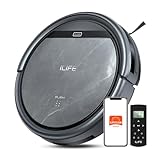
| ILIFE V5s Max | Hard-floor-focused homes on a tight budget | $89.99 |
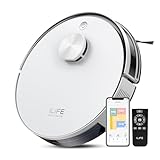
| ILIFE A30s | Maximum raw suction per dollar | $138.99 |
| Shark Navigator AV2110S | Carpet-heavy homes with a self-empty base | $269.97 |
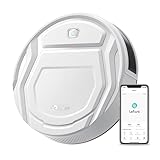
| Lefant M210 | Long runtime on a low budget | $99.99 |
| Shark AV2501AE | Large homes with pets and zero-effort maintenance | $441.33 |
How We Picked
We evaluated these eight models on published suction ratings, navigation method (LiDAR, visual, or random logic), self-empty capability, dustbin or base capacity, listed runtime, and price. Owner feedback from verified purchase reviews was weighed for consistency on real-world pickup, noise levels, and long-term reliability. Models that pair vacuuming with mopping were excluded because they introduce maintenance complexity that defeats the purpose of a vacuum-only category. Navigation architecture carried the most weight: a robot that cleans in organized rows and returns to its dock consistently will outperform a higher-suction unit that wanders and gets stuck.
The 8 Best Rated Robot Vacuum Only in 2026
eufy 11S MAX Robot Vacuum Cleaner
The 11S MAX targets households with low-clearance furniture where taller robots simply cannot reach. Owners praise its slim profile and quiet operation, which makes it suitable for homes with light sleepers or pets that startle easily. The primary trade-off is navigation: without LiDAR, it relies on random-pattern logic, meaning it will take longer to cover open floor space and may miss spots in larger rooms.
- Pro: Among the thinnest designs in this group, fitting under sofas and dressers that block bulkier competitors.
- Pro: Noticeably quieter than most units at this price tier, based on owner-reported feedback.
- Con: No LiDAR or mapping, so coverage is uneven in rooms over roughly 200 square feet.
Skip this one if your floors are open and large, or if you need consistent edge cleaning. It performs best as a supplement in small apartments or single rooms.
iRobot Roomba 105 Vac Robot Vacuum
The 105 Vac brings iRobot’s mature navigation system to an aggressive price point. Its LiDAR-based mapping and row-by-row cleaning pattern produce coverage that owners describe as noticeably more thorough than random-bump robots at similar costs. The Power-Lifting suction handles both hard floors and low-pile carpet competently. The main limitation is the small onboard dustbin, which means emptying it frequently unless you opt for the dock version.
- Pro: LiDAR navigation with neat-row cleaning delivers consistent coverage at a price well under $200.
- Pro: Proven reliability track record from iRobot’s long history in the category.
- Con: No self-empty capability in this standalone configuration; manual bin emptying is required often.
Skip if you dislike the maintenance of emptying a small bin every two or three runs. The dock version below solves that problem for roughly $90 more.
iRobot Roomba 105 Vac with AutoEmpty Dock
Adding the AutoEmpty Dock transforms the 105 Vac into a genuinely hands-off appliance. Owners report going up to 75 days between dock bag changes, which removes the most common friction point of robot vacuum ownership. Navigation and suction match the standalone model exactly, so you get the same row-by-row LiDAR cleaning with dramatically less upkeep. The step-up cost is justified for anyone who already considers a small-dustbin robot a dealbreaker.
- Pro: Self-empties for up to 75 days, eliminating near-daily bin maintenance.
- Pro: Retains the same LiDAR navigation and multi-surface performance as the base 105 Vac.
- Con: The dock requires floor space and a nearby outlet, which may be inconvenient in small apartments.
Skip if your home is tight on layout or if you are comfortable emptying a bin every few days and want to save $90.
ILIFE V5s Max Robot Vacuum
At $89.99, the V5s Max is the lowest-priced option here and earns its keep on hard floors. The 4000Pa suction is adequate for dust, crumbs, and light debris on tile, laminate, and sealed concrete. Owners frequently note its value for small to medium homes with minimal carpet. The weakness is navigation logic—it lacks LiDAR and uses a less organized cleaning pattern that can feel random in open spaces.
- Pro: Lowest entry price in the group, making it an easy risk for first-time robot owners.
- Pro: 4000Pa suction handles hard-floor debris reliably in owner feedback.
- Con: Navigation is less systematic than LiDAR-equipped competitors, reducing coverage efficiency.
Skip if your home has more than one room with carpet or if you need reliable edge and corner pickup.
ILIFE A30s Robot Vacuum
The A30s is the suction-value story in this roundup. At 10000Pa, it delivers the highest rated suction figure among all eight models, and at $138.99 it costs less than the Roomba 105 Vac. Owners report strong performance on pet hair and embedded carpet debris. The trade-off is navigation maturity: while it includes mapping, the path planning is less refined than iRobot’s system, and some owners note occasional confusion in complex layouts.
- Pro: Highest suction rating in the group at 10000Pa, paired with a mid-range price.
- Pro: Excellent owner-reported pickup on pet hair and textured carpets.
- Con: Navigation is less consistent than LiDAR-first competitors in rooms with many obstacles.
Skip if your home has intricate furniture layouts where organized path planning matters more than peak suction.
Shark Navigator Robot Vacuum with Self-Empty Base
The AV2110S occupies the carpet-focused middle ground. Shark’s Navigator line has built a strong reputation for deep-pile carpet performance, and the included self-empty base adds convenience without pushing the price past $270. Owners highlight its effectiveness on medium-to-high-pile rugs that thinner robots struggle with. The navigation is capable but does not match the precision of LiDAR-first units in multi-room mapping.
- Pro: Self-empty base included at a competitive price, removing frequent bin maintenance.
- Pro: Strong carpet performance per owner feedback, particularly on medium and high-pile rugs.
- Con: Navigation is solid but lacks the refined LiDAR mapping found in the Roomba and Shark AV2501AE.
Skip if hard floors dominate your home or if you need room-by-room zone control through an app.
Lefant M210 Robot Vacuum Cleaner
The M210 is a budget machine with two standout numbers: 120 minutes of runtime and a $99.99 price. That runtime exceeds most competitors in this group, making it practical for single-floor coverage without mid-cycle recharging. Wi-Fi, app control, and Alexa compatibility at this price point are notable inclusions. Owners praise its quiet, slim design for hard-floor homes but note limitations on thick carpet and corners.
- Pro: 120-minute runtime allows extended cleaning sessions without returning to the dock.
- Pro: App and voice-control connectivity at under $100 is uncommon in this price band.
- Con: Edge and corner cleaning is inconsistent per owner feedback, leaving debris along baseboards.
Skip if you have wall-to-wall carpet or if thorough edge pickup is a priority for you.
Shark AV2501AE AI Robot Vacuum with XL HEPA Self-Empty Base
The AV2501AE sits at the premium end of the vacuum-only category at $441.33, and it justifies that price with the broadest feature set here. LiDAR navigation, a bagless XL HEPA base with 60-day capacity, AI-driven obstacle recognition, and carpet-plus-hard-floor versatility make it the most capable single-unit solution for pet-owning households with mixed flooring. The bagless design eliminates a recurring cost, though HEPA filter cleaning is still periodic. Some owners note it runs louder than lower-priced alternatives.
- Pro: Bagless 60-day self-empty base eliminates both manual emptying and bag-replacement costs.
- Pro: LiDAR navigation combined with AI obstacle detection handles cluttered and multi-room layouts well.
- Con: Highest price in the group, and the unit is louder than budget competitors per owner reports.
Skip if your home is small, mostly hard-floor, or if you want to spend under $250 on a robot vacuum.
Buying Guide
Navigation Method Is the Single Biggest Differentiator
Random-pattern and gyro-based robots work in small open rooms but lose efficiency as your floor plan grows complex. LiDAR-equipped models like the Roomba 105 Vac and Shark AV2501AE build a map and clean in organized rows, covering the same floor in less time with fewer missed patches. If your home has more than two rooms or furniture-dense layouts, prioritize LiDAR and accept the price premium—it translates directly into less time the robot runs and fewer spots you need to re-clean manually.
Self-Empty Capability Changes Your Weekly Routine
A robot without a self-empty base demands bin attention every two to four runs for most households. Models with docks (the Roomba 105 with AutoEmpty, Shark Navigator, and Shark AV2501AE) extend that interval to weeks or months. Decide how many minutes per week you are willing to spend touching the machine. If the answer is near zero, the dock is non-negotiable and worth the price step-up. If you do not mind a 30-second emptying task twice weekly, you can redirect that savings toward better suction or navigation.
Suction Rating Alone Does Not Predict Pickup
The ILIFE A30s at 10000Pa outranks every other model in raw spec, yet some owner reviews note the Roomba’s lower-rated suction system performs comparably on carpet due to superior brush design and air-path engineering. Use suction numbers as a relative guide, not an absolute ranking. Read verified-owner feedback for your specific floor type. If you have high-pile carpet, look for mentions of deep-pile performance specifically rather than trusting the Pa figure alone.
Our Verdict
Our top pick is the iRobot Roomba 105 Vac with AutoEmpty Dock at $249.99. It balances LiDAR navigation, reliable self-emptying, and a price that undercuts most competitors with similar capabilities. Our budget pick is the ILIFE V5s Max at $89.99, which offers the lowest financial risk for hard-floor homes where sophisticated navigation is less critical. The Shark AV2501AE wins outright if you have multiple pets, mixed flooring, and a larger home where its bagless HEPA base and AI obstacle detection eliminate more daily friction than any other model in this group.
FAQ
Do vacuum-only robots clean as well as combo models?
For vacuuming specifically, a dedicated model typically matches or exceeds combo units at the same price because its weight and airflow are not divided between a mop mechanism and water tank. Combo robots often have shallower dustbins to accommodate plumbing, which means they need more frequent emptying than their vacuum-only counterparts.
How long do these robots last before replacement?
Owner reports across this category commonly cite three to five years of regular use before battery degradation or brush wear noticeably reduce performance. Models with bagless self-empty bases may last longer because they avoid the recurring cost and availability issues of proprietary bags.
Will a robot vacuum pick up pet hair from carpet effectively?
High-suction models with rubberized or multi-surface brushes (the ILIFE A30s, Shark AV2501AE, and Roomba 105 Vac) receive the most positive owner feedback for embedded pet hair on carpet. Lower-price random-navigation units can push hair around rather than lifting it, so navigation quality matters as much as Pa rating for this use case.
Can I use a vacuum-only robot alongside a separate mop?
Yes. Many owners in this category run the robot daily for debris and vacuum tasks, then mop manually or with a standalone device once weekly. This split approach often produces cleaner floors than a single combo robot, since neither task is compromised by shared design constraints.