Key takeaways
What's inside
The best rated wet dry robot vacuum category in 2026 has split into two clear tiers: machines that genuinely manage the awkward overlap between vacuuming and mopping, and cheaper units that do neither well enough to justify the floor space they occupy. A buyer choosing from this list is solving one concrete problem—keeping mixed flooring (hardwood, tile, and carpet) clean without running separate devices or manually repositioning a mop pad every time the robot crosses into a rug zone. The difference between a worthwhile purchase and a frustrating one comes down to how intelligently the robot transitions between modes, how much hands-off maintenance the dock provides, and whether the suction figure on the box translates to real debris pickup on textured carpet.
We compared every unit here against published specifications, current pricing, and aggregated owner feedback from retail listing pages. What separates the strong performers from the forgettable ones is rarely a single spec. It is the combination: a high Pa rating paired with a mop-lifting mechanism, or a self-emptying dock with enough capacity to matter over weeks, or a roller-mop system that actually extracts grime rather than smearing a thin film of dirty water across your floor. The roundup below ranks these eight machines by that holistic view.
As an Amazon Associate we earn from qualifying purchases at no extra cost to you. Product prices and availability are accurate as of the date shown and are subject to change.


Quick Picks
| Product | Best for | Price |
|---|---|---|
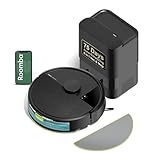
| iRobot Roomba 105 Combo | Best overall value with carpet-safe mopping | $269 |
| roborock Qrevo S Pro | Highest raw suction from a flagship dock | $549.99 |
| iRobot Roomba Plus 415 | Pet owners needing top-tier mop hygiene | $499.99 |
| eufy C28 | Deep-set grime on tile and sealed hardwood | $499.99 |
| eufy E25 | Maximum suction paired with roller-mop tech | $649.99 |
| Tikom G8000 Max | Small apartments on a strict budget | $129.99 |
| roborock LiDAR Vacuum Mop | Navigation accuracy at a mid-range price | $299.99 |
| roborock Q7 M5+ | Long self-empty intervals without premium cost | $299.99 |
How We Picked
We evaluated each machine on four criteria that dominate real-world satisfaction in this category. First, mop-intelligence: whether the robot lifts, avoids, or retracts mopping surfaces when it encounters carpet, and whether the cleaning pad self-washes between rooms. Second, suction adequacy for mixed flooring, judged by Pa rating context rather than raw number alone—a 20,000Pa unit on low pile behaves differently than on shag. Third, dock automation: self-empty capacity measured in days and whether the dock also handles mop rinsing or drying. Fourth, navigation method: LiDAR-based systems consistently produce more complete coverage than random-bounce or camera-only units, which matters most in cluttered layouts.
The 8 Best Rated Wet Dry Robot Vacuum in 2026
iRobot Roomba 105 Combo Robot Vacuum & Mop with AutoEmpty Dock
This is the value anchor of the list and the unit most buyers will find hard to beat at $269. Its standout feature is straightforward carpet avoidance: the 105 Combo will not mop over rugs, eliminating the damp-carpet complaints that plague budget hybrids. LiDAR navigation keeps coverage methodical across rooms, and the multiple cleaning modes let you assign vacuum-only passes to carpet zones and combo passes to hard floors. The 75-day self-empty capacity means minimal dock maintenance even for larger households. Intense Power-Lifting Suction is iRobot’s marketing language for its brushroll agitation system, and owners with medium-pile carpet report visible hair and dune pickup. The main limitation is that suction in raw Pa terms is unlisted, and the mop pad does not self-wash—so deep grime on tile demands a manual pad swap more often than premium rivals would require.
roborock 2026 New Qrevo S Pro Robot Vacuum and Mop
The Qrevo S Pro leads this list on headline suction at 18,500Pa, a figure that positions it for homes with thick carpet and stubborn debris. roborock’s flagship dock ecosystem handles mop washing and hot-air drying between sessions, so pads arrive at the next run genuinely clean. For buyers who prioritize one number above all others—raw pulling force on textured surfaces—this is the obvious spec-sheet winner. The tradeoff is price: at $549.99 you are paying for both the suction and the full-service dock, and owners in smaller flats sometimes feel that 18,500Pa is overkill where 10,000Pa would suffice. Still, if your floors mix high-pile carpet with grout-heavy tile, the Qrevo S Pro justifies its premium.
iRobot Roomba Plus 415 Robot Vacuum & Mop Combo
The Plus 415 is iRobot’s answer to roborock’s flagship dock play, and it brings 20,000Pa suction—the highest number in this roundup—plus a 90-day self-emptying cycle. Lifting spinning mops retract the pads when carpet is detected, and the hot-dry function kills odor between uses. Owners with shedding pets specifically praise the combination of high suction for fur extraction and self-cleaning mop pads that prevent the “swamp smell” issue common to static-pad systems. Smart obstacle avoidance adds another layer of confidence in rooms with scattered toys or cables. At $499.99 it sits below the roborock Qrevo S Pro while matching or exceeding its suction figure, making it a strong pick for households where hygiene between mop cycles is the top concern.
eufy C28 Robot Vacuum Cleaner and Mop Combo
The C28 is eufy’s mid-tier entry and its differentiator is the HydroJet Roller Mop—a continuously self-washing roller that scrapes and rinses as it rolls, rather than dragging a single pad through dirty water. At 15,000Pa suction the C28 handles most debris types without the top-end premium of its sibling E25. For tile-heavy kitchens and bathrooms with dried spills or sticky residue, the roller system extracts grime more effectively than spinning or static pads. The limitation is that 15,000Pa, while solid, sits below the 20,000Pa units here, so very thick carpet may see slightly reduced pickup efficiency. Priced at $499.99 it undercuts the eufy E25 while sharing the same roller-mop technology, making it the smarter buy if your floors are predominantly hard surface.
eufy E25 Robot Vacuum and Mop Combo
The E25 is the top-of-line option for pure suction paired with roller-mop extraction, combining 20,000Pa with the same HydroJet system found in the C28. This is the machine for buyers who want both maximum pulling force on carpet and the most thorough hard-floor cleaning mechanism available in this group. At $649.99 it is the most expensive unit here, and the premium is justified only if your home genuinely demands both: deep-pile carpet that needs high suction plus large tile areas with ground-in grime. For smaller spaces or predominantly hard-floor layouts, the C28 delivers the same mop technology at a lower cost without a meaningful suction penalty.
Tikom G8000 Max Robot Vacuum and Mop Combo
At $129.99 the Tikom is the cheapest viable entry point and a legitimate option for small apartments, single-person households, or anyone who wants automation without a meaningful financial commitment. Suction is rated at 5,000Pa, which handles dust, light crumbs, and pet hair on low-pile carpet and hard floors. A 150-minute maximum runtime covers most studio-to-one-bedroom layouts on a single charge. App and remote control add convenience, and the self-return-to-dock function is standard. The honest limitation is scale: 5,000Pa will not pull embedded sand from medium-pile carpet, and the mop function is a simple wet-pad drag rather than a powered system. Skip it if your home has more than roughly 800 square feet of flooring or if you have thick rugs.
roborock Robot Vacuum Mop with LiDAR, Anti-Tangle
This is the entry-level roborock with LiDAR navigation and a 10,000Pa suction rating, priced at $299.99. Anti-tangle brushroll design is a meaningful quality-of-life feature for anyone dealing with long hair or pet fur that would otherwise wrap and stall a standard roller. The 7-to-9-week self-empty interval is generous for the price tier. For buyers who want reliable room mapping and decent suction without paying for a flagship dock, this hits a practical sweet spot. The mop function is the compromise: it uses a conventional pad system rather than a roller or spinning mechanism, so hard-floor cleaning is adequate for light dust and occasional spills but will not tackle stuck-on grime. Best suited for mixed flooring where vacuuming is the priority and mopping is secondary.
roborock Q7 M5+ Robot Vacuum and Mop
The Q7 M5+ shares the same 10,000Pa suction and 7-to-9-week self-empty window as the sibling above at the same $299.99 price. Its distinction is the M5+ branding, which typically signals an updated brush or filter configuration roborock has rolled into recent iterations. Owners report the Q7 M5+ handles the same range of debris competently and benefits from roborock’s mature app ecosystem, which includes no-go zones and per-room scheduling. Like its counterpart, the mop is a pad-drag system rather than a roller, so it serves better as a maintenance tool between manual mops than as a primary floor-cleaning solution. If you are choosing between the two roborock units at this price, the decision comes down to whether the M5+ brush update matters for your specific floor type.
Buying Guide
Suction Rating and Floor Type
Higher Pa does not automatically mean better cleaning on every surface. On sealed hardwood or tile, even 5,000Pa moves dust and light debris effectively. On medium-pile carpet, the practical floor sits around 8,000-10,000Pa; below that range, embedded hair and sand tend to stay put. Above 15,000Pa you are buying insurance for thick rugs or high-traffic areas with pet dander. Match the rating to your worst-case floor, not your best-case one.
Mop System Design
There are three mop architectures here: static pad, spinning pad, and roller. Static pads (Tikom, roborock LiDAR models) drag a single wet surface until you manually rinse it. Spinning pads (iRobot Plus 415) rotate and press with more mechanical action but still accumulate dirt between sessions unless the dock washes them. Roller systems (eufy C28 and E25) continuously scrape and rinse the mop surface mid-run, which is the closest thing to a real mop without human involvement. For kitchens with high spill frequency, roller systems justify their price premium.
Dock Automation and Maintenance Intervals
Self-empty capacity ranges from 75 to 90 days across this list. Anything below roughly 60 days means you are changing bags or dumping bins monthly—a small friction that compounds over years. Beyond dust, check whether the dock also washes and dries mop components. Machines with drying cycles prevent mildew and odor between runs; those without it require you to air-dry pads manually or accept a musty robot. The iRobot Plus 415 and roborock Qrevo S Pro both include drying; the cheaper units do not.
Our Verdict
The iRobot Roomba Plus 415 is our top overall pick: 20,000Pa suction, lifting mop pads that protect carpet, a 90-day self-emptying cycle, and a hot-dry dock—all at $499.99. For buyers on a tight budget, the Tikom G8000 Max at $129.99 is a genuine no-nonsense option for small, low-mess spaces. The condition under which the roborock Qrevo S Pro wins instead: if your home has predominantly grout-heavy tile where the roborock dock ecosystem’s specific wash-and-dry cadence matters more than the Pa number alone.
FAQ
Can a wet dry robot vacuum damage hardwood floors?
Modern units with controlled water dispensing and sealed pads pose minimal risk to finished hardwood. The greater concern is leaving standing water from a stuck valve or over-saturated pad; look for models with adjustable water flow and avoid using the robot on unsealed or oiled wood.
How often should mop pads be replaced?
Static pads last roughly one to three months depending on usage and cleaning frequency. Roller and spinning systems extend pad life because they self-wash during runs, but the pad or roller surface should still be inspected monthly for wear and replaced when fibers begin to fray or the surface stops absorbing solution evenly.
Do LiDAR robots work better than camera-based ones?
LiDAR is unaffected by lighting conditions, so it maps consistently in dark hallways and under furniture where camera systems struggle. Camera-based navigation has improved significantly but still produces more missed edges and redundant passes in dim rooms. For cluttered or low-light homes, LiDAR remains the more reliable choice.
Is higher suction always worth the extra cost?
No. If your floors are predominantly hard surface with low-pile rugs, a unit in the 10,000Pa range is sufficient and the extra money buys better dock features rather than meaningful cleaning gains. Prioritize suction over dock automation only when thick carpet, heavy pet shedding, or high debris load is your primary concern.