Key takeaways
- Check the seal on a windy day by moving a thin strip of tissue near the joints; movement indicates an air leak.
- Use removable materials on rental windows, but test adhesion before applying tape around painted trim.
- Inspect foam at the start of each cooling season. Compressed, brittle, or detached strips should be replaced.
- Keep window locks, emergency-release features, and the manufacturer’s drainage path accessible.
What's inside
Sealing a window air conditioner is not just a matter of making the installation look neat. Small gaps around the frame, sash, or side panels can let cooled air escape, admit hot outdoor air, and allow rain, insects, and street noise inside. A well-sealed unit can also run more comfortably because it is not constantly fighting against avoidable heat gain.
This guide explains how our home-appliance testing lab approaches the job: measure first, choose materials that suit the window, seal the main leaks without blocking drainage or ventilation, and check the finished installation under real operating conditions. It also covers useful gear, including foam tape, replacement side panels, and removable weather-sealing tape.
As an Amazon Associate we earn from qualifying purchases at no extra cost to you. Product prices and availability are accurate as of the date shown and are subject to change.




🛒 Best Price Today on Amazon
Prime members get fast, free shipping on everything above, plus member-only deals. New members get a 30-day free trial — cancel anytime.
Start With the Right Fit and a Safe Installation
Before sealing anything, confirm that the air conditioner is suitable for the room and the window. For example, the BLACK+DECKER Window Air Conditioner 12,000 BTU BWAC12WTB is designed for spaces up to 550 square feet, but cooling capacity alone does not make an installation successful. The window must support the unit, the cabinet should sit level from side to side, and the exterior portion must have adequate clearance for airflow.
Follow the manufacturer’s instructions for brackets, support rails, and window locks. Never use foam or tape to compensate for an unstable unit. With the air conditioner unplugged, inspect the opening for warped frames, cracked trim, or loose hardware. Repair structural problems first; sealant is for controlling air and weather, not carrying weight.
Measure the Gaps Before Buying Materials
Close the window as far as the installation allows and examine the perimeter in daylight. Measure the width and depth of gaps at the top, sides, and where the accordion panels meet the frame. A strip that is too thin may not compress enough to stop drafts, while one that is too thick can prevent the sash from closing properly.
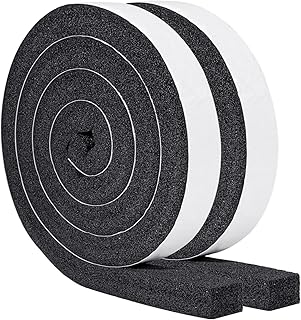
For ordinary gaps around a window air conditioner, 1-inch foam tape is often a practical starting point. High Density Foam Tape Air Conditioner Window Seal is a useful option when you need a compressible strip with adhesive backing. Yotache Air Conditioner Window Seal Kit also uses 1-inch foam and provides two 6.5-foot rolls, which can be convenient for a standard installation or a wider opening.
Measure twice, including the side-panel area. Many leaks occur around the plastic or accordion extensions rather than around the metal cabinet itself. If the supplied panels are damaged or leave unusually large openings, replacement panels such as the 2 Pack Window Air Conditioner Side Panels may provide a more complete barrier. Check their dimensions against your window before ordering.
Prepare the Surfaces for Reliable Adhesion
Good tape depends more on preparation than on pressure alone. Remove dust, grease, loose paint, and old adhesive from the contact surfaces. Use a lightly damp cloth first, then allow the frame to dry completely. On a painted or delicate surface, test any cleaner in an inconspicuous spot. Avoid applying tape to wet, flaking, or freshly painted surfaces.
Cut foam strips to length before removing the backing. Apply them in straight runs rather than stretching the material, which can cause it to pull away later. Press firmly along the entire strip, paying particular attention to corners and joints. Leave the foam exposed long enough to compress against the adjoining surface, but do not pile up several layers where they could interfere with the sash or locking mechanism.
Seal the Sash, Side Panels, and Frame
Work from the largest, most obvious gaps to the smallest. The meeting rail where the upper and lower sashes overlap is a common draft path. The top edge of the lower sash may also need a compressible strip after the unit is installed. Seal the vertical edges around the side panels, then inspect the panel-to-frame connection and the panel-to-air-conditioner connection.
For a temporary or rental-friendly installation, SWRT 20 Mil Window Weather Sealing Tape is designed for a broader 3-inch coverage area and is marketed for residue-free removal. Use wide tape only on clean, compatible surfaces, and press it down without covering drainage openings, operating controls, or ventilation grilles. Remove it slowly at the end of the season to reduce the chance of lifting paint.
Do not seal the bottom of the exterior cabinet if the manufacturer provides a drainage path. Condensation must be able to leave the unit as designed. Never cover the outdoor coil, fan discharge, or any opening identified in the installation manual as necessary for operation.
Use the Correct Kit for Portable Air Conditioners
A portable air conditioner requires a different solution because its exhaust hose usually connects to a window insert rather than resting in a traditional sash opening. A universal fabric-style kit such as the HOOMEE 197-inch Window Seal for Mobile Air Conditioner and Tumble Dryer can close the perimeter while allowing the hose to pass through a zip opening. Follow the kit’s placement instructions and keep the hose as short and straight as practical.
Do not use a portable-unit window seal as a substitute for a support bracket or a way to vent hot exhaust indoors. The purpose is to prevent room air from leaking around the insert; the exhaust must still discharge safely outside.
Tips
- Check the seal on a windy day by moving a thin strip of tissue near the joints; movement indicates an air leak.
- Use removable materials on rental windows, but test adhesion before applying tape around painted trim.
- Inspect foam at the start of each cooling season. Compressed, brittle, or detached strips should be replaced.
- Keep window locks, emergency-release features, and the manufacturer’s drainage path accessible.
Frequently Asked Questions
Should I seal around the entire air conditioner?
Seal the indoor perimeter and the window opening, but do not cover vents, coils, controls, or drainage openings. The correct boundary is the gap between the unit or side panels and the window frame—not every opening in the cabinet.
Is foam tape or weather-sealing tape better?
Foam tape is usually better for uneven, compressible gaps because it fills space. Wider weather-sealing tape can cover larger joints and may be useful for temporary installations. Choose based on gap size, surface compatibility, and whether you need clean seasonal removal.
Can I use household caulk around a window air conditioner?
Caulk can work for fixed, stationary joints, but it is often inconvenient for a seasonal unit that must be removed. A removable tape or foam solution is generally easier to inspect and replace. Never caulk over a drainage route or moving sash.
How often should the seal be replaced?
Inspect it annually and replace it when it no longer springs back, has separated from the frame, or shows cracking, mold, or water damage. Heavy sun exposure and repeated installation can shorten the life of adhesive-backed materials.
Conclusion
The best way to seal a window air conditioner is to combine a secure, level installation with accurately measured, well-prepared sealing materials. Use foam for compressible gaps, broader removable tape for suitable temporary coverage, and purpose-built panels or kits when the window design calls for them. A careful final inspection can improve comfort, reduce unwanted drafts, and help the unit deliver the cooling performance you paid for.